






ETOH is the medical abbreviation for ethanol, the active ingredient in alcoholic beverages. You’ll see this term in clinical documentation when healthcare providers record your drinking history, order blood alcohol tests, or diagnose alcohol-related conditions. Common ICD-10 codes include F10.10 for uncomplicated alcohol use disorder and K70.30 for alcoholic cirrhosis. Understanding ETOH‘s role in your medical records helps you navigate discussions about screening tools, risk levels, and treatment options below.
Definition and Full Form of ETOH in Medical Terminology

Ethanol, the active ingredient in beer, wine, and spirits, is what healthcare providers mean when they use the abbreviation ETOH in your medical records. The ETOH medical abbreviation derives from ethanol‘s chemical formula: C2H5OH. “Et” represents the ethyl group, while “OH” denotes the hydroxyl group. Excessive consumption of ETOH can lead to a variety of health issues, including liver disease, addiction, and impaired cognitive function. Therefore, healthcare professionals emphasize the importance of avoiding ETOH, especially for individuals with certain medical conditions or those taking specific medications.
Understanding what ETOH means in medical terms helps you interpret lab results and clinical notes accurately. The ETOH abbreviation medical professionals use distinguishes consumable alcohol from toxic variants like methanol or isopropanol. When you see the ETOH full form in medical documentation, it specifically references ethyl alcohol’s effects on your body. It is crucial to be aware of the risks associated with etoh patients, as excessive consumption can lead to various health complications, including liver disease, addiction, and impaired cognitive function. Medical professionals must closely monitor these patients to provide the appropriate interventions and support.
The ETOH meaning medical teams rely on guarantees precision when documenting alcohol-related findings, from blood alcohol levels to consumption patterns requiring clinical assessment. This precision is essential because ethanol functions as a central nervous system depressant linked to both acute intoxication and chronic health conditions. Chronic alcohol use significantly increases the risk of developing alcoholic liver disease, which ranges from fatty liver to hepatitis and cirrhosis. Doctors particularly rely on this terminology when diagnosing or treating patients with alcohol use disorder, alcohol withdrawal, or alcohol poisoning.
How ETOH Is Used in Clinical Documentation and Charts
When you review medical charts, you’ll notice ETOH follows specific abbreviation standards that guarantee consistent communication across healthcare teams. This standardized abbreviation across medical systems ensures clarity in patient records regardless of which facility or provider is accessing the information. Your alcohol test results appear alongside this notation, with blood alcohol concentration values documented as “ETOH level” followed by the measurement in mg/dL. Healthcare providers also use ETOH to assign diagnostic codes from the ICD-10-CM F10 series, which captures everything from acute intoxication to alcohol use disorder for billing and treatment planning purposes. The abbreviation also facilitates efficient multidisciplinary discussions among nurses, physicians, and specialists who need to quickly communicate about a patient’s drinking history or intoxication status.
Chart Abbreviation Standards
How does ETOH actually appear in your medical records? Healthcare facilities maintain approved abbreviation lists that govern clinical documentation. The etoh medical abbreviation nursing staff use follows standardized protocols to guarantee clarity and reduce errors.
Most institutions require ETOH documentation in specific contexts:
- Social history sections, capturing your drinking frequency, quantity, and duration
- Problem lists, recording diagnoses like “ETOH dependence” linked to ICD-10 codes
- Assessment notes, flagging conditions such as intoxication or withdrawal risk
The Joint Commission discourages ambiguous abbreviations, so you’ll typically see ETOH paired with specific clinical details rather than used alone. This specificity is particularly important because ETOH, which stands for ethanol or ethyl alcohol, is the active ingredient in alcoholic beverages and requires precise documentation for proper patient care. Accurate ETOH documentation is critical since ethanol depresses the central nervous system, impairing judgment and reflexes in ways that directly impact treatment decisions. When reviewing hospital bills or discharge summaries, you may notice that alcohol can be substituted for EtOH to make the terminology more accessible to patients. Patient-facing documents often spell out “alcohol” or “ethanol” for accessibility, while professional notes retain ETOH for efficient charting during time-sensitive care situations.
Documenting Alcohol Test Results
Beyond standardized abbreviation protocols, understanding how clinicians document alcohol test results helps you interpret your own medical records. When laboratories report ETOH findings, they typically include Blood Alcohol Concentration measured in mg/dL, confirming acute intoxication levels.
| Test Type | What It Measures | Clinical Significance |
|---|---|---|
| BAC | Ethanol percentage in blood | Confirms acute intoxication |
| Liver Panel (AST/ALT/GGT) | Enzyme elevation patterns | Indicates chronic use |
| MCV | Red blood cell size | Suggests long-term consumption |
The ETOH medical abbreviation appears throughout your diagnosis records, from toxicology screens to discharge summaries. Clinicians document results using standardized notation to guarantee accuracy across departments. You’ll find these entries support differential diagnosis and treatment planning, helping providers identify whether alcohol contributes to your presenting symptoms. This documentation is particularly crucial for diagnosing and treating conditions influenced by alcohol consumption, including liver disease, addiction, and mental health disorders.
Coding ETOH Diagnoses
Because accurate coding directly affects treatment planning and insurance reimbursement, clinicians follow specific protocols when documenting ETOH-related diagnoses in your medical charts.
The ETOH abbreviation connects directly to standardized diagnostic codes that categorize your condition. When providers note that ETOH stands for ethanol involvement, they’re establishing the basis for proper billing and care coordination. In this notation, Et represents ethyl while OH designates the hydroxyl group in the chemical structure.
Common coding applications include:
- F10.10, Alcohol use disorder, uncomplicated, when the ETOH acronym appears alongside dependence documentation
- F10.129, Alcohol abuse with intoxication, unspecified, for acute presentations
- K70.30, Alcoholic cirrhosis of liver, linking chronic ETOH consumption to organ damage
These codes guarantee your healthcare team communicates effectively across departments. Proper ETOH documentation supports continuity of care, triggers appropriate screenings, and validates medical necessity for treatments you receive.
Health Effects and Complications Associated With ETOH Use
When ETOH enters your bloodstream, it affects nearly every organ system in your body, with severity depending on both acute intake levels and chronic exposure patterns. Understanding the alcohol abbreviation medical professionals use helps you interpret your health records and recognize associated risks.
| System Affected | Complications |
|---|---|
| Neurological | Wernicke-Korsakoff syndrome, dementia, peripheral neuropathy |
| Cardiovascular | Atrial fibrillation, heart failure, stroke |
| Hepatic | Fatty liver, cirrhosis, hepatic encephalopathy |
| Reproductive | Fetal alcohol syndrome, spontaneous abortion |
| Oncological | Liver, esophageal, breast, colorectal cancers |
At BAC levels exceeding 0.4%, you face respiratory depression, coma, and death. Chronic use causes irreversible liver damage and brain degeneration. Heavy drinking dramatically increases your heart failure risk compared to non-drinkers. Teenagers and young adults are the demographic groups most commonly treated for severe alcohol intoxication and are more likely to sustain injuries from accidents while under the influence. Early intervention and access to alcohol addiction treatment are crucial for minimizing long-term health effects and improving recovery outcomes. Support systems, including counseling and rehabilitation programs, can greatly aid individuals in overcoming their reliance on alcohol.
ETOH Screening Methods and Laboratory Testing
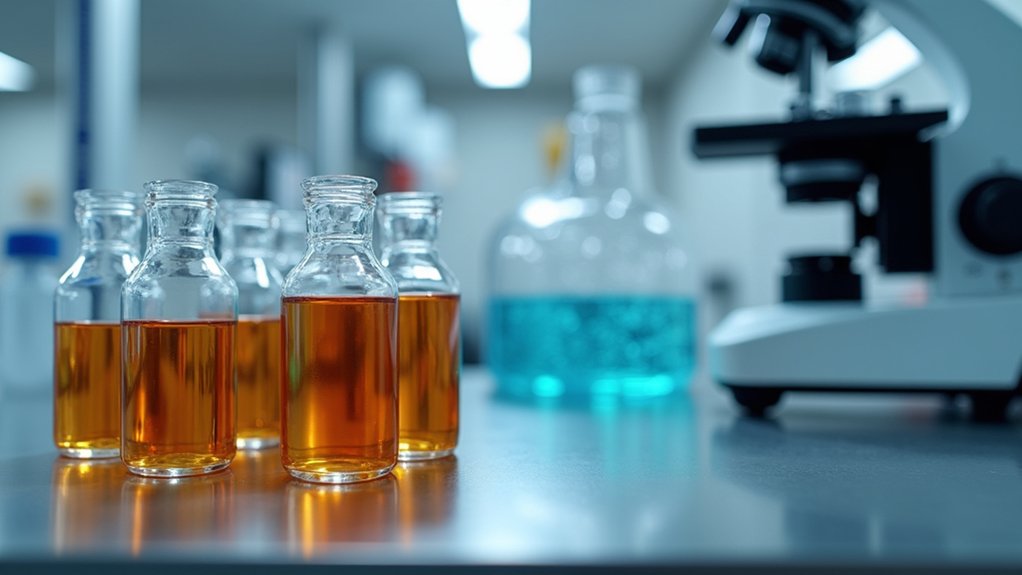
Identifying alcohol-related health concerns early requires reliable screening methods that range from simple questionnaires to precise laboratory measurements. Your healthcare provider may use validated tools like the AUDIT, AUDIT-C, or CAGE questionnaire to assess your drinking patterns during routine visits.
When clinical situations require objective measurement, providers rely on these testing methods:
- Breath alcohol testing, estimates blood alcohol concentration through exhaled air, commonly used in emergency and legal settings
- Point-of-care devices, provide rapid bedside results within minutes to guide acute management decisions
- Blood ethanol analysis, uses gas chromatography or enzymatic assays for precise quantification in gray-top collection tubes
Laboratory personnel must record the exact collection time on the specimen tube or in the computer system to ensure accurate interpretation of results. When preparing for blood collection, the phlebotomist must avoid using alcohol to clean the venipuncture site to prevent contamination of the specimen. Your results are interpreted alongside critical signs, neurological examination, and medical history to distinguish intoxication from other conditions causing altered mental status. Blood alcohol content can typically be detected for 6 to 12 hours after consumption, which influences the timing of specimen collection in clinical and legal contexts.
ICD-10 Diagnosis Codes for ETOH-Related Conditions
Healthcare providers rely on ICD-10 codes to accurately document ETOH-related conditions in your medical record, and understanding these classifications can help you interpret diagnoses on billing statements or discharge paperwork.
The primary category F10.- covers mental and behavioral disorders due to alcohol use. You’ll see F10.1 for harmful use, F10.2 for dependence syndrome, and F10.3 for withdrawal states. When withdrawal includes delirium, providers allocate F10.4. The code F10.9 represents alcohol use, unspecified and is classified under Mental, Behavioral and Neurodevelopmental disorders by the WHO.
Organ-specific damage carries distinct codes. Alcoholic liver disease falls under K70.-, with K70.3 indicating cirrhosis. Your provider uses I42.6 for alcoholic cardiomyopathy and G62.1 for alcoholic polyneuropathy. For newborns, providers document Q86.0 for fetal alcohol syndrome when maternal alcohol consumption has affected infant development.
Acute conditions require separate documentation. K85.2 identifies alcohol-induced acute pancreatitis, while K29.2 specifies alcoholic gastritis. These precise codes guarantee your treatment history accurately reflects alcohol’s role in your diagnosis.
Risk Levels, Binge Drinking Criteria, and Treatment Options

Understanding your risk level helps you and your healthcare provider determine whether alcohol use requires intervention. Low-risk drinking means up to one drink daily for females and two for males, though no amount is completely risk-free. Heavy drinking, eight or more drinks weekly for females or fifteen for males, dramatically increases your risk for liver disease, cardiovascular problems, and cancer.
Binge drinking occurs when you consume four or more drinks (females) or five or more drinks (males) within approximately two hours, typically raising blood alcohol to 0.08 g/dL or higher.
If you need treatment, evidence-based options include:
- Medical detoxification with supervised withdrawal management
- FDA-approved medications like naltrexone or acamprosate
- Psychosocial therapies including cognitive behavioral therapy and motivational interviewing
Early intervention improves outcomes considerably.
Frequently Asked Questions
Can ETOH Show up on a Standard Drug Test at Work?
No, EtOH won’t show up on a standard workplace drug test. These panels typically screen for five substances, marijuana, cocaine, opiates, amphetamines, and phencyclidine, but don’t include alcohol. If your employer wants to detect EtOH, they’ll need to use separate testing methods like breathalyzers, saliva tests, or specific urine panels. You should know that safety-sensitive and DOT-regulated positions often require additional alcohol screening beyond standard drug tests.
How Long Does ETOH Stay Detectable in Your System?
ETOH stays detectable in your system for varying lengths depending on the test type. Blood and saliva tests detect alcohol for 6-12 hours, while breath tests extend to 12-24 hours. Standard urine tests pick up ETOH metabolites for 12-48 hours. If you’re a chronic user, hair follicle testing can reveal alcohol use for up to 90 days. Factors like age, weight, liver health, and food intake also affect your detection window.
Is ETOH the Same Abbreviation Used in Other Countries?
Yes, ETOH is the same abbreviation used internationally. Since it derives from ethanol’s chemical formula (C2H5OH), you’ll find it recognized in medical records worldwide. Healthcare providers across different countries rely on this standardized term to document alcohol-related findings consistently. Whether you’re reviewing lab results in Europe, Asia, or the Americas, ETOH indicates ethyl alcohol without regional variation, ensuring clear communication among clinicians globally.
Why Do Doctors Use ETOH Instead of Just Writing Alcohol?
Doctors use ETOH instead of “alcohol” because it specifies ethyl alcohol precisely, distinguishing it from other toxic alcohols like methanol or isopropanol that require different treatments. You’ll find this abbreviation saves time in fast-paced settings like emergency departments while maintaining clinical accuracy. ETOH also provides neutral, standardized terminology across your medical records, lab reports, and treatment notes, ensuring clear communication between all your healthcare providers regardless of specialty or facility.
Can Patients Request ETOH Be Removed From Their Medical Records?
You can request an amendment under HIPAA, but healthcare providers typically deny requests to remove accurate ETOH documentation. If your clinical record reflects objective findings, like lab results or observed intoxication, the original entry usually stays intact. Instead, you may add a written statement or addendum explaining your disagreement. This addendum becomes part of your permanent record, though it won’t erase the original ETOH notation.