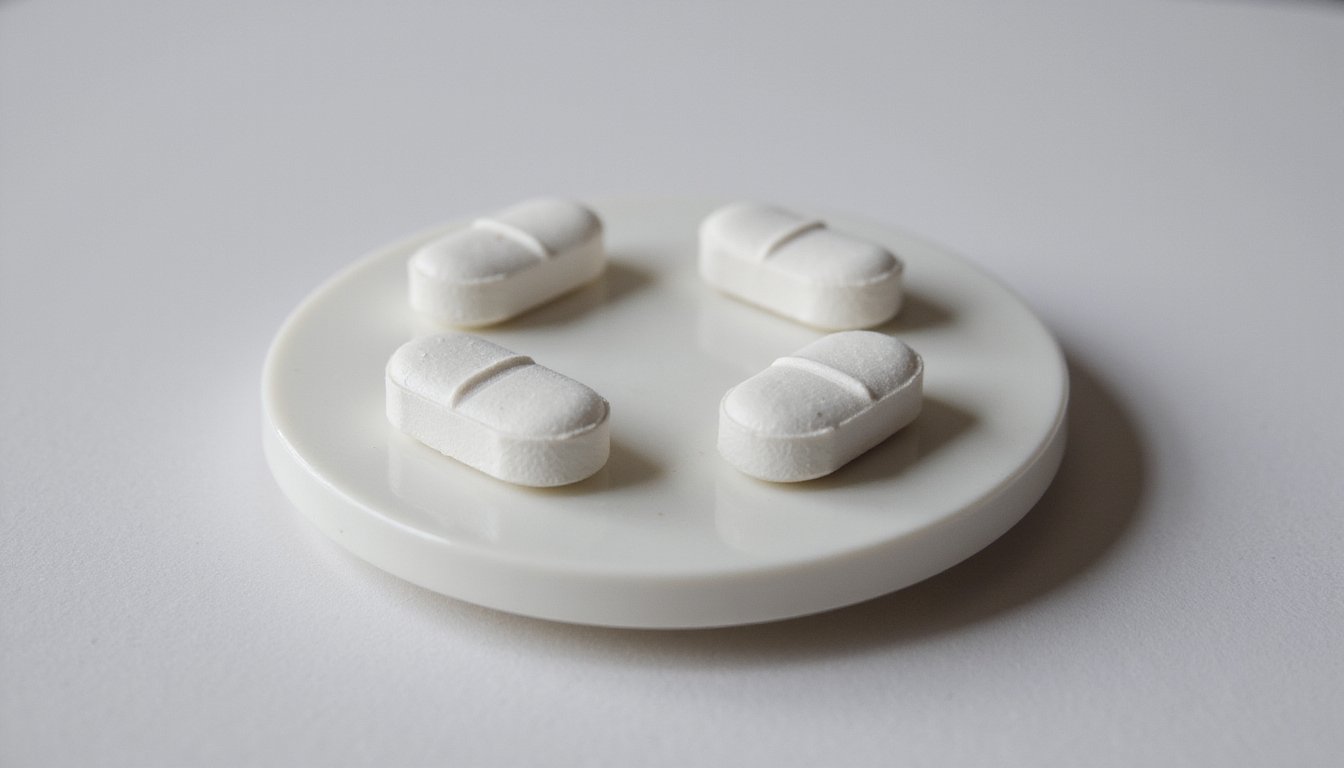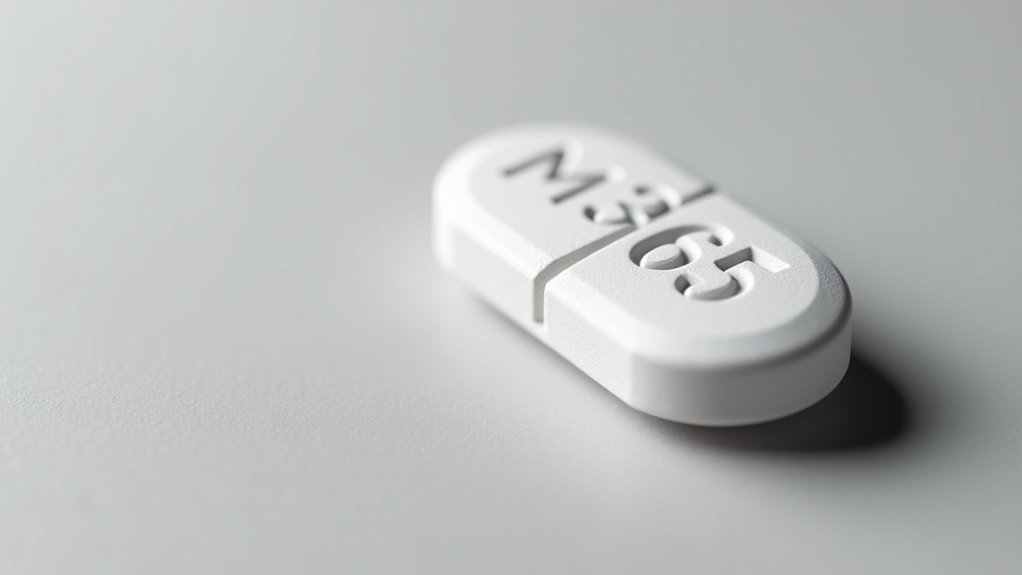






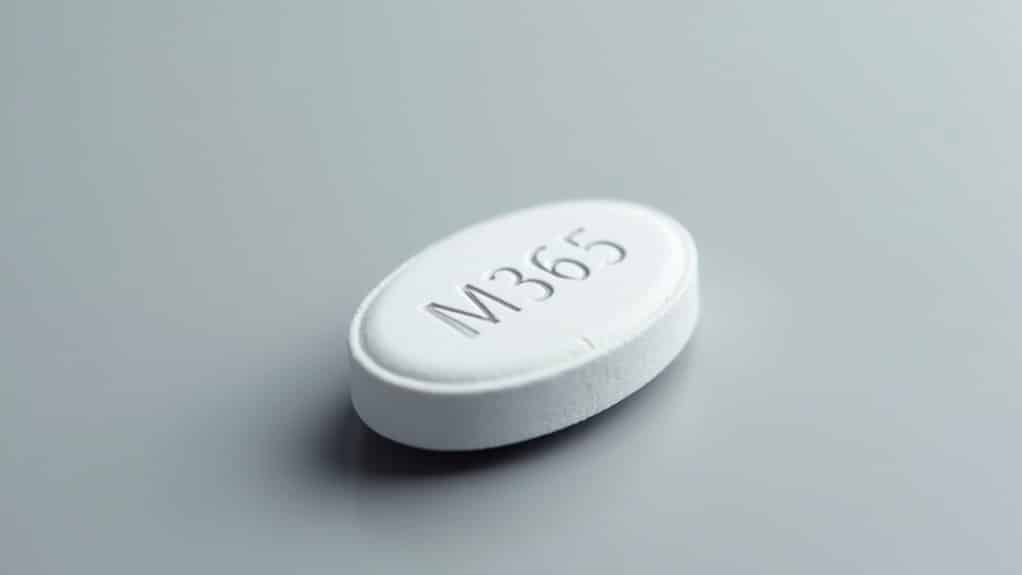
The M365 pill is a white, oblong tablet you can identify by its distinctive “m365” imprint and deep score line on the back. It contains 5mg hydrocodone and 325mg acetaminophen, prescribed for moderate to severe pain following surgeries, fractures, or dental procedures. You may experience side effects like drowsiness, nausea, or constipation. As a Schedule II controlled substance, it carries risks of dependence and requires careful monitoring, understanding proper usage helps you stay safe.
How to Identify an M365 Pill by Shape and Imprint
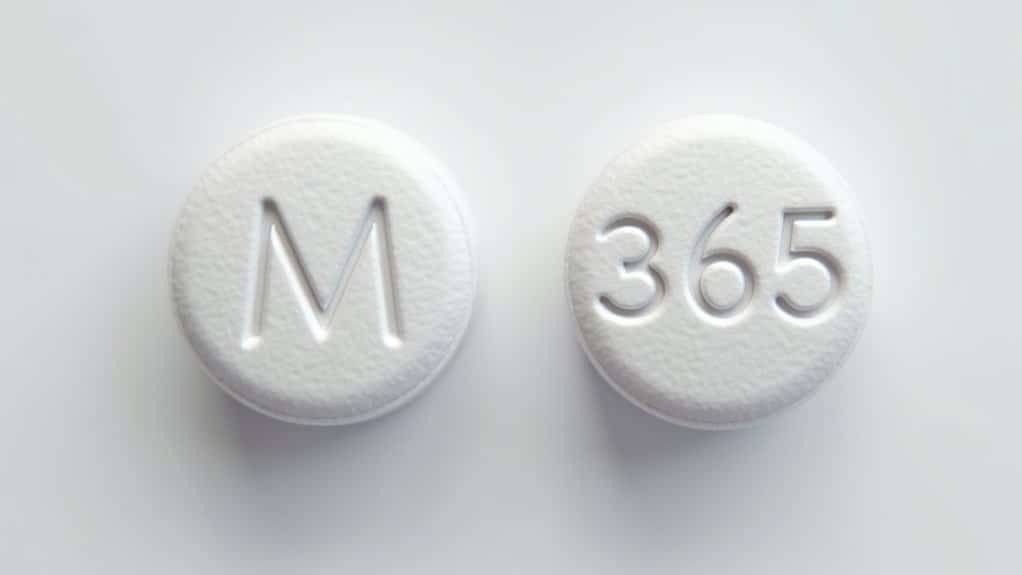
How can you confirm that a white oblong pill is actually an M365 tablet? Start by examining the physical characteristics carefully. You’re looking for a white pill with a capsule-shaped, elongated tablet form measuring approximately 15mm wide.
For accurate pill identification, check for the distinctive m365 imprint stamped on one side. This marking identifies the medication as a Mallinckrodt Pharmaceuticals product containing hydrocodone and acetaminophen, a Schedule II controlled substance. The most common formulation contains 5mg hydrocodone and 325mg acetaminophen.
The M365 imprint identifies this Mallinckrodt tablet as a hydrocodone-acetaminophen combination, classified as a Schedule II controlled substance.
Turn the tablet over to locate a deep score line on the back, which allows for dose division when prescribed. The surface should appear smooth and consistently white or off-white. Your prescription label will also include a physical description of the medication to help confirm proper identification.
Don’t confuse this tablet with similar medications like M366 or the orange V3605 variant. When uncertain, always verify with your pharmacist. You can also use a pill identification tool to verify the authenticity of pills by checking physical characteristics like size, shape, color, and imprint codes.
What’s Inside an M365 Pill
Beyond its physical appearance, the M365 pill contains a carefully formulated combination of two active ingredients: hydrocodone bitartrate (5 mg) and acetaminophen (325 mg). This combination medication delivers dual-action pain relief through distinct mechanisms. Hydrocodone binds to opioid receptors in your central nervous system, altering how you perceive pain, while acetaminophen inhibits prostaglandins to enhance analgesic effects.
The pharmaceutical composition also includes several inactive ingredients essential for tablet stability and absorption. Crospovidone serves as a disintegrant, magnesium stearate functions as a lubricant, and microcrystalline cellulose acts as a binder. Povidone, pregelatinized starch, stearic acid, and silicon dioxide complete the formulation.
You should note that this active ingredients profile makes M365 effective for moderate to severe pain but requires prescription monitoring due to hydrocodone’s Schedule II classification. The M365 pill is typically prescribed when other pain medications have not provided adequate relief for the patient. Common side effects to be aware of include drowsiness, nausea, constipation, and lightheadedness. Due to its opioid component, prolonged use of M365 can lead to tolerance, physical dependence, and opioid use disorder.
What Doctors Prescribe M365 For
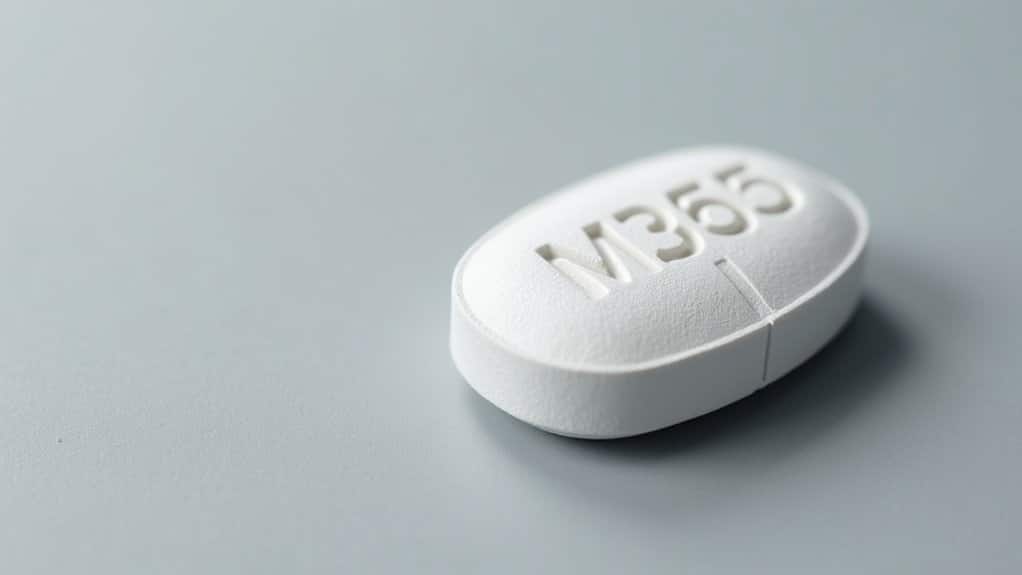
Healthcare providers prescribe M365 for moderate to severe pain that doesn’t respond adequately to non-opioid analgesics alone. You’ll typically receive this medication for acute pain from fractures, dental procedures, or post-surgical recovery when other treatments prove insufficient.
| Pain Category | Common Examples | Typical Duration |
|---|---|---|
| Acute Pain | Fractures, oral surgery | Short-term |
| Post-Operative | Surgical recovery | Days to weeks |
| Chronic Conditions | Arthritis, back pain | Closely monitored |
Your doctor may incorporate M365 into broader pain management regimens for chronic pain conditions like persistent arthritis or debilitating back pain. However, you should expect physicians to prescribe this medication only after determining that opioid intervention is medically necessary and that benefits outweigh potential risks. As a Schedule II/IIN controlled substance, M365 requires strict adherence to prescribing guidelines and careful monitoring throughout treatment.
How M365 Relieves Pain in Your Body
When you take an M365 pill, the hydrocodone component binds to mu-opioid receptors in your brain and spinal cord, activating pathways that inhibit pain signal transmission. Unlike some pain medications, hydrocodone has no ceiling effect, meaning its pain-relieving action continues to increase with dosage. Acetaminophen works through a complementary mechanism, blocking pain signals in your body and activating descending serotonergic pathways in your central nervous system. Together, these two ingredients target your pain through multiple pathways, providing relief that neither component could achieve alone.
Opioid Receptor Binding Mechanism
The hydrocodone in your M365 pill works by binding to mu-opioid receptors (MOR) located throughout your brain and spinal cord. These receptors belong to the G-protein coupled receptors family, featuring seven transmembrane domains that respond when an opioid agonist attaches.
| Component | Action | Result |
|---|---|---|
| Mu-opioid receptors | Bind hydrocodone | Initiate signaling cascade |
| G-proteins | Dissociate and activate | Reduce cAMP levels |
| Ion channels | Alter potassium/calcium flow | Block pain signals |
Once activated, your receptors trigger a cascade that inhibits adenylate cyclase and modifies ion channel activity. This hyperpolarizes neurons, reducing their ability to fire and transmit pain signals. The analgesic effects you experience result from this systematic dampening of pain transmission pathways. Because hydrocodone is a semi-synthetic opioid, it effectively mimics the body’s natural endorphins to produce these pain-relieving effects. Specifically, opioids work presynaptically to inhibit neurotransmitter release, including substances like noradrenaline and substance P that would otherwise transmit pain signals. Additionally, the acetaminophen component enhances pain relief by inhibiting prostaglandin synthesis, which also helps reduce body temperature during your treatment.
Acetaminophen’s Complementary Action
Cannabinoid system involvement occurs when AM404 activates CB1 receptors and boosts your natural endocannabinoid levels. However, new research from Indiana University reveals that acetaminophen actually inhibits an enzyme that makes the endocannabinoid 2-AG, suggesting reduced 2-AG levels lead to decreased pain rather than elevated endocannabinoids. You’ll also benefit from serotonergic and pain threshold effects, as acetaminophen stimulates descending serotonin pathways that raise your pain threshold. AM404 also acts on TRPV1 receptors in the spinal dorsal horn to modulate nociceptive transmission. These combined mechanisms complement hydrocodone’s action for more effective analgesia.
Central Nervous System Effects
Understanding how M365 works in your central nervous system helps explain why it’s effective for pain relief. When you take this hydrocodone acetaminophen combination, the hydrocodone component binds to mu-opioid receptors in your brain and spinal cord. This binding activates signaling pathways that block pain signal transmission and reduce neurotransmitter release, including substance P.
Your body experiences the analgesic properties through suppressed nociceptive reflexes without affecting your sense of touch. The medication reaches peak concentrations within one hour, providing rapid relief. However, hydrocodone also acts on brainstem respiratory centers, creating respiratory depression risk that limits safe dosing. This risk increases significantly when combined with other medicines, potentially causing slow or shallow breathing.
The dual-action approach, hydrocodone targeting opioid receptors while acetaminophen works through complementary pathways, delivers effective central nervous system pain management for moderate to severe conditions unresponsive to non-opioid alternatives.
Common M365 Side Effects
M365 pills can cause several predictable side effects that you should monitor while taking this medication. Gastrointestinal effects include nausea, constipation, and stomach upset. Neurological effects commonly manifest as dizziness, drowsiness, and headaches. You may also experience respiratory and sensory effects like lightheadedness or slow breathing, which requires immediate medical attention.
- Gastrointestinal symptoms: nausea, vomiting, constipation, stomach pain
- Neurological reactions: dizziness, sedation, fatigue, confusion
- Dermatological and allergic reactions: skin rash, itching, hives, facial swelling
- Mood and behavioral changes: anxiety, restlessness, depression, mood swings
Watch for dermatological and allergic reactions such as rash or hives. Serious skin reactions including Stevens-Johnson syndrome and toxic epidermal necrolysis may occur and require immediate medical attention. Mood and behavioral changes including anxiety or depression can also occur. Elderly patients may be more susceptible to confusion and severe drowsiness when taking this medication. Contact your healthcare provider if side effects persist or worsen.
Why M365 Is a Schedule II Controlled Substance
You should understand that M365 carries a Schedule II controlled substance classification because hydrocodone’s high potential for abuse can lead to severe psychological and physical dependence. The DEA reclassified hydrocodone combination products from Schedule III to Schedule II in October 2014 after determining that lower doses in combination formulations don’t reduce abuse risk. This classification means you’ll need a new written prescription for each refill, and your prescriber must monitor you through regular wellness checkups and prescription drug monitoring programs.
High Abuse Potential Risk
Prescription opioids like the M365 pill carry considerable abuse potential, which is why federal regulators classify hydrocodone-acetaminophen combinations as Schedule II controlled substances. When you take hydrocodone, it produces euphoria and deep relaxation by acting on your brain’s reward system, which drives recreational use patterns.
Key risk factors you should understand:
- Rapid dependence development, Physical dependence can form within weeks, even with prescribed use
- Opioid use disorder, SAMHSA reports 2.7 million Americans currently struggle with this chronic condition
- Polydrug interactions, Combining M365 with alcohol or benzodiazepines greatly amplifies overdose risk
- Fatal outcomes, CDC data shows prescription opioids contributed to over 16,000 overdose deaths in 2021
Your prescriber monitors these risks carefully to balance pain management with safety concerns.
DEA Classification Rationale
Understanding why the DEA places the M365 pill in Schedule II helps explain the strict prescribing rules you’ll encounter.
The DEA classifies this prescription medication as a Schedule II/IIN controlled substance because hydrocodone combination products demonstrate high abuse potential and can cause severe psychological or physical dependence. Research confirms that lower hydrocodone doses don’t reduce abuse liability, which led to the 2014 rescheduling from Schedule III.
As a controlled drug, M365 faces the same regulatory restrictions as other Schedule II opioid substances like oxycodone and morphine. You can’t get refills on this pain reliever, each prescription requires a new order from your healthcare provider. This classification acknowledges the medication’s legitimate medical value while implementing safeguards against misuse and diversion through strict prescribing protocols.
Strict Prescription Requirements
Because the DEA classifies hydrocodone as a Schedule II controlled substance, the M365 pill falls under the strictest prescription requirements in federal drug regulation. This schedule II classification means you can’t obtain this medication through verbal orders or automatic refills.
Your prescriber must follow specific prescription issuance rules when authorizing M365:
- Written or electronic prescriptions are mandatory, no phone-in orders permitted
- Patient age and ID verification requires you to be 18 or older with government-issued identification at pickup
- Refill and quantity limits prohibit automatic renewals, requiring new prescriptions for continued treatment
- Medical supervision mandates regular checkups before prescribers authorize additional supplies
These prescription requirements exist because Schedule II substances carry high potential for severe psychological or physical dependence. Your healthcare provider must evaluate your health status and opioid exposure history before prescribing.
M365 Risks: Addiction, Overdose, and Liver Damage
While the M365 pill provides effective pain relief when used as prescribed, it carries significant risks that you should understand before taking this medication. Is the m365 dangerous? Patients may experience side effects ranging from mild to severe, which can vary significantly. It is crucial to weigh the benefits against the potential for addiction or misuse, particularly in individuals with a history of substance abuse. Always consult with a healthcare professional to determine if this medication is appropriate for your specific circumstances.
Addiction Risks and Physical Dependence
Research shows 21, 29% of patients prescribed opioids for chronic pain misuse them, with 8, 12% developing opioid use disorder. Extended use creates physical dependence as your body adapts to the medication, requiring higher doses for the same effect.
Opioid misuse affects up to 29% of chronic pain patients, with physical dependence developing as tolerance builds over time.
Overdose Risks
Opioid overdoses claimed 79,358 lives in 2023. Misusing M365, particularly through snorting, dramatically increases respiratory failure risk.
Withdrawal Symptoms
Stopping abruptly after prolonged use triggers muscle aches, abdominal pain, anxiety, sweating, and insomnia.
Liver Damage Risks
The acetaminophen component poses serious liver toxicity concerns with overuse, especially when combined with other acetaminophen-containing products.
How to Take M365 Safely
Taking M365 exactly as your doctor prescribes is essential for safe pain management and minimizing serious complications.
Dosage adherence requires you to take only the prescribed amount at recommended intervals. Don’t exceed 4,000 mg of acetaminophen daily from all sources. Special population considerations apply if you’re elderly or have liver conditions, your provider may adjust your dose accordingly.
Follow these administration protocols and substance and interaction avoidance guidelines:
- Take 1-2 tablets every 4-6 hours as needed, never exceeding prescribed frequency
- Avoid alcohol completely and inform your doctor about all current medications
- Don’t combine with benzodiazepines or other CNS depressants
- Report uncontrolled pain rather than increasing doses independently
Proper storage and disposal practices include keeping medication locked away and using drug take-back programs.
M365 Overdose Signs and Emergency Response
Even with careful adherence to prescribed dosing, you should recognize the warning signs of M365 overdose, a medical emergency that requires immediate action. Respiratory depression represents the most dangerous symptom, potentially progressing to respiratory failure without intervention.
| Physical Signs | Neurological Signs | Other Symptoms |
|---|---|---|
| Pinpoint pupils | Unresponsiveness | Nausea/vomiting |
| Blue lips/nails | Extreme drowsiness | Cold, clammy skin |
| Limp body | Confusion | Irregular breathing |
Your emergency response should include calling 911 immediately and providing details about the amount ingested. If you have naloxone available, administer it while awaiting medical personnel. Don’t combine M365 with alcohol or benzodiazepines, as these substances dramatically increase overdose risk. Monitor the person’s breathing until help arrives.
Frequently Asked Questions
Can I Drink Alcohol While Taking M365 Pills?
You shouldn’t drink alcohol while taking M365 pills. Combining alcohol with hydrocodone intensifies CNS depression, increasing your risk of dangerous sedation, slowed breathing, and overdose. The acetaminophen component adds another serious concern, drinking three or more alcoholic beverages enormously raises your risk of liver damage. Even moderate alcohol consumption creates compounded risks including respiratory depression, extreme drowsiness, and potentially fatal outcomes. Always inform your prescriber about your alcohol use patterns.
How Long Does M365 Stay Detectable in Drug Tests?
The detection window for M365 (hydrocodone/acetaminophen) varies by test type. In urine, you’ll test positive for 1-4 days, potentially up to 7 days with chronic use. Blood tests detect it for approximately 24 hours, while saliva tests show positive results for 12-36 hours. Hair follicle testing offers the longest window, up to 90 days. Your metabolism, dosage frequency, and liver function greatly/substantially/considerably influence these timeframes.
What Should I Do if I Miss a Dose of M365?
If you miss a dose of M365, take it as soon as you remember. However, if it’s almost time for your next scheduled dose, skip the missed one and continue your regular schedule. Don’t double up to compensate, this increases your risk of acetaminophen-related liver damage and opioid overdose. If you’re unsure what to do or frequently miss doses, contact your healthcare provider for personalized guidance.
Can I Take M365 While Pregnant or Breastfeeding?
You should avoid taking M365 while pregnant or breastfeeding unless your doctor determines it’s absolutely necessary. Hydrocodone crosses the placenta and may cause neonatal withdrawal, poor fetal growth, preterm delivery, or stillbirth. During breastfeeding, opioids can sedate your infant or trigger withdrawal symptoms. If you need pain relief during pregnancy, acetaminophen alone is the safest option. Always consult your obstetrician before taking any opioid medication.
Are There Non-Opioid Alternatives to M365 for Pain Relief?
Yes, you have several effective non-opioid alternatives for pain relief. You can try over-the-counter options like NSAIDs (ibuprofen, naproxen) or acetaminophen alone. Your doctor might recommend prescription alternatives such as antidepressants, anticonvulsants, or newer medications like suzetrigine. Non-drug approaches, including physical therapy, acupuncture, cognitive behavioral therapy, and TENS units, also provide evidence-based relief. You should discuss these options with your healthcare provider to find the safest, most effective treatment for your specific condition.