





Zoloft’s parent compound clears your system within 5 to 7 days, based on its average half-life of 26 hours. However, you’ll carry its active metabolite, desmethylsertraline, considerably longer, its 62 to 104 hour half-life means complete elimination takes 2 to 3 weeks. Your individual clearance timeline depends on liver function, age, and genetic variations in CYP2D6 enzyme activity. Understanding these factors helps explain why discontinuation effects vary so dramatically between individuals.
What Is Zoloft’s Half-Life?
Zoloft’s half-life, the time required for plasma concentration to decrease by 50%, ranges from 22 to 36 hours in adults, with an average of approximately 26 hours. Young males demonstrate shorter elimination times around 22.4 hours, while young females and elderly patients show extended ranges of 32.1, 36.7 hours.
Understanding the Zoloft half life helps you anticipate how long the medication remains active in your body. Individual variability extends this range from 13, 45 hours based on liver function, age, and genetic factors. Genetic polymorphisms in cytochrome P450 enzymes can significantly affect how quickly your body processes and eliminates the medication. Since sertraline is highly protein-bound at 98% in the blood, factors affecting protein levels can also influence how the drug is distributed and eliminated from your system.
Desmethylsertraline, Zoloft’s active metabolite, has a considerably longer half-life of 56, 120 hours. This metabolite accumulates to concentrations exceeding the parent drug at steady state, extending Zoloft’s pharmacological presence beyond what the primary compound’s half-life suggests.
How Long Does Zoloft Stay in Your System?
After your final dose, Zoloft’s elimination follows a predictable timeline based on its 26-hour half-life and the slower clearance of its active metabolite. You can expect complete elimination of the parent drug within approximately 5 to 7 days, though detection windows vary markedly depending on the testing method used. Understanding these timelines helps you anticipate how long sertraline-related compounds remain measurable in your system. Hair follicle testing provides the longest detection window, with Zoloft remaining identifiable for up to 90 days after your last dose. The active metabolite N-desmethylsertraline takes longer to clear than the parent drug, with a half-life ranging from 62 to 104 hours.
Typical Elimination Timeline
When you stop taking Zoloft, the medication doesn’t leave your body immediately, sertraline’s half-life of 24-26 hours means your system eliminates roughly half the drug every day. Complete clearance requires five to six half-lives, translating to approximately five to seven days for most individuals. When you stop taking Zoloft, the medication doesn’t leave your body immediately, sertraline’s half-life of 24, 26 hours means your system eliminates roughly half the drug every day. If you’re wondering is it safe to stop Zoloft cold turkey, this pharmacokinetic profile explains why abrupt discontinuation often leads to withdrawal effects. Complete clearance requires five to six half-lives, translating to approximately five to seven days for most individuals.
Understanding how long does sertraline stay in your system requires examining its active metabolite, desmethylsertraline. This compound possesses a considerably longer half-life of 56-120 hours, extending detectable presence up to two weeks. Compared to other medications in the same class, this SSRI half life falls within the moderate range. Hair follicle testing can reveal Zoloft use for up to 90 days after your last dose, far exceeding standard blood or urine detection windows.
Your blood levels peak four to six hours post-ingestion, then decline predictably. Factors including liver function, genetic enzyme variability, and body composition influence your personal elimination timeline. Sertraline is metabolized in the liver primarily by the CYP2D6 enzyme, which explains why genetic variations in this enzyme can significantly alter how quickly you process the medication.
Detection Windows Explained
Understanding how long sertraline remains detectable depends on the type of drug test administered, as each testing method targets different biological samples with distinct detection capabilities.
The sertraline half life of approximately 26 hours influences zoloft clearance time across all testing modalities. Your drug elimination timeline varies based on metabolic factors, kidney function, and duration of use. Higher doses take longer to fully clear from your system compared to lower maintenance doses.
Detection windows by sample type include:
- Urine testing: Detects sertraline metabolites for 2-9 days post-discontinuation, with standard windows ranging 3-7 days depending on test sensitivity
- Blood testing: Shows presence for 24-48 hours typically, extending up to 5 days with chronic use
- Hair follicle testing: Captures metabolites for up to 90 days, providing historical usage data rather than recent consumption
Standard drug panels don’t routinely screen for sertraline, requiring specialized testing methods. Saliva testing offers a 1 to 2 day detection window, making it the shortest timeframe among common testing options.
Why Desmethylsertraline Stays Longer Than Zoloft
When you take Zoloft, your liver converts sertraline into desmethylsertraline through N-demethylation, creating a metabolite that clears from your body at a considerably slower rate. While sertraline has a terminal elimination half-life averaging 26 hours, desmethylsertraline persists with a half-life ranging from 62 to 120 hours, roughly three to four times longer. This extended half-life means desmethylsertraline continues circulating in your bloodstream well after sertraline itself has been eliminated, with serum concentrations of the metabolite often exceeding those of the parent drug.
Slower Metabolite Breakdown Rate
Nearly all of the sertraline you take undergoes extensive first-pass liver metabolism, with less than 5% of the unchanged drug remaining detectable in plasma. The primary pathway involves N-demethylation, converting sertraline into desmethylsertraline, the dominant sertraline metabolites circulating in your bloodstream.
Understanding antidepressant pharmacokinetics explains why your medication washout period extends beyond the parent drug’s clearance:
- CYP2B6 and CYP3A4 enzymes primarily handle sertraline’s conversion to desmethylsertraline
- Desmethylsertraline’s half-life ranges from 62 to 104 hours, compared to sertraline’s 26-hour average
- Decreased clearance rates occur in older patients, requiring 2-3 weeks to reach steady-state
- Patients with liver impairment require additional caution as they experience even slower elimination of the medication
Desmethylsertraline shows substantially less pharmacological activity than sertraline, yet its prolonged presence means trace amounts persist in your system well after the active medication clears. Both desmethylsertraline and sertraline subsequently undergo oxidative deamination and hydroxylation, followed by glucuronide conjugation before elimination from the body.
Extended Elimination Half-Life
Desmethylsertraline’s elimination half-life of 62-104 hours, roughly 2.6 to 4.3 days, far exceeds sertraline’s 26-hour average, which directly explains why Zoloft-related compounds remain detectable long after the parent drug clears.
This extended half-life means desmethylsertraline requires approximately 13 to 21 days to fully eliminate from your system, compared to sertraline’s 5-6 day clearance window. When you’re considering how long Zoloft lasts in your body, you must account for this metabolite’s prolonged presence. At steady state, desmethylsertraline accumulates to greater concentrations in plasma than sertraline itself, making it the dominant compound during the elimination phase.
Your liver’s N-demethylation pathway produces desmethylsertraline concentrations that typically exceed sertraline levels in serum. Despite its reduced pharmacological activity compared to the parent compound, this metabolite influences your total drug elimination timeline. Research confirms that desmethylsertraline does not contribute significantly to sertraline’s therapeutic serotonergic effects, despite being the principal metabolite. Dual excretion through urine and feces, each accounting for 40-45% of the dose, further extends complete clearance beyond initial expectations.
How Age, Gender, and Health Affect Zoloft’s Half-Life
Several biological and physiological factors markedly alter sertraline’s half-life, creating substantial variability in how long the medication remains active in your system.
When determining how long does Zoloft stay in your system, consider these key variables:
- Age: Young males exhibit a shorter sertraline half-life of 22.4 hours, while elderly individuals and young females show extended half-lives of 32.1-36.7 hours
- Gender: Pharmacokinetic differences between sexes considerably impact plasma concentrations and elimination rates at maximum doses
- Liver function: Impaired hepatic metabolism prolongs drug exposure, as CYP450 enzyme activity directly controls clearance
Your metabolic profile also influences clearance duration. CYP2C19 poor metabolizers require 50% dose reductions due to extended drug exposure. The desmethylsertraline metabolite’s 56-120 hour half-life further extends overall elimination, particularly in those with compromised liver function. Additionally, sertraline’s status as a moderate inhibitor of CYP2D6 means it can affect the metabolism of other medications you may be taking, potentially altering their clearance times as well.
How Long Zoloft Shows Up on Drug Tests
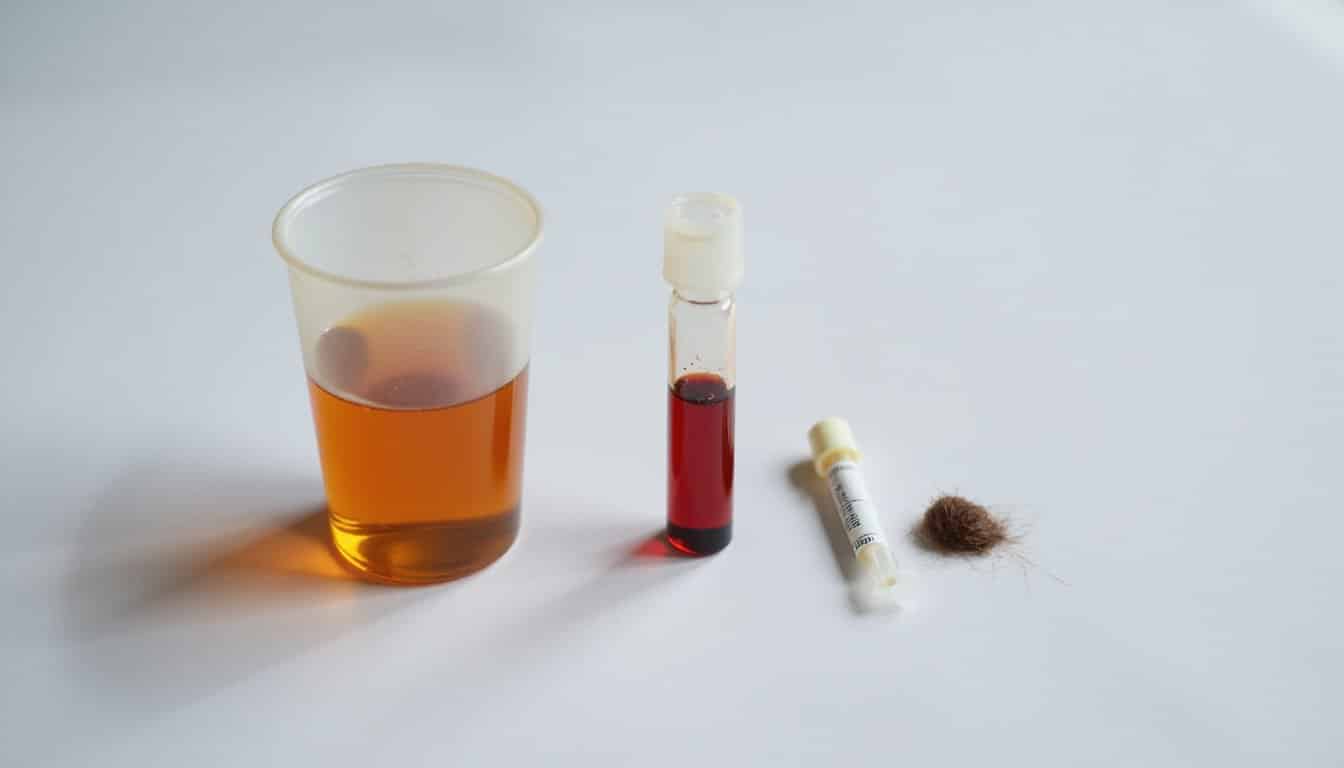
Drug testing for Zoloft varies considerably by sample type, with each method offering distinct detection windows based on sertraline’s pharmacokinetic properties.
Urine testing detects Zoloft for up to 9 days, though windows of 3, 7 days are common. Blood tests identify sertraline for 1, 5 days, influenced by its 26-hour half-life and active metabolite N-desmethylsertraline. Blood testing is considered one of the most accurate forms of testing for measuring the actual presence of the drug in the bloodstream. Saliva detection spans 1, 4 days, offering a less invasive option. Hair follicle testing provides the longest window, up to 90 days, but requires approximately one week of growth for viability.
Standard 5- and 10-panel drug screens don’t target Zoloft. However, tricyclic antidepressant screens can detect it. You should know that sertraline may trigger false positives for benzodiazepines or LSD at rates of 5, 10%. Confirmatory testing via mass spectrometry or gas chromatography resolves these discrepancies.
What Happens to Your Brain as Zoloft Clears
Beyond detection windows, your brain undergoes significant neurobiological changes as Zoloft clears your system. During chronic sertraline treatment, your serotonin receptors downregulate to compensate for increased synaptic serotonin. Upon cessation, these receptors begin regaining sensitivity within 24 hours, though complete recalibration takes weeks.
Key neurobiological shifts include:
- SERT binding site recovery: Serotonin transporters gradually upregulate, restoring normal 5-HT clearance rates
- Receptor sensitivity normalization: Downregulated receptors recalibrate to endogenous serotonin levels
- Neuroplastic reorganization: Prefrontal cortex and hippocampus pathways rewire based on current neurochemical conditions
You may experience brain zaps, vivid dreams, or vertigo as your central nervous system adapts. These emotional and physical sensations are tied to delicate receptor recalibration as your brain adjusts to functioning without external support. While sertraline clears in 5-6 days, neuroadaptations reverse over a longer timeline. Structural changes in the anterior cingulate cortex and hippocampus continue influencing neural function during this adjustment period.
When Withdrawal Symptoms Start After Stopping Zoloft
Withdrawal symptoms typically emerge within 1-3 days after your last Zoloft dose, though some individuals notice initial effects as early as 12-24 hours post-discontinuation. Most people experience symptom onset between days 2-5, coinciding with sertraline’s elimination half-life of approximately 26 hours. Withdrawal symptoms typically emerge within 1, 3 days after your last Zoloft dose, though some individuals notice initial effects as early as 12, 24 hours post-discontinuation. When discussing weaning off Zoloft side effects, most people experience symptom onset between days 2, 5, coinciding with sertraline’s elimination half-life of approximately 26 hours.
During the first week, you’ll likely encounter dizziness, nausea, irritability, and the characteristic “brain zaps”, brief electrical sensation-like phenomena. Sleep disturbances, vivid dreams, and flu-like symptoms commonly develop alongside headaches and fatigue.
Peak intensity occurs between 36-96 hours after cessation, with symptoms reaching maximum severity during days 4-7. You may experience pronounced mood swings, anxiety, and concentration difficulties during this window. Physical symptoms like muscle pain and headaches intensify before gradually subsiding. The acute phase typically resolves within 1-6 weeks, depending on your dosage history and treatment duration.
How to Safely Manage Zoloft Discontinuation
Safe discontinuation of Zoloft requires a structured tapering protocol rather than abrupt cessation. You should reduce your dose by approximately 25% every one to four weeks, with total taper duration ranging from four to twelve weeks depending on your treatment history and current dosage. Safe discontinuation of Zoloft requires a structured tapering protocol rather than abrupt cessation. When considering the Zoloft withdrawal timeline, you should reduce your dose by approximately 25% every one to four weeks, with total taper duration ranging from four to twelve weeks depending on your treatment history and current dosage.
A gradual tapering approach over several weeks ensures safer Zoloft discontinuation than stopping cold turkey.
Medical supervision throughout this process is essential. Your prescriber will customize the schedule based on individual factors and monitor for symptoms that typically emerge within one to three days of each dose reduction.
Key strategies for successful discontinuation include:
- Tracking symptoms like irritability, insomnia, and dizziness to distinguish withdrawal from relapse
- Slowing the taper or temporarily resuming a lower dose if significant symptoms emerge
- Adding supportive therapies such as CBT to manage psychological symptoms during the changeover period
When the Medication Clears, Healing Can Begin Start Now
Knowing how long Zoloft remains in your system provides important context for what withdrawal may feel like and underscores exactly why having medical professionals guide that process is so critical. Simonds Recovery Centers delivers specialized medical detox in Los Angeles County designed to account for each client’s unique pharmacological profile and ensure withdrawal is managed with clinical precision. Serving individuals across Granada Hills, our +1 (833) 781-8338 team stands ready around the clock to help you begin safely.
Frequently Asked Questions
Can I Drink Alcohol While Zoloft Is Still Clearing From My System?
You shouldn’t drink alcohol while Zoloft is clearing from your system. The drug’s 24-36 hour half-life means it takes 5-7 days for near-complete elimination, and its active metabolite persists even longer. During this window, you’ll face heightened risks of CNS depression, impaired coordination, and intensified sedation. Wait at least one week after your last dose before consuming alcohol, and consult your healthcare provider for personalized guidance.
Will Taking Zoloft With Food Change How Long It Stays in Me?
No, taking Zoloft with food won’t change how long it stays in your system. Research shows food doesn’t alter sertraline’s absorption rate, bioavailability, or elimination half-life. You’ll still reach peak plasma concentrations within 4-10 hours regardless of meal timing, and the drug clears through the same 22-36 hour half-life pathway. Your liver and kidney function, age, and genetics influence clearance duration, not whether you’ve eaten.
Does Zoloft Interact With Other Medications During the Elimination Period?
Yes, Zoloft can interact with other medications during elimination. Drugs that inhibit your liver’s cytochrome P450 enzymes slow sertraline clearance, extending its presence beyond the standard 26-hour half-life. Conversely, enzyme inducers accelerate metabolism, reducing plasma concentrations. Since desmethylsertraline (Zoloft’s active metabolite) has a half-life of 62-104 hours, it remains longer and may interact with concurrent medications. You’ll need monitoring if you’re taking enzyme-affecting drugs alongside Zoloft.
Can Exercise Speed up How Quickly Zoloft Leaves My Body?
No direct evidence supports exercise accelerating Zoloft clearance from your body. Your liver’s metabolic capacity, not physical activity, primarily determines how quickly you eliminate sertraline. While exercise boosts general metabolic rate, research hasn’t established it as a modifier for this medication’s elimination. Factors like age, liver function, genetics, and dosing history influence your clearance timeline more considerably. You shouldn’t rely on exercise to speed up the 5-7 day typical elimination period.
Will Zoloft Affect My Sleep Quality as It Clears From My System?
Yes, Zoloft can affect your sleep quality during clearance. As sertraline levels drop, your brain’s serotonin signaling undergoes readjustment, potentially causing sleep disturbances. These effects often persist beyond the 5-6 day physical elimination period because neurological adaptation takes longer than drug clearance. The active metabolite N-desmethylsertraline‘s extended 62-104 hour half-life prolongs this adjustment phase. You’ll minimize sleep disruptions by following a gradual taper rather than abrupt discontinuation.