


You can’t make Benadryl wear off faster, but you can support your body while it clears. Effects typically fade within 4 to 6 hours, driven by a half-life of 7 to 12 hours. Your liver metabolizes it first, then your kidneys filter it out. Staying hydrated, eating nutritious meals, and resting genuinely help you feel more alert. Caffeine and alcohol don’t speed clearance and some choices actually slow it. Here’s what actually works.
Key Takeaways
- No proven method makes Benadryl wear off faster; effects fade in 4, 6 hours while full clearance takes 13.2, 49 hours.
- Stay hydrated by drinking water every 90, 120 minutes to support kidney filtration as the drug clears naturally.
- Eat nutritious meals to fuel liver enzymes and add light movement once sedation fades to boost circulation.
- Avoid caffeine, alcohol, activated charcoal, and other sedatives, as they mask symptoms or delay elimination rather than help.
- Expect functional clarity around 12 hours, and avoid intense exercise or sharp-coordination activities until sedation fully lifts.
Can you actually make Benadryl wear off faster
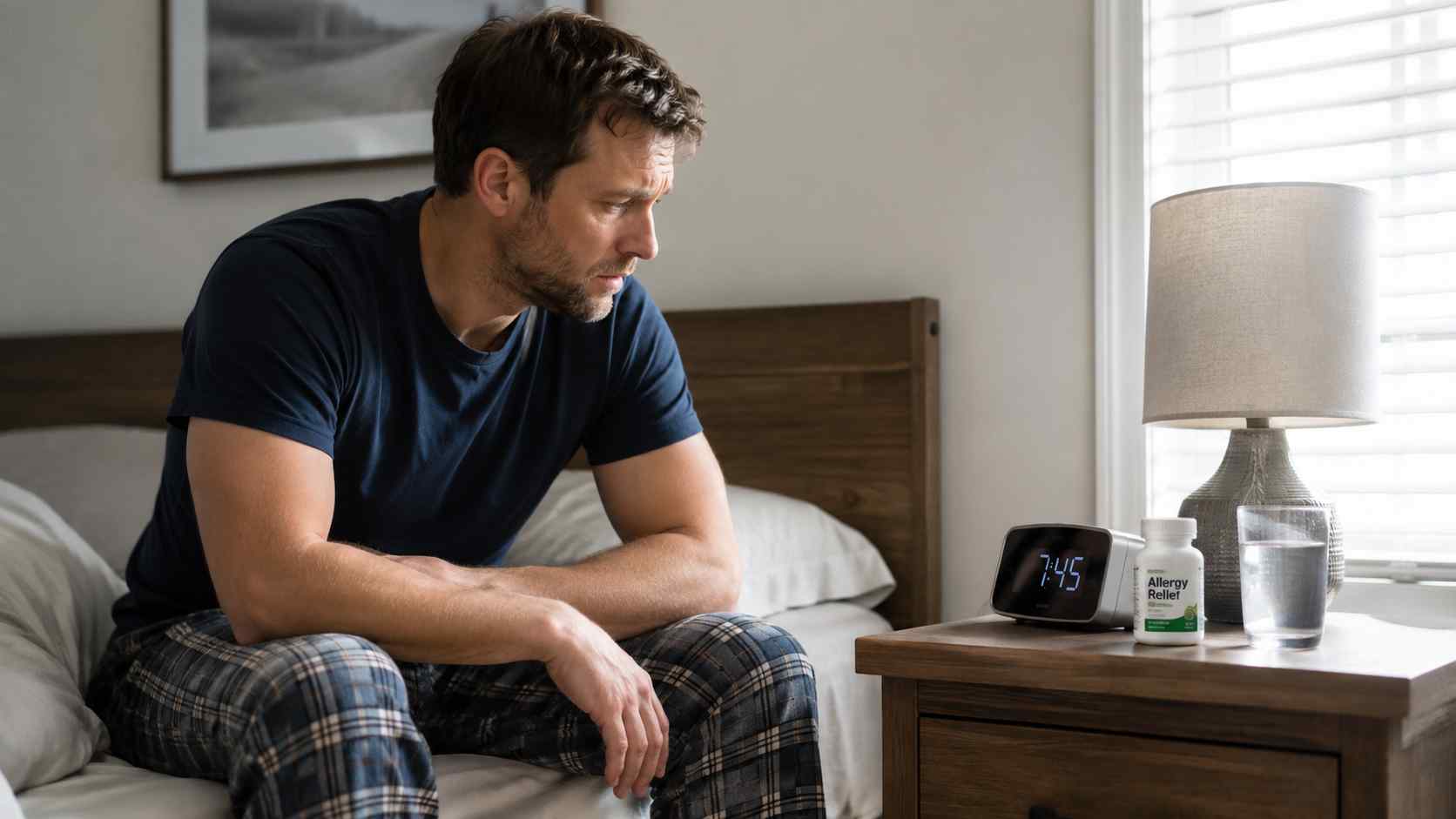
You cannot make Benadryl wear off faster, but you can support your body’s natural clearance. Benadryl’s effects usually fade within 4 to 6 hours, though residual drowsiness can linger 8 to 12 hours. Complete elimination takes roughly 13.2 to 49 hours, driven by a half-life of 7 to 12 hours in healthy adults.
You can’t override this timeline, but you can help your liver and kidneys work steadily. Staying hydrated supports kidney filtration, while nutritious meals fuel the liver enzymes that metabolize the drug. Light movement boosts circulation and metabolism. Avoiding alcohol and sedatives prevents delays in clearance.
Why the body needs time to clear diphenhydramine
The body needs time to clear diphenhydramine because it relies on your liver and kidneys to break it down and remove it, and that process simply takes time. Your liver metabolizes the drug first, then your kidneys filter the metabolites into your urine. This isn’t instant. Diphenhydramine’s half-life averages 7 to 12 hours in healthy adults, meaning your body needs that long to clear just half a single dose. Complete elimination takes roughly 13.2 to 49 hours, and traces linger in urine for up to 4 days.
You’ll notice effects fade within 4 to 6 hours, but residual drowsiness can persist 8 to 12 hours post-ingestion. That gap exists because feeling alert doesn’t mean the drug’s gone. Your enzymes and filtration systems keep working steadily until the compound fully leaves you.
What genuinely helps you feel more alert (hydration, rest, food, time)

Hydration, rest, food, and time genuinely help you feel more alert. Start with hydration: drink water every 90, 120 minutes, aiming for 6, 8 glasses daily, so your kidneys and metabolism keep working steadily as the drug leaves your system. Eat nutrient-dense foods, fruits, vegetables, whole grains, to fuel your liver, which processes the medication. Skip processed sugars, fried foods, and animal fats that tax metabolic efficiency. Move gently: light activity boosts circulation and clarity once sedation fades, but avoid intense exercise since coordination’s still impaired. Rest when drowsiness peaks rather than fighting it with caffeine, which masks tiredness without removing the drug. Ultimately, time does the heavy lifting, expect effects to wear off within 4, 6 hours.
What does not work and what to avoid
Certain popular “quick fixes” simply don’t speed up Benadryl’s exit, and some actively backfire. Caffeine can mask drowsiness, but it won’t remove the drug any faster, you’ll feel more alert while the diphenhydramine still lingers. Activated charcoal offers little benefit once absorption’s complete, so it won’t help hours after your dose. Alcohol works against you entirely: it slows liver enzymes, delays elimination, and can double the drowsiness or trigger confusion. Skip sedatives too, since they compound the metabolic burden and further delay clearance. Don’t reach for other substances to counteract effects, as you risk harmful interactions. Avoid intense exercise while sedation persists, impaired coordination makes it unsafe. Minimize tobacco as well. Nothing shortcuts the timeline; your liver and kidneys need actual time to finish the job.
Why mixing stimulants or other substances to counteract it is dangerous
Mixing stimulants or other substances to counteract Benadryl is dangerous because it sets up a direct physiological conflict: caffeine or similar substances stimulate your central nervous system while diphenhydramine suppresses it. You don’t remove the drug, you mask sedation while metabolites still circulate. This creates unpredictable effects and strains your heart and nervous system.
| Substance | Effect on Body | Hidden Danger |
|---|---|---|
| Caffeine | Masks drowsiness | Delayed reaction times remain |
| Alcohol | Intensifies sedation | Doubles confusion, respiratory risk |
| Other sedatives | Compound suppression | Dangerous over-sedation |
| Stimulant drugs | Force alertness | Heart strain, arrhythmia |
| Tobacco | Alters metabolism | Undermines clearance |
Caffeine won’t speed elimination; it only hides symptoms while impairment persists. Layering substances risks harmful interactions your liver can’t process safely. You’re better off letting time and hydration work.
How long you should simply wait it out
Most people can simply wait about 12 hours for functional clarity, though full clearance takes longer. After a single dose, you’ll usually feel Benadryl’s effects fade within 4 to 6 hours, though residual drowsiness can linger for 8 to 12 hours. That difference reflects how the drug works: its active effects taper as blood concentrations drop, but lingering sedation persists while your liver metabolizes what remains. Benadryl’s half-life averages 7 to 12 hours in healthy adults, meaning complete elimination takes roughly 13.2 to 49 hours. You can’t meaningfully accelerate this timeline through tricks or stimulants. The safest approach is patience: let your body’s normal metabolism run its course, and avoid activities requiring sharp coordination until sedation fully lifts.
How Simonds Recovery Centers helps with medication misuse
Simonds Recovery Centers helps with medication misuse by addressing the underlying behavior rather than just the immediate dose. When you rely on Benadryl beyond its intended use, for sleep, sedation, or self-medication, you’re reinforcing a cycle that hydration and exercise won’t resolve. Simonds evaluates your usage patterns, identifies the physiological and behavioral drivers, and builds a structured plan around them. You’ll get medical supervision during gradual dose reduction, which is safer than stopping abruptly. Their clinicians assess whether other substances or sedatives are compounding your risk, since combined use delays clearance and intensifies sedation. You’ll also learn evidence-based strategies to manage the allergic symptoms or insomnia that triggered overuse. Addressing the root cause protects your liver, kidneys, and long-term metabolic health.
Stacking Substances to Fight the Drowsiness? Stop and Call.
Nothing speeds Benadryl out, and fighting the sedation with caffeine, alcohol, or stimulants only masks impairment while straining your heart. If you’re at that point, the real issue isn’t the timeline, it’s why the dose was that high. Simonds Recovery Centers in Granada Hills treats the polysubstance pattern underneath, with a supervised taper and safer ways to handle what you were medicating.
Call (833) 781-8338 now or verify your insurance. Confidential, seven days a week.
Frequently Asked Questions
Can Benadryl Show up on a Drug Test?
Yes, Benadryl can show up on a drug test. Its metabolites stay detectable in your urine for up to 4 days after you take it. While standard drug panels don’t typically screen for diphenhydramine, it can occasionally trigger false positives for substances like PCP or methadone. If you’re facing a test, you should tell the administrator you’ve taken it, so they can interpret your results accurately.
Is It Safe to Take Benadryl Every Night for Sleep?
You shouldn’t rely on Benadryl every night for sleep. Its long half-life (7, 12 hours) means it lingers in your system, often leaving you with residual drowsiness that persists 8, 12 hours after ingestion. Nightly use can build tolerance, disrupt sleep quality, and delay clearance since your liver enzymes process it slowly. Instead, talk with your doctor about safer options. If you do use it, take the lowest effective dose, around 25 mg.
Can You Build a Tolerance to Benadryl Over Time?
Yes, you can build a tolerance to Benadryl over time. When you use it regularly, your body’s sedative response often weakens, so you’ll notice it makes you less drowsy than it once did. This happens as your system adapts to diphenhydramine’s effects. If you’re taking it nightly for sleep, you might feel tempted to increase your dose but that raises risks. Talk to your doctor before adjusting anything or continuing long-term use.
Does Age Affect How Quickly Benadryl Leaves Your System?
Yes, your age affects how quickly Benadryl clears your system. As you get older, your kidney function and metabolism typically slow down, extending the drug’s half-life beyond the usual 7, 12 hours for healthy adults. This means complete elimination, which normally takes 13.2 to 49 hours, can stretch longer for you. You’ll likely experience prolonged drowsiness too, so you should consider using the lowest effective dose to minimize sedation.
Are There Non-Drowsy Antihistamine Alternatives to Benadryl?
Yes, you’ve got several non-drowsy options. Second-generation antihistamines like loratadine, cetirizine, and fexofenadine relieve allergies without the heavy sedation Benadryl causes. They work by blocking histamine receptors while minimally crossing into your brain, so you stay alert. They also last longer, typically 24 hours per dose so you’ll dose less often. If you’re managing allergies day-to-day, these are usually better choices. Check with your doctor to match one to your needs.