





What Does “Zaza” Mean in Cannabis Culture?
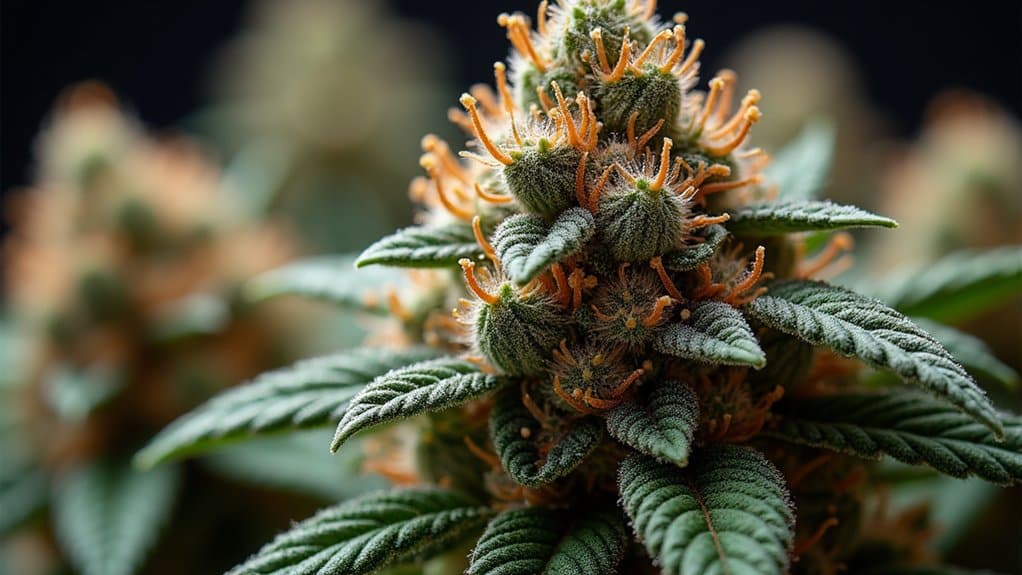
In cannabis culture, “zaza” refers to premium, high-potency flower typically boasting THC concentrations that top 30%. You’ll find this term distinguishes top-shelf, exotic genetics from standard-grade cannabis, signaling superior quality and potency reserved for connoisseurs.
The etymology traces from “exotic,” phonetically compressed to “za-tic,” then shortened to “za” and “zaza.” This linguistic evolution transformed street slang into a widely recognized cultural term by the late 2010s. Rappers like Future, Lil Durk, Chief Keef, Travis Scott, and Moneybagg Yo have popularized the term in their lyrics, helping cement zaza‘s place in mainstream cannabis vocabulary.
The etymology traces from “exotic,” phonetically compressed to “za-tic,” then shortened to “za” and finally “zaza,” a progression that helps with understanding zaza and weed differences in both language and culture. This linguistic evolution transformed street slang into a widely recognized cultural term by the late 2010s. Rappers such as Future, Lil Durk, Chief Keef, Travis Scott, and Moneybagg Yo popularized the term in their lyrics, helping cement zaza’s place in mainstream cannabis vocabulary.
When you encounter a zaza strain, expect bold terpene profiles, vibrant coloration, loud aromas, and pronounced effects. High-THC zaza can distort perception of time, sound, and sight, contributing to its reputation for intense experiences. The label functions more as a quality indicator than a botanical classification, representing the pinnacle of cannabis flower cultivation. Unlike specific genetic designations, “zaza” signals rare, high-grade material with exceptional bag appeal and potent cannabinoid content. While the term is mostly slang, there is an actual strain named ZaZa bred by South Bay Genetics, created by crossing Scott’s OG with Gas Station Bob.
Where Zaza Strain Genetics Actually Come From
When you trace the genetics of the original ZaZa strain, you’ll find South Bay Genetics in Southern California as the verified breeder, with Flora Nugs leading the project. The strain’s lineage combines Scott’s OG, a Triangle Kush and Rare Dankness #1 cross bred by Rare Dankness, with Gas Station Bob, an indica-dominant cultivar known for heavy resin production and gassy terpene profiles. This specific cross produces ZaZa’s 70% indica-dominant structure, though you’ll encounter conflicting reports citing Cookies N Cream or Blue Dream ancestry due to undocumented breeding variations. Rigorous backcrossing strategies have been employed to stabilize the ZaZa line, resulting in minimal genetic variance across phenotypes. The resulting flowers typically display dense, green buds with tightly stacked swollen calyxes and a thick coating of resin that reflects the strain’s premium genetics. It’s worth noting that while ZaZa has verified genetic origins, the term “Zaza” in broader cannabis culture is not a single genetic line but rather an adjective applied to any cannabis meeting elite quality standards.
South Bay Genetics Origins
Though many dispensaries loosely apply the “zaza” label to any premium flower, South Bay Genetics actually developed a specific strain called ZaZa with documented parentage. This California-based breeder created the real zaza strain by crossing Scott’s OG with Gas Station Bob, establishing verifiable genetic lineage rather than marketing hype.
You’ll find South Bay Genetics operates as a small-batch operation specializing in indica-dominant hybrids with West Coast genetics. Their exotic zaza strain inherits distinct characteristics from its parentage, Gas Station Bob contributes dense bud structure, heavy resin production, and that signature gassy terpene profile. This approach mirrors the work of Californian pioneers who first crossed sativas with fast-flowering indica strains to combine desirable qualities in new hybrids.
The zaza strain reflects South Bay’s breeding philosophy: merging classic OG heritage with modern cultivation techniques. Their founder began serious cultivation in 2009, building on legendary genetics to develop award-winning cultivars with THC ranges typically between 18-22%. The strain’s genetic stability allows for predictable performance across varied growing environments, making it appealing to both commercial cultivators and home growers. South Bay Genetics has built a reputable pedigree in the cannabis community, contributing to numerous award-winning strains beyond just the ZaZa line.
Parent Strain Lineage Breakdown
The ZaZa strain traces its verified genetics to two parent cultivars: Scott’s OG and Gas Station Bob. Scott’s OG descends from the OG Kush family, contributing ZaZa’s gassy, pungent terpene profile and hard-hitting sedative effects. Gas Station Bob delivers dense bud structure with swollen calyxes and exceptional resin production.
| Parent Strain | Key Genetic Contributions |
|---|---|
| Scott’s OG | Earthy aroma, potent indica effects |
| Gas Station Bob | Dense structure, high trichome yield |
| Combined Result | 70% indica-dominant hybrid |
| THC Range | 18-24% potency |
You’ll find both parents pass indica-dominant traits to ZaZa, creating its characteristic relaxing stone. South Bay Genetics, Gastown Genetics, and Dying Breed Seeds have all worked with these genetics to stabilize the lineage. The resulting buds display deep green hues accented by vibrant orange pistils and a shimmering coat of trichomes. This strain quickly gained popularity in California for delivering chill, easy-going effects that provide relaxation without overwhelming sedation.
Scott’s OG X Gas Station Bob: the Primary Zaza Cross
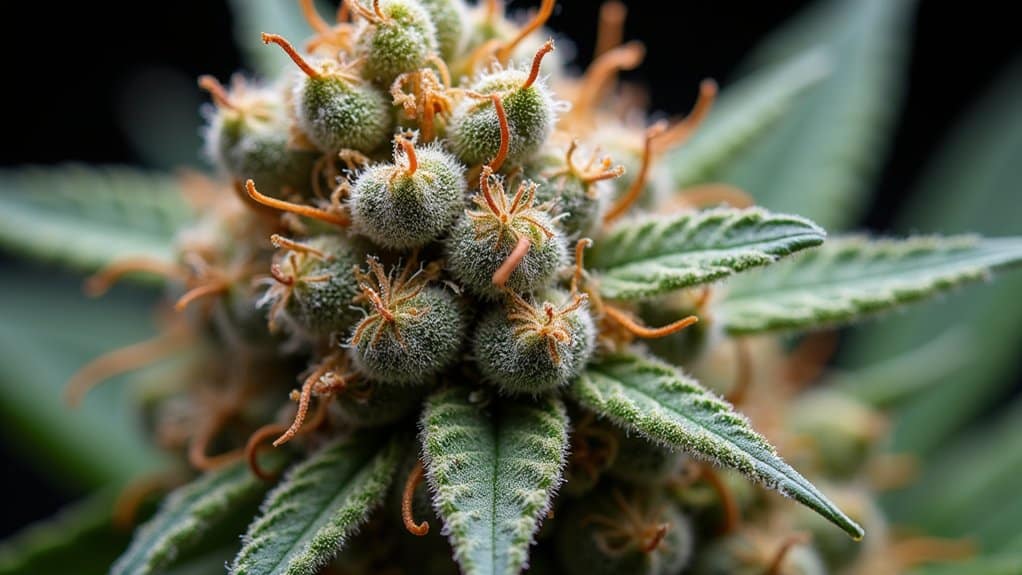
Scott’s OG brings Triangle Kush and Rare Dankness #1 genetics to the cross, contributing its indica-dominant structure and 25-29% THC potency, while Gas Station Bob adds complementary traits from South Bay Genetics breeding programs. When you combine these parent strains, you’re working with a hybrid that balances Scott’s OG’s sedative, couch-lock effects against Gas Station Bob’s distinct terpene contributions. Scott’s OG itself delivers a pungent lemon and kush scent profile that carries through to its offspring, with lime-green buds covered in thick white trichomes that signal its potency. The resulting cross exhibits the dense, trichome-coated buds characteristic of its OG lineage alongside the hybrid vigor that makes it a foundational zaza variety. This genetic foundation proves well-suited for indoor and outdoor growing, demonstrating robust resilience that appeals to cultivators seeking consistent results.
Parent Strain Genetics
When breeders cross Scott’s OG with Gas Station Bob, they create what many collectors consider the foundational Zaza genetic profile. However, you should approach this claim with caution. Scott’s OG descends from Triangle Kush and Rare Dankness #1, but documented evidence linking Gas Station Bob to a primary zaza og strain cross remains unverified in current botanical records. This lineage produces an indica-commanding high that leaves users locked into the couch, unable to move. The Scott’s OG parent is known for buds covered in thick crystal trichomes, signaling the intense effects that define quality zaza genetics.
The term “zaza” functions more as a quality descriptor than a precise genetic classification. You’ll find strains labeled zaza originating from Runtz, Kush, and Cookies lineages rather than one consistent parent combination. This informal labeling means the genetics behind any zaza og strain can vary considerably between growers and markets. Before accepting specific lineage claims, you should verify sources through established seed banks or genetic testing databases.
South Bay Genetics Origins
Based in Southern California’s South Bay region, South Bay Genetics has established itself as a craft breeding operation dedicated to small-batch cultivar development. Founded by Flora Nugs, who traces her cannabis genetics background to Seattle where her parents cultivated at home, the operation merges historical lineages with modern breeding techniques.
Their primary zaza cross pairs Scott’s OG with Gas Station Bob, creating hybrid strains that build on classic indica and sativa foundations. You’ll find this experimental approach reflects South Bay Genetics’ commitment to preserving genetic diversity while developing unique trait combinations. The operation has documented 116 strains, utilizing advanced tools like microsatellite mapping to achieve less than 5% variance in THC content. This technical precision sets industry standards for consistency in indica-dominant hybrid strains.
Hybrid Balance Traits
South Bay Genetics’ breeding program centers on a specific cross that exemplifies their approach to zaza development: Scott’s OG paired with Gas Station Bob. This zaza hybrid combines Scott’s OG’s documented potency, THC levels reaching 29%, with Gas Station Bob’s presumed vigor and fuel-forward terpene expression.
You’ll notice this cross produces distinct indica-dominant effects:
- Heavy body sedation that leads to couch-lock and deep physical relaxation
- Euphoric mood elevation balanced against pronounced calming properties
- Extended duration effects suited for evening therapeutic use
The resulting zaza hybrid targets stress, anxiety, insomnia, and chronic pain relief. You should approach this cross cautiously if you’re inexperienced, excessive consumption risks paranoia, dizziness, and prolonged grogginess. The breeding specifically emphasizes enhanced resin production and concentrated cannabinoid content.
Cookies N Cream, Stardawg, and Other Claimed Parents
Two parent strains define Cookies and Cream‘s genetic foundation: Girl Scout Cookies and Starfighter, crossed by Exotic Genetix to produce this balanced hybrid. You’ll find Girl Scout Cookies contributes its signature sweet, baked-goods flavor profile and Cannabis Cup-winning genetics, while Starfighter delivers pure indica traits with fruity aromatics and calming physical effects.
This cookies and cream lineage traces through OG Kush, Tahoe Kush, Durban Poison, and Alien OG, creating complex terpene expression featuring caryophyllene, limonene, and humulene. The strain earned 1st Place Best Hybrid at Denver’s 2014 Cannabis Cup, cementing its status as exotic weed worth seeking.
You’re looking at THC levels reaching the mid-20% range with 50/50 hybrid balance. The genetic framework has spawned over 170 direct descendants in breeding programs worldwide.
How to Spot Real Zaza by Appearance and Smell
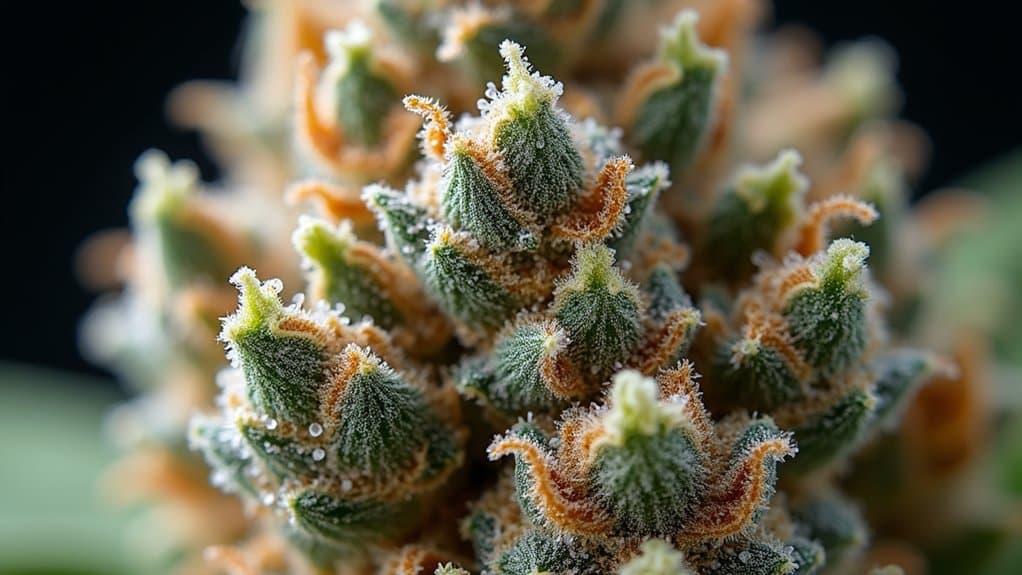
Authentic zaza strain varieties display unmistakable visual markers that separate them from standard cannabis varieties. You’ll notice dense, rock-hard clusters reaching 2-3 inches in diameter with deep green coloration interspersed with purple and orange hues. The buds exhibit a crystalline trichome coating that signals high potency and quality genetics.
Authentic zaza strain varieties display unmistakable visual markers that separate them from standard cannabis offerings, which is central to how to identify zaza weed accurately. You’ll notice dense, rock-hard clusters reaching roughly two to three inches in diameter, with deep green coloration interspersed with purple and orange hues. The buds also exhibit a crystalline trichome coating that signals high potency and quality genetics.
True zaza stands apart with rock-hard, frosty buds dripping in trichomes and painted in deep purples and fiery oranges.
When examining a zaza strain, look for these identifying characteristics:
- Abundant frosty trichomes creating an “iced out” appearance across the entire bud surface
- Long, fiery red or orange pistils contrasting against dark green or purple flower coloration
- Pine-tree morphology with tightly stacked, swollen calyxes difficult to break apart by hand
The aroma profile combines earthy, gassy notes with fruity undertones like grape or citrus, detectable from significant distance.
Effects You Can Expect From Zaza Strains
Beyond visual and olfactory identification, understanding how zaza strains affect your body and mind helps you select the right genetics for your needs. The zaza kush strain typically delivers a biphasic experience: initial euphoria and mental stimulation give way to profound physical sedation. You’ll notice creeper effects that intensify gradually rather than hitting immediately.
| Effect Phase | What You’ll Experience |
|---|---|
| Initial (0-30 min) | Euphoria, mental clarity, creative uplift |
| Secondary (30-90 min) | Body-melting relaxation, couch-lock onset |
| Extended (90+ min) | Deep sedation, sleepy stone, potential immobilization |
Therapeutically, these genetics address insomnia, chronic pain, and appetite loss. Caryophyllene and myrcene terpenes contribute anti-inflammatory and analgesic properties. Novice users should approach cautiously, high-THC profiles increase anxiety risk.
THC Levels and Terpenes in Authentic Zaza
Lab-tested Zaza samples consistently show THC levels between 19% and 30%, with authentic batches typically exceeding the 20% threshold that distinguishes premium genetics from standard offerings. CBD content remains minimal, usually below 1%, creating a THC-dominant cannabinoid profile that drives the strain’s potent psychoactive effects.
Lab-tested Zaza samples consistently show THC levels between 19% and 30%, with authentic batches typically exceeding the 20% threshold that distinguishes premium genetics from standard offerings, a range that defines zaza weed potency and effects. CBD content remains minimal, usually below 1%, creating a THC-dominant cannabinoid profile that drives the strain’s potent psychoactive impact.
The terpene composition of any zaza strain defines its aromatic signature. Authentic samples contain total terpene concentrations exceeding 2-3%, featuring:
- Myrcene, delivers earthy, herbal foundation notes
- Caryophyllene, contributes spicy, peppery undertones
- Limonene, provides citrus brightness and sour lemon accents
You’ll recognize genuine zaza strain genetics through dense trichome coverage and Certificate of Analysis verification. These lab reports confirm cannabinoid percentages and terpene richness, ensuring you’re accessing legitimate premium flower.
How South Bay Genetics Developed the Zaza Strain
While many cannabis labels emerge from marketing trends rather than deliberate cultivation, South Bay Genetics developed ZaZa through systematic breeding that crossed Scott’s OG with Gas Station Bob to achieve a balanced hybrid profile. This zaza strain combines indica-dominant genetics from Scott’s OG with Gas Station Bob’s dense bud structure and gassy terpene expression.
You’ll find ancestry tracing back to Cookies N Cream and Stardawg, which contribute creamy sweetness and spicy uplift respectively. South Bay Genetics employed rigorous backcrossing strategies to stabilize the line, ensuring uniform seeds with predictable yields. Genetic testing confirmed the zaza strain maintains less than 7% variance in cannabinoid potency across controlled harvests.
THC levels consistently range from 18% to 24%, with data spanning three growing seasons demonstrating robustness across variable climates.
Why Real Zaza Remains Hard to Find
South Bay Genetics’ rigorous breeding protocols established a genetically stable Zaza line, yet consumers struggle to find authentic products in today’s fragmented market.
When you’re searching for the zaza weed strain, you’ll encounter three primary barriers:
- Market scarcity: Premium zaza strain names command $60+ per eighth, with ounces reaching $600 in limited-supply regions
- Counterfeit proliferation: Street vendors frequently mislabel average cannabis as zaza to justify inflated pricing
- Verification gaps: Legitimate products require third-party lab results confirming cannabinoid percentages and contaminant-free status, yet many vendors omit this documentation
Understanding what strain is zaza becomes complicated when the term functions as quality slang rather than botanical classification. You’ll need to verify dense bud structure, heavy trichome coverage, and gassy terpene profiles to distinguish authentic genetics from imposters.
Frequently Asked Questions
Can You Grow Zaza Strains Outdoors in Cold Climates?
You shouldn’t grow zaza strains outdoors in cold climates. These genetics typically derive from Runtz, Kush, or Cookies lineages that thrive in warm, sunny environments with consistent temperatures. Cold conditions stress plants, reducing yields below their 15-20 oz/plant potential. Instead, you’ll want cold-hardy alternatives like Auto Mazar, Frisian Dew, or Pakistan Chitral Kush, strains specifically bred for temperature resilience. Zaza varieties require warmth and humidity that short, cold growing seasons simply can’t provide.
What Are the Common Negative Side Effects of Smoking Zaza?
You’ll commonly experience dry mouth, dry eyes, and red eyes when smoking zaza strains. You may notice heightened heart rate, dizziness, and headaches, especially with higher doses. Anxiety and paranoia can affect you if you’ve got low tolerance or underlying mental health conditions. You should watch for creeper effects, as THC potency builds unexpectedly. Prolonged use can lead to tolerance development and potential cannabis use disorder.
How Long Does Zaza Typically Take to Flower Indoors?
Zaza strains typically flower indoors within 8-9 weeks, though you’ll find some phenotypes finishing a few days earlier or extending to 10 weeks depending on your growing conditions. You’ll want to monitor trichome development and pistil coloration to determine peak harvest timing. Maintaining consistent temperature, humidity, and light exposure throughout flowering helps you achieve predictable timelines and ideal THC concentrations ranging from 19-23%.
Is Zaza Suitable for Beginner Cannabis Consumers?
You shouldn’t start with zaza if you’re new to cannabis. These strains typically contain 19-30% THC, delivering fast-acting, intense euphoria and heavy sedation that can overwhelm inexperienced users. The creeping onset makes dosing particularly tricky, you’ll feel effects build rapidly after initial consumption. If you’re determined to try zaza genetics, start with minimal doses and reserve consumption for evenings when you won’t need alertness or mobility.
What Makes Zaza Different From Other Exotic Strain Labels Like Runtz?
Zaza distinguishes itself from Runtz through its specific genetic lineage, you’re looking at a cross between Scott’s OG and Gas Station Bob developed by South Bay Genetics, rather than Runtz’s Zkittlez and Gelato parentage. While both carry “exotic” status, Zaza’s 70% indica-dominance and distinctive gassy, floral terpene profile from caryophyllene and linalool differ noticeably from Runtz’s sweeter, candy-forward characteristics derived from its fruity ancestry.