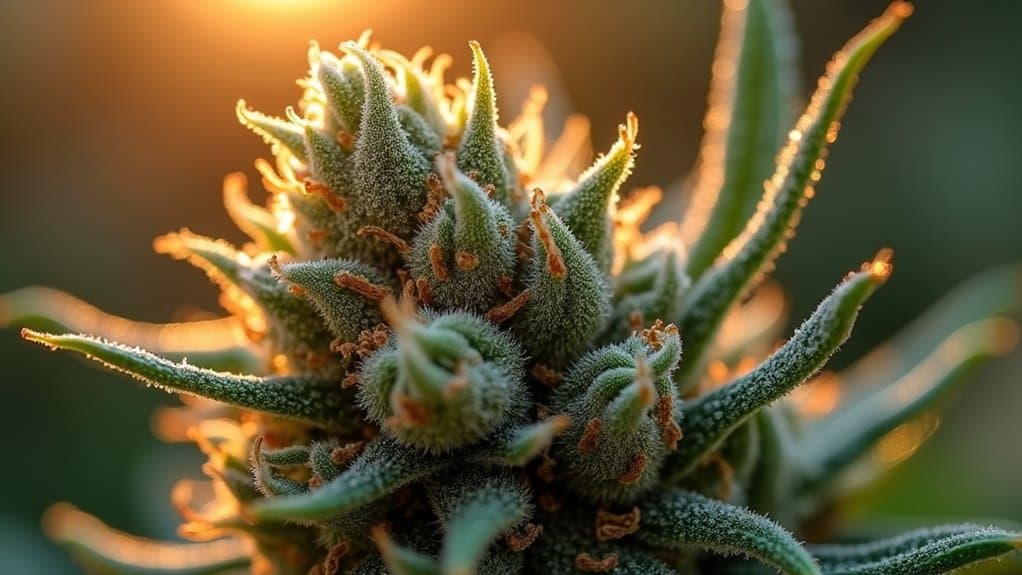




True zaza weed hits your senses before you even touch it, you’ll spot dense, rock-hard nugs blanketed in glistening trichomes with deep purple hues and fiery orange pistils threading throughout. The aroma announces itself with pungent gasoline undertones layered beneath sweet candy and citrus brightness. When you smoke it, expect sharp sour lemon on the inhale fading into earthy, peppery diesel with a lingering grape finish. Below, you’ll discover exactly what separates authentic zaza from imposters.
What Makes Zaza Different From Regular Weed?
When you first encounter true zaza, you’ll notice it’s not just another pretty bud on the shelf. This exotic flower stands apart through its rare boutique genetic lines, bred specifically for traits you won’t find in mass-market strains.
When you first encounter true zaza, you’ll notice it’s not just another pretty bud on the shelf. This exotic flower stands apart through its rare boutique genetic lines, a distinction often seen across popular zaza strains in cultivation that are bred specifically for traits you won’t find in mass-market varieties.
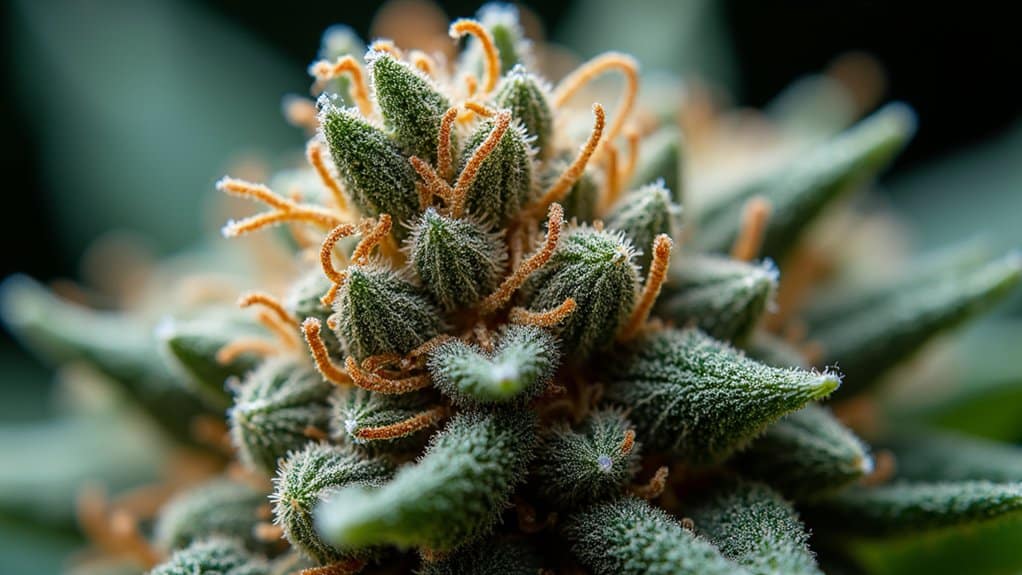
What distinguishes zaza from regular cannabis starts with its cannabis bud structure, dense, compact formations covered in abundant trichomes that signal exceptional resin production. You’re looking at THC concentrations reaching 18-30%, vastly outpacing average strains. The buds can be so rock hard and sticky that they become difficult to break apart without proper tools. The visual appeal is enhanced by thin light orange pistils weaving through the deep green and purple buds.
The terpenes tell the real story. Zaza’s complex profile of myrcene, caryophyllene, limonene, and linalool creates that unmistakable “loud” aroma experienced connoisseurs recognize instantly. While standard weed offers predictable characteristics, zaza delivers genetic stability through rigorous backcrossing, ensuring less than 7% variance in potency across harvests. Beyond potency, zaza is also prized for delivering a smooth smoke that enhances both enjoyment and aroma for those seeking a gentler inhalation experience.
Why Real Zaza Buds Feel Like Dense Little Rocks
When you pick up authentic zaza, you’ll immediately notice the rock-hard density that distinguishes it from inferior flower, these buds feel like compact little stones because of their tightly stacked calyx structure. Each swollen calyx presses firmly against the next, creating that signature chunky, pine-tree formation that experienced connoisseurs recognize instantly. This dense architecture isn’t accidental; it’s the result of premium genetics and meticulous cultivation that prioritizes structural integrity alongside potency. The buds are well-formed and can reach up to 2-3 inches in diameter, showcasing the impressive size that quality zaza achieves under optimal growing conditions. Adding to the visual appeal, delicate orange pistils weave throughout these dense nugs, providing striking contrast against the tightly packed structure. The exceptional density also creates a velvety texture across the bud surface, a direct result of the strain’s remarkably high resin production.
Tight Calyx Stack Structure
Have you ever wondered why premium zaza buds feel like dense little rocks when you roll them between your fingers? That satisfying weight comes from tight calyx stacking, a structural hallmark of authentic zaza bud quality.
Each calyx spirals around the developing flower, creating compressed layers that eliminate air pockets. In strains like Grape Zaza and Blueberry Zaza, this stacking accelerates during weeks five through seven of flowering, producing those coveted conical colas with minimal visible stem.
You’ll notice true zaza bud exhibits short internodes that concentrate mass in the upper canopy. This architecture creates the “golf ball” appearance prized by connoisseurs. The high calyx-to-leaf ratio means you’re handling more flower and less trim material, a telltale sign you’ve found genuine top-shelf cannabis. Well-grown za also displays a glassy “frost” from intact resin heads that blankets these tightly stacked calyxes. These bulbous trichome heads typically appear milky around week eight, signaling peak ripeness and maximum resin development. Indoor-grown examples showcase this tight calyx structure best, where environmental precision amplifies both bag appeal and potency beyond what outdoor cultivation typically achieves.
Rock-Hard Bud Density
Beyond tight calyx stacking lies the ultimate tactile test of zaza authenticity: rock-hard bud density. When you squeeze a genuine sticky zaza nug between your fingers, you’ll notice minimal give. These buds resist compression like small stones, maintaining their structural integrity under pressure.
This density stems from excellent growing conditions and proper curing techniques. You’re feeling the result of tightly packed trichome-laden calyxes that developed under ideal light intensity and nutrient availability.
Lesser-grade cannabis often feels airy or spongy, crumbling easily when handled. True zaza maintains that satisfying heft that experienced connoisseurs recognize instantly. The weight-to-size ratio tells you everything about cultivation quality.
When breaking apart these dense nugs, you’ll expend real effort. That resistance confirms you’re holding premium flower worthy of the zaza distinction.
Chunky Pine-Tree Formation
Genuine zaza reveals its pedigree through a distinctive chunky, pine-tree architecture that sets it apart from ordinary flower. When examining what does zaza look like, you’ll notice elongated, dense formations with tightly stacked swollen calyxes creating that signature chunky appearance. These cola clusters can reach 2-3 inches in diameter under ideal conditions.
What does zaza weed look like up close? You’re looking at rock-hard buds that resist manual separation due to their super sticky resin coating. This zaza flower showcases deep greens interspersed with purples and fiery red pistils, visual markers that distinguish premium genetics. The term zaza itself originates from the word exotic and gained popularity through mentions in hip-hop culture.
How does zaza look like compared to lower grades? The pine-tree structure facilitates superior trichome accumulation, while zaza flavors and what does zaza smell like directly correlate with this structural density. This indica-dominant hybrid carries 70% Indica genetics, which contributes to its characteristically dense, compact bud structure.
The Deep Purples and Fiery Oranges of True Zaza
When you first encounter true Zaza, the color palette commands your attention before any other sensory element. Deep purple hues dominate the bud structure, creating striking contrast against emerald-green undertones. You’ll notice golden amber tones weaving throughout, adding warmth and visual depth that separates premium flower from ordinary cannabis.
The fiery orange pistils threading through each nug provide dimensional contrast that experienced connoisseurs recognize instantly. These rust-colored hairs accent the purple and green pigmentation, creating an exotic appearance that defines authentic Zaza quality. White Zaza varieties showcase similar characteristics with lighter trichome coverage amplifying the color interplay.
You’re looking at nature’s artistry when proper genetics meet skilled cultivation. The vibrant coloration signals robust terpene development and careful curing practices that preserve these visual markers of excellence. The dense, triangle-shaped nugs characteristic of quality Zaza provide substantial weight and structure that feels satisfying in hand. This rare, premium marijuana commands higher prices at dispensaries due to its exceptional visual presentation and limited availability.
That Frosty Trichome Blanket Covering Every Bud
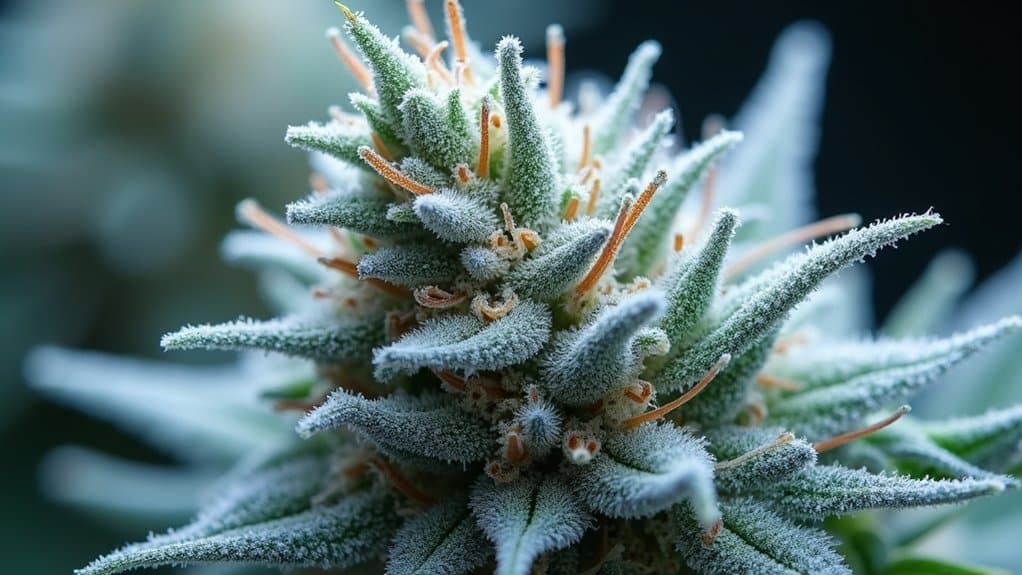
That crystalline frost coating authentic Zaza buds isn’t merely decorative, it’s the visible signature of exceptional cannabinoid and terpene concentration. When you examine premium blue zaza under proper lighting, you’ll notice abundant bulbous trichome heads creating that coveted glassy appearance with minimal visible stems.
Dense resin coverage signals careful cultivation and promises smooth, flavorful smoke. You’re looking for trichomes shifting from clear to cloudy, with 5, 20% amber depending on your desired effects. This maturity window typically falls around days 58, 66 of flowering.
The thick trichome blanket should coat every surface, calyxes, sugar leaves, even smaller popcorn nugs. Quality blue zaza displays a favorable bract-to-sugar-leaf ratio, yielding that connoisseur-grade appearance where crystalline structures glisten like morning frost on glass. The original Zaza strain produces buds that are small and grape-shaped, heavily covered in trichomes that reflect its premium South Bay Genetics lineage. These abundant trichomes are also rich in terpenes, contributing to the strain’s distinct aroma and potential health benefits.
Why Zaza Smells “Loud” From Across the Room
Beyond that visual frost lies Zaza’s most unmistakable calling card, its aggressive aromatic presence that announces itself the moment you crack a jar. You’ll recognize true zaza by how it dominates a room’s airspace without hesitation.
The terpene concentration in premium zaza creates what connoisseurs call “loud” weed, cannabis so pungent it’s impossible to conceal. Your nose detects these complex bouquets immediately:
- Gasoline undertones that hit sharp and chemical
- Sweet candy notes layered beneath the fuel
- Citrus brightness cutting through heavier scents
- Earthy pine grounding the overall profile
- Skunky musk that lingers on fabric and skin
You’re experiencing terpene-rich resin glands working overtime. This aromatic intensity separates zaza from mid-grade flower, where smell dissipates quickly and lacks dimensional complexity.
What Zaza Tastes Like When You Actually Smoke It
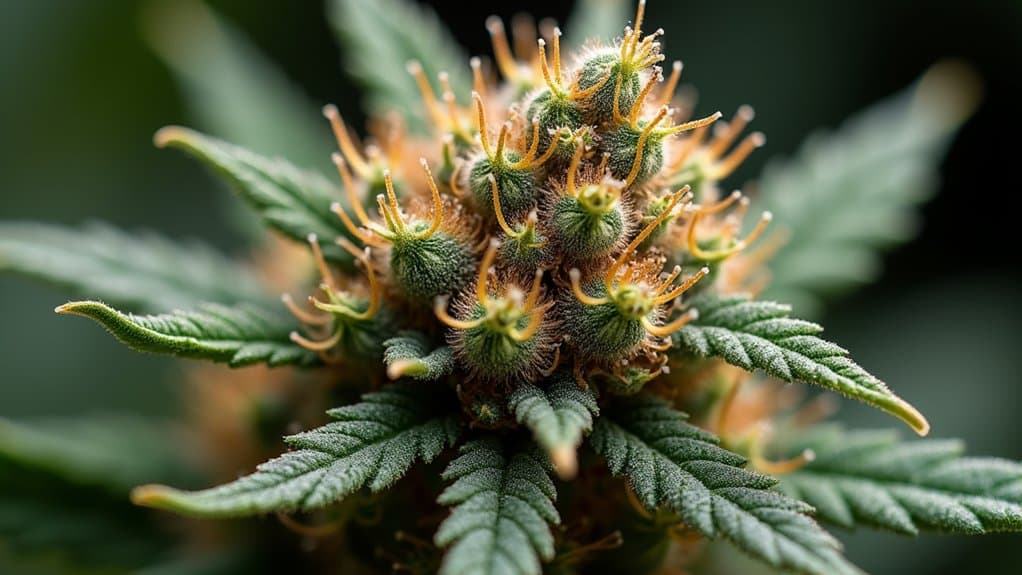
The moment zaza smoke hits your tongue, you’ll taste sour lemon as the dominant note, sharp, distinct, and unmistakably present. Earthy undertones anchor the experience while subtle citrus layers build complexity with each draw.
| Inhale Profile | Exhale Profile |
|---|---|
| Sour lemon, herbal foundation | Sweet undertones, candy finish |
| Smooth, unhurried development | Spicy diesel, peppery warmth |
| Citrus brightness | Nutty depth, floral notes |
On exhale, you’ll detect that signature sweetness balancing the initial tartness. Caryophyllene delivers peppery diesel qualities while limonene maintains citrus brightness throughout. The aftertaste lingers, sour lemon fading into piney freshness with gas and grape undertones. Unlike standard strains offering one-dimensional earthiness, zaza’s terpene-driven profile rewards discerning palates with genuinely layered flavor architecture. Popular zaza strains like Gelato, Runtz, and Lemon Haze each deliver their own variation on these complex and often fruity flavor profiles.
Visual Markers That Signal High-Potency Zaza
When you’re examining potential zaza, your eyes should immediately catch the dense trichome crystal coverage that blankets every surface like a glistening frost. You’ll notice vibrant color variations ranging from deep purples to bright neon greens, accented by fiery orange pistils that signal proper genetic expression. The rock-hard bud structure, compact, weighty, and resistant to crumbling, confirms you’re handling cannabis that’s been cultivated to its full potential.
Dense Trichome Crystal Coverage
Dense trichome crystal coverage serves as one of the most reliable visual indicators that you’re examining true zaza-quality cannabis. When you inspect premium buds, you’ll notice stalked capitate trichomes creating that characteristic frosty appearance that connoisseurs prize. These resinous structures house the concentrated cannabinoids and terpenes responsible for potent effects and complex flavor profiles.
You can assess quality through these key visual markers:
- Thick crystal coats covering the entire bud surface, signaling strong THC content
- Glossy, sticky appearance that distinguishes high-potency strains from inferior options
- Cloudy trichome heads indicating peak cannabinoid production and ideal harvest timing
- Dense clustering that creates a polished, crystallized aesthetic
- Generous frosting extending onto sugar leaves with vibrant color contrasts
A light squeeze should release aromatic notes while confirming high resin density.
Vibrant Color Variations
Beyond that crystalline frost, color tells its own story of potency and genetic excellence. You’ll notice authentic zaza displays a striking palette ranging from deep olive greens to rich purple undertones, approximately 65% of properly cultivated crops showcase this full spectrum. Those vibrant hues result from anthocyanin production during flowering, with cooler temperatures intensifying purple tones.
Watch for thin orange pistils weaving through each bud, signaling proper maturity and adding visual dimension. Rare phenotypes push further, presenting lavender-colored flowers or near-black expressions that indicate exceptional genetic lineage.
Some batches reveal golden nugget appearances, showcasing alternate phenotype potential. When you spot balanced green-purple distribution with grape-shaped formations and pronounced fuzzy texture, you’re examining top-shelf genetics. Color saturation directly correlates with cannabinoid concentration, vivid complexity marks premium-grade zaza.
Rock-Hard Bud Structure
Rock-hard bud structure serves as one of the most reliable visual markers separating genuine zaza from mid-grade flower. When you squeeze a quality nug between your fingers, you’ll notice immediate resistance, these buds don’t compress easily. This density stems from tight calyx stacking and ideal growing conditions that produce compact, chunky formations.
True connoisseurs recognize these structural indicators:
- Dense buds measuring 0.30, 0.45 g/cm³ that feel substantial in hand
- Tightly packed calyxes with minimal visible gaps between structures
- Pine-tree shaped colas reaching 2-3 inches in diameter
- Super sticky resin that makes hand-breaking difficult
- Minimal stem visibility with favorable bract-to-sugar-leaf ratios
You’re looking for flower that maintains structural integrity without crumbling, a hallmark of properly cultivated and cured zaza-grade cannabis.
The Exotic Genetics Behind Zaza’s Unique Traits
When you examine what separates zaza from standard cannabis, the genetics tell the story. ZaZa strain traces its lineage to South Bay Genetics, crossing Scott’s OG with Gas Station Bob to create an indica-dominant hybrid. This pairing wasn’t accidental, breeders selected parents hitting 26% THC and exceptional resin production to establish an elite potency baseline.
When you examine what separates zaza from standard cannabis, the genetics tell the story, clearly illustrating the differences between zaza and weed. The ZaZa strain traces its lineage to South Bay Genetics, crossing Scott’s OG with Gas Station Bob to create an indica-dominant hybrid. This pairing wasn’t accidental, breeders deliberately selected parent strains reaching around 26% THC and exhibiting exceptional resin production to establish an elite potency baseline.
You’ll notice the terpene architecture immediately. Myrcene delivers those earthy, herbaceous foundations while caryophyllene adds spicy, peppery complexity. Linalool rounds out the profile with delicate floral notes reminiscent of lavender. This trio creates zaza’s signature earthy-nutty-floral aroma that distinguishes it from one-dimensional strains.
The Gas Station Bob parentage passes down thick trichome coverage and oil-rich flowers, explaining why zaza buds appear drenched in frost. These genetics produce concentrate-worthy material with serious bag appeal.
How to Spot Fake Zaza vs. the Real Thing
Understanding zaza’s genetic blueprint gives you a foundation, but that knowledge means little if you can’t distinguish authentic flower from the flood of imposters saturating today’s market. You’ll need to engage your senses critically and examine every detail.
Key authentication markers:
- Dense, rock-hard buds with thick, uniform trichome coverage that sparkles, not sparse or dull resin glands
- Earthy, herbal base notes layered with sour lemon, diesel, or peppery spice, never hay-like or chemically harsh
- Professional, tamper-evident packaging with scannable COAs showing THC in the 18, 24% range
- Consistent strain naming from recognized breeders like South Bay Genetics
- Regulatory compliance icons and batch tracking data on all packaging
When you encounter rounded “35%+ THC” claims without verifiable lab reports, you’re likely facing marketing fiction, not genuine zaza.
When you encounter rounded “35%+ THC” claims without verifiable lab reports, you’re likely facing marketing fiction rather than genuine zaza, which is why understanding zaza weed potency and effects requires relying on tested data instead of exaggerated labels.
Frequently Asked Questions
How Long Does Zaza Weed Stay Fresh When Stored Properly?
When you store your Zaza properly in airtight, dark glass containers at cool temperatures with 55, 62% humidity, you’ll preserve its premium qualities for 6, 12 months. You’ll notice the complex terpene profile, those sweet, gassy, or citrus notes, begins fading first. Beyond a year, you’re losing that signature “loud” aroma and vibrant appearance that defines true Zaza, though cannabinoids remain relatively stable longer.
Can Zaza Weed Be Grown Outdoors or Only Indoors?
You can grow zaza genetics outdoors, but you’ll face significant challenges. These exotic strains thrive in controlled indoor environments where you can fine-tune temperature, humidity, and lighting to achieve those dense, trichome-laden buds with vibrant color expression. Outdoors, you’re battling humidity, pests, and weather unpredictability that can compromise the resinous, visually stunning quality that defines true zaza. For connoisseur-grade results, indoor cultivation remains your best bet.
What Is the Typical Price Range for Authentic Zaza Weed?
You’ll typically pay $50, $80 per eighth at legal dispensaries for authentic zaza, with ounces running $260, $400+ depending on your market. Street prices hover around $40, $60 per eighth for genuinely exotic flower. If you’re seeing “zaza” priced under $35, your palate should raise an eyebrow, that’s usually mid-shelf masquerading as top-tier. True exotic commands its premium through dense trichome coverage, complex terpene profiles, and verified potency testing.
Does Zaza Weed Produce Different Effects Than Regular Cannabis Strains?
Yes, zaza weed delivers noticeably more intense effects than standard strains. You’ll experience a powerful, lasting high thanks to THC levels ranging from 20-30%, significantly higher than average cannabis. The rich terpene profile works synergistically with these heightened cannabinoids, enhancing your overall experience beyond just potency. You’re getting a more refined, complex effect that discerning consumers recognize immediately. It’s why connoisseurs specifically seek out authentic zaza for its superior psychoactive experience.
Is Zaza a Specific Strain Name or a Quality Classification?
“Zaza” functions as both. You’ll find it as a specific hybrid strain, Scott’s OG crossed with Gas Station Bob, bred by South Bay Genetics, delivering earthy, nutty notes with sour lemon undertones. However, you’ll also encounter “zaza” used as slang for any premium, exotic-tier cannabis boasting exceptional trichome density and complex terpene profiles. Context determines meaning: check breeder information and lab results to distinguish the named cultivar from quality classification.