







In a MAT program, you’ll move through four evidence-based phases. First, you’ll complete intake and assessment, including a medical evaluation, behavioral health screening, and baseline labs. Next, you’ll begin induction and stabilization, where your provider finds a dose that manages withdrawal and cravings. Then you’ll enter ongoing maintenance, combining medical check-ins, counseling, and urine screening. MAT treats substance use disorder as a chronic, manageable condition. Here’s what each phase involves.
Key Takeaways
- Intake begins with a phone, online, or in-person contact, followed by assessment, paperwork, medical evaluation, and baseline labs.
- Induction and stabilization start medication to manage withdrawal and cravings while finding an effective, stabilizing dose.
- Ongoing maintenance combines medical check-ins, counseling, case management, and urine screening to sustain long-term recovery.
- Weekly treatment hours typically decrease as clinical stability and recovery benchmarks are demonstrated over time.
- MAT has no fixed end date and may continue for months or years across outpatient or inpatient settings.
What a MAT program is

A MAT (Medication-Assisted Treatment) program is a structured, evidence-based approach that combines FDA-approved medications with behavioral health support and case management to treat substance use disorders. The program addresses your condition medically and behaviorally, using medications to stabilize your physiology while counseling and coordinated care support your recovery goals. You’ll work with a prescribing provider who meets federal MAT requirements, along with counselors or substance use disorder case managers. Treatment integrates clinical assessment, medication management, and behavioral health services within one care system. Your program monitors progress through regular check-ins, urine screening, and treatment plan adjustments. As you achieve stability, weekly treatment hours may decrease. This model treats substance use disorder as a chronic, manageable condition requiring ongoing, individualized care. Medication assisted treatment can help reduce cravings while supporting individuals in developing healthier coping strategies. As part of a comprehensive recovery program, this approach can contribute to more effective and sustainable addiction treatment.
The intake and assessment
The intake and assessment process starts with a first contact, a phone call, online request, or in-person visit, that determines your readiness for treatment. Once readiness is confirmed, you’ll typically get an appointment within 24, 48 hours. Your first visit runs longer than routine follow-ups because your medical history, substance use patterns, and treatment goals must be reviewed. You’ll complete program forms, a medication treatment agreement, release-of-information, and consent documents, while staff verify your insurance. A medical evaluation, behavioral health screening, and baseline labs establish whether MAT fits your needs.
| Phase | What You Do | What Staff Do |
|---|---|---|
| Registration | Complete forms | Verify insurance |
| Clinical | Share history | Assess with DSM-5 |
| Testing | Provide samples | Run labs, drug screen |
These steps support safe medication selection and identify issues needing follow-up.
Induction and stabilization
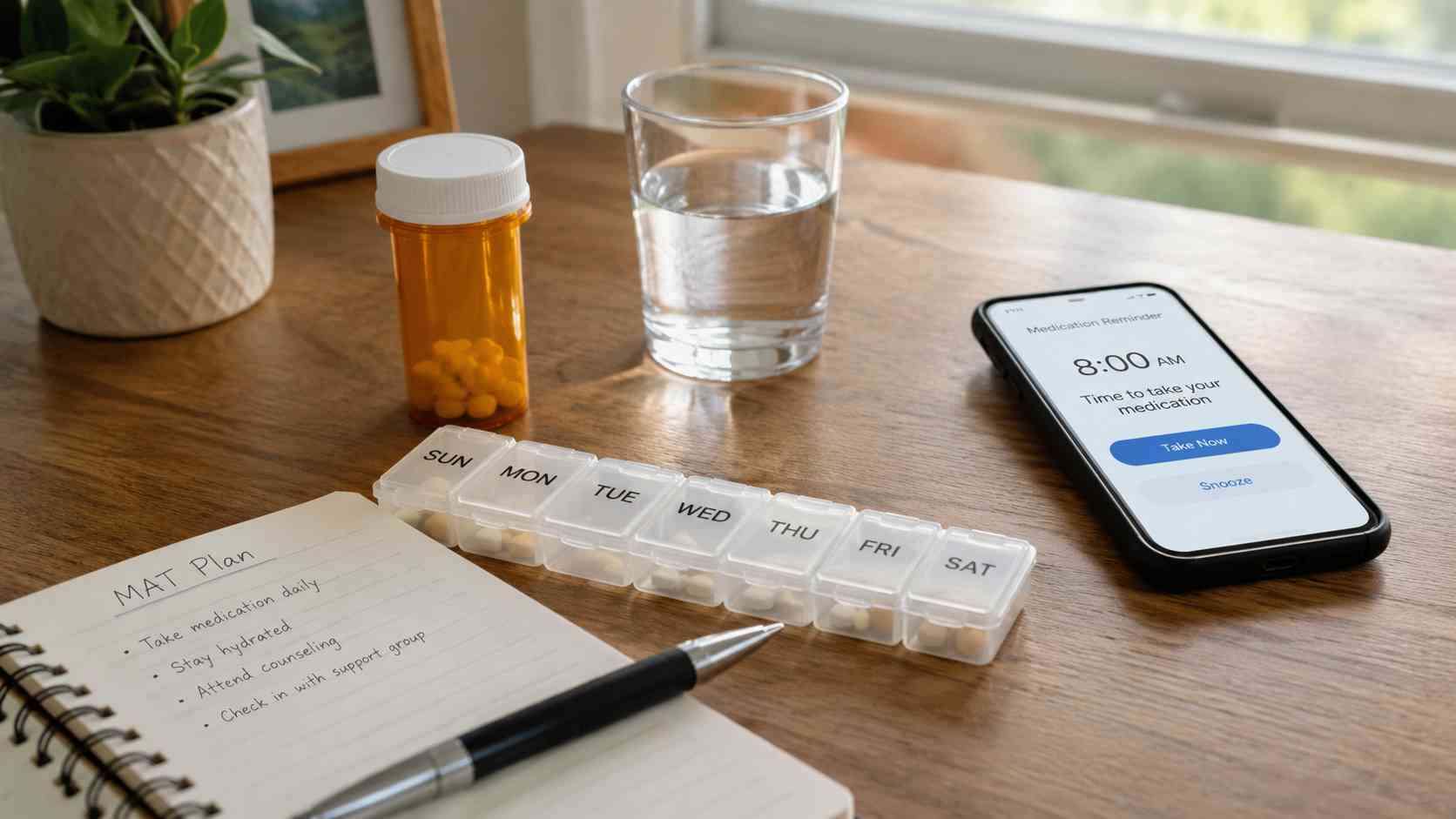
Induction and stabilization begin with medication initiation, often with a first stabilization dose provided during the intake or induction visit. Depending on clinic workflow and how you respond, this visit can last anywhere from about 90 minutes to four hours. Your provider will explain how the medication works, why it’s being prescribed, and what side effects or precautions you should watch for. To support safety, your first dose may be coordinated with a private room, an observation period, or a same-day medical review. This structure lets the clinical team monitor your response and adjust as needed. The goal during this phase is stabilization, finding the dose that manages withdrawal and cravings while establishing a foundation for the ongoing care that follows.
Ongoing maintenance
Ongoing maintenance builds on the stabilization you’ve achieved, shifting the focus from finding your dose to sustaining recovery over time. You’ll attend regular medical check-ins that monitor your response to medication, review side effects, and confirm continued clinical stability. These visits often include case management and either group or individual counseling to address behavioral health needs. You’ll complete repeated urine drug screening, which supports treatment adjustments and helps identify emerging concerns. As you meet recovery benchmarks, your weekly treatment hours may decrease, reflecting your progress. Coordination with primary care remains a frequent component, ensuring your broader health needs are addressed. Your treatment plan gets adjusted as needed, and relapse-prevention strategies, harm-reduction supports like naloxone education, and phased progression help you maintain long-term recovery. CBT vs DBT compares two therapeutic approaches that support mental health recovery in different ways. Understanding their distinct techniques can help individuals identify strategies that better align with their treatment needs, coping skills, and emotional well-being.
The counseling component

Counseling addresses the behavioral patterns and mental health needs that medication alone can’t resolve, while medication stabilizes the physiological side of recovery. During intake, you’ll complete a behavioral health assessment that screens for mental health conditions and substance use severity, often using structured tools like the DSM-5 opioid use disorder checklist. As you move into ongoing care, you’ll participate in group or individual counseling scheduled alongside regular medical check-ins and case management. Your weekly treatment hours may decrease as you meet clinical stability and recovery benchmarks. Counseling supports relapse prevention, coordinates with primary care, and integrates harm-reduction education such as naloxone training. This behavioral health component works with your medication to address the psychological and social factors that sustain long-term recovery. MAT opioid vs alcohol treatment may involve medication, counseling, and integrated care tailored to the substance use disorder. Combining these approaches can help individuals manage substance use and co-occurring mental health concerns while supporting long-term recovery.
How long MAT lasts
MAT doesn’t follow a fixed end date because recovery timelines vary from person to person. Your length of treatment depends on clinical stability, recovery benchmarks, and how well your medication and counseling plan supports your goals. Early in treatment, you’ll likely attend more frequent check-ins, but weekly treatment hours often decrease as you demonstrate stability. Your care team monitors your progress through regular medical visits, repeated urine screening, and ongoing adjustments to your treatment plan.
Some people continue MAT for months, others for years, and there’s no clinical requirement to stop by a set point. As you progress through treatment phases, your plan may shift toward relapse prevention, harm-reduction supports like naloxone education, and coordination with primary care to sustain long-term recovery. MAT for alcohol addiction can support individuals by reducing cravings and addressing their specific treatment needs. Combining medication with professional care and peer support can provide encouragement, accountability, and a more comprehensive approach to recovery.
Inpatient vs. outpatient MAT
MAT is offered in two settings, outpatient and inpatient. In outpatient care, you attend scheduled visits for assessment, medication, and counseling while living at home. This model supports intake steps like medical evaluation, urine drug screening, baseline labs, and induction without requiring an overnight stay. You’ll return for follow-up check-ins, repeated screening, and counseling as your treatment plan progresses. Methadone can help reduce opioid cravings and withdrawal symptoms as part of a comprehensive treatment plan. Combining methadone with counseling and ongoing support can promote recovery and improve overall well-being.
Inpatient care differs by providing structured, supervised treatment within a residential or hospital setting. You might start there if you need medically managed withdrawal, close observation during induction, or stabilization for co-occurring conditions. Once you’re stable, you’ll often move to outpatient care for long-term maintenance. Your provider determines the appropriate setting based on your medical history, substance use severity, and clinical needs.
From First Call to Lasting Recovery, We Walk It With You.
A MAT program isn’t just a prescription, it’s intake and assessment, medication paired with counseling, and support that carries through long after you stabilize. Simonds Recovery Centers in Granada Hills runs that full arc, starting with medication-assisted treatment, grounded in therapy that keeps it working, and beginning wherever you are, including medical detox if your body needs to clear first.
Call (833) 781-8338 now or verify your insurance. Confidential, seven days a week.
Frequently Asked Questions
Will MAT medication show up on employment drug tests?
It depends on the medication and the test. Standard employment panels generally don’t screen for buprenorphine or naltrexone, though methadone can show up, and expanded panels may test for more. If a legitimate prescription does register, documentation from your prescriber clarifies it, and under the ADA a lawful prescription is protected medical information. Talk with your provider about your specific medication and testing situation, and keep proof of your prescription on hand.
Can I travel or take vacations while in a MAT program?
Yes, with some planning. Coordinate with your provider before you go, since ongoing care includes regular check-ins, counseling, and periodic urine screening. Depending on your medication and how stable you are, you may need arrangements for dosing, refills, or a temporary transfer of care, and methadone in particular may require guest dosing at another clinic. Ask about scheduling early, and carry documentation of your prescription to avoid interruptions.
How much does MAT cost without insurance?
It varies widely by medication, program, and region, so the most reliable figure comes from asking the specific program about its self-pay rates. If you’re uninsured, intake teams often connect you with Medicaid enrollment support, sliding-scale fees, or other financial assistance, so cost alone doesn’t have to be a barrier to starting. Ask about the full fee structure, including medication, visits, and counseling, so there are no surprises.
Is MAT safe during pregnancy or breastfeeding?
Yes, when managed by your provider. Buprenorphine and methadone are commonly used during pregnancy for opioid use disorder, and intake typically includes pregnancy screening, with testing before your first dose to guide medication selection. Your provider explains how the medication works and monitors you throughout. Tell your care team if you’re pregnant or breastfeeding so they can coordinate your medical review, adjust your plan, and arrange appropriate follow-up.
Can I drive or operate machinery while taking MAT medication?
Usually yes, once you’re stabilized, but use caution early on. During induction, your provider will go over side effects like drowsiness or reduced alertness that can affect your ability to operate equipment safely. Until you know how the medication affects you, avoid high-risk tasks. Tell your prescriber about any sedation you notice, and don’t combine your medication with alcohol.