


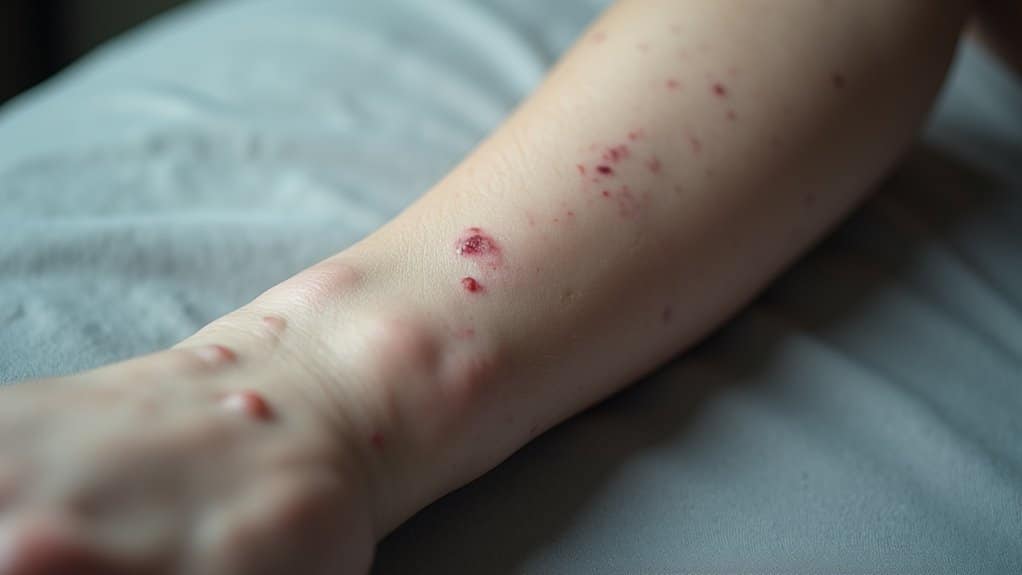




Track marks are the punctures, bruises, and scars that form when repeated injections injure your skin and the veins beneath it. Recent marks look like small scabs, redness, or swelling. Older ones leave scars or hardened, “ropey” veins. You’ll usually find them on the inner elbow, forearms, or hands. They can’t reveal which substance was injected, but they do signal risks like infection, abscess, and vein damage. Knowing the warning signs can help you decide what to do next.
Key Takeaways
- Track marks are scars from repeated injections, often forming along veins or at injection sites used again and again.
- Recent marks appear as small punctures, scabs, bruises, or redness, while healed marks look like small scars along veins.
- Track marks most commonly appear on the inner elbow, forearms, and hands, but can also occur on the neck, groin, feet, or toes.
- Track marks cannot reveal which substance was injected or how severe someone’s injection use is.
- Seek urgent medical care for fever, chills, pus, rapidly spreading redness, severe pain, or pulsating swelling, which may signal infection or abscess.
What are track marks
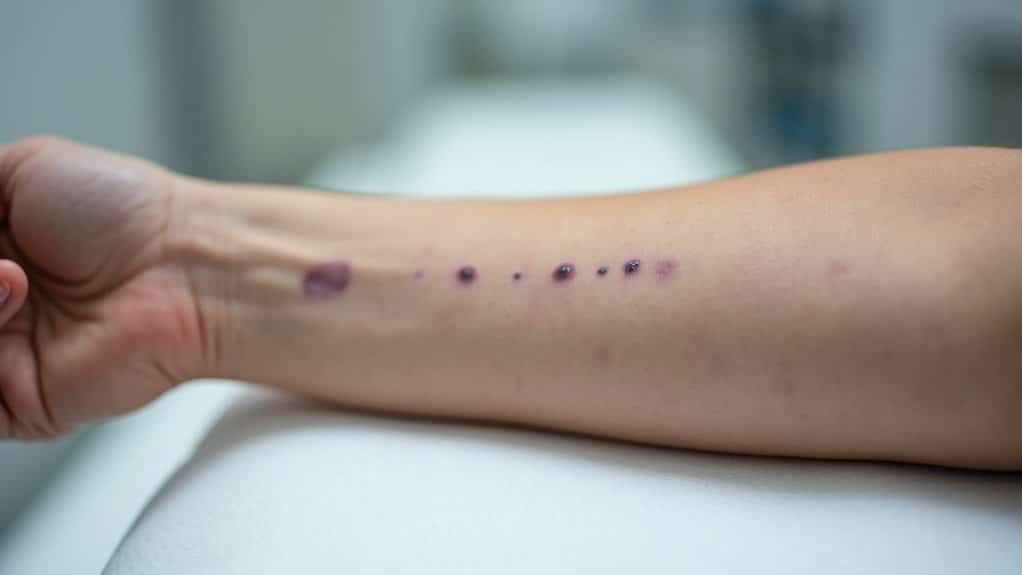
Track marks are scars that form from repeated injections, often along veins or at injection sites someone uses again and again. You might notice small punctures, scabs, bruises, or localized redness and swelling at recent sites. Healed marks often look like small scars, and repeated vein injury can leave veins feeling hardened or “ropey.” You’ll typically see them on the arms, but they can also appear on the hands, neck, groin, fingers, or toes. Bruising happens when blood leaks beneath the skin during an injection.
A mark alone doesn’t confirm someone’s history or identify a specific substance, and it can’t tell you whether an infection is present. Symptoms and a proper clinical evaluation tell you far more.
What track marks look like at different stages
Recent track marks look like small punctures, scabs, bruises, or localized redness and swelling, while healed marks appear as small scars along a vein or at a spot you’ve used repeatedly. Bruising happens when blood leaks beneath your skin during an injection. Track marks change as injection sites heal or sustain further injury. If you inject into the same vein over time, it can become hardened or “ropey” to the touch. Dull or reused needles cause more tissue trauma, so they can leave larger wounds and more noticeable scarring. Marks don’t appear only at the inner elbow; you may find them on your hands, neck, groin, fingers, or toes. A mark’s appearance alone can’t tell you whether infection is present, so watch closely for symptoms.
Where on the body track marks typically appear
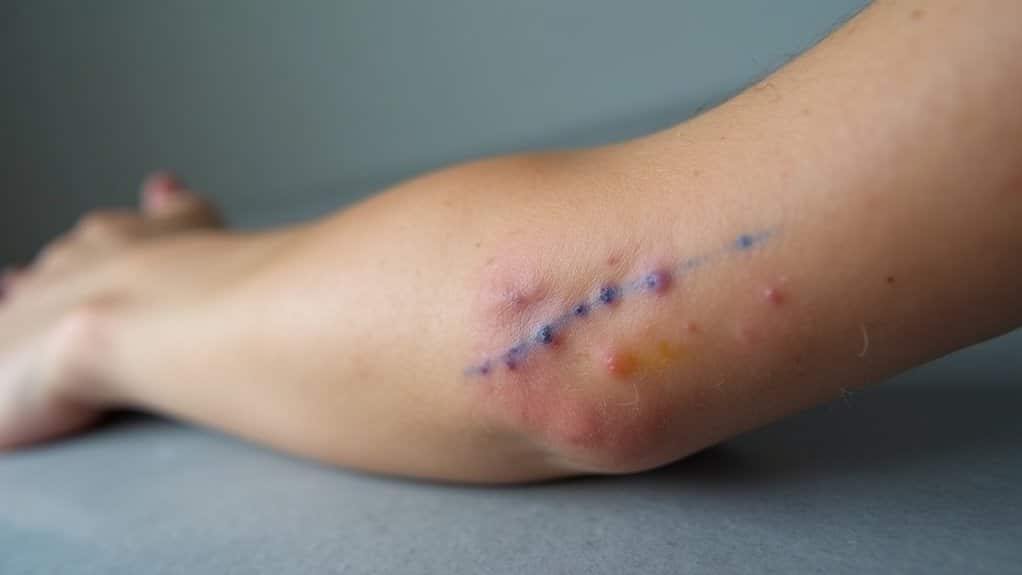
Track marks most commonly appear on the inner elbow, but they can also develop on the forearms, the backs of the hands, the fingers, the neck, the groin, the feet, and the toes. You shouldn’t assume marks appear only at the inner elbow.
Marks usually follow the path of a vein or cluster at a spot that’s been used repeatedly, so where they show up often reflects which veins have been accessed most.
If you notice marks in less visible areas, such as between fingers or toes, they may be easy to overlook entirely. Sites in the groin carry particular risk: redness, heat, pain, or pulsing swelling there needs urgent medical assessment. Keep in mind that a mark’s location alone doesn’t confirm someone’s history or identify a substance.
What track marks indicate about the type and severity of use
Track marks can’t tell you which substance someone has injected or how severe their use is. What you can see reflects injection practices and tissue injury, not a specific drug or diagnosis.
| What You Might See | What It Reflects |
|---|---|
| Small punctures, scabs, or bruises | Recent injections or blood leaking beneath skin |
| Hardened or “ropey” veins | Repeated injury to the same vein |
| Redness, warmth, swelling, or pus | Possible infection needing medical assessment |
Marks also vary with needle condition, site rotation, and equipment hygiene, so two people with similar habits can look very different. A visible mark doesn’t confirm infection either. Symptoms and clinical evaluation matter. If you notice spreading redness, fever, or chills, seek medical care rather than drawing conclusions from appearance.
What health risks track marks signal (infection, vein collapse, abscess)
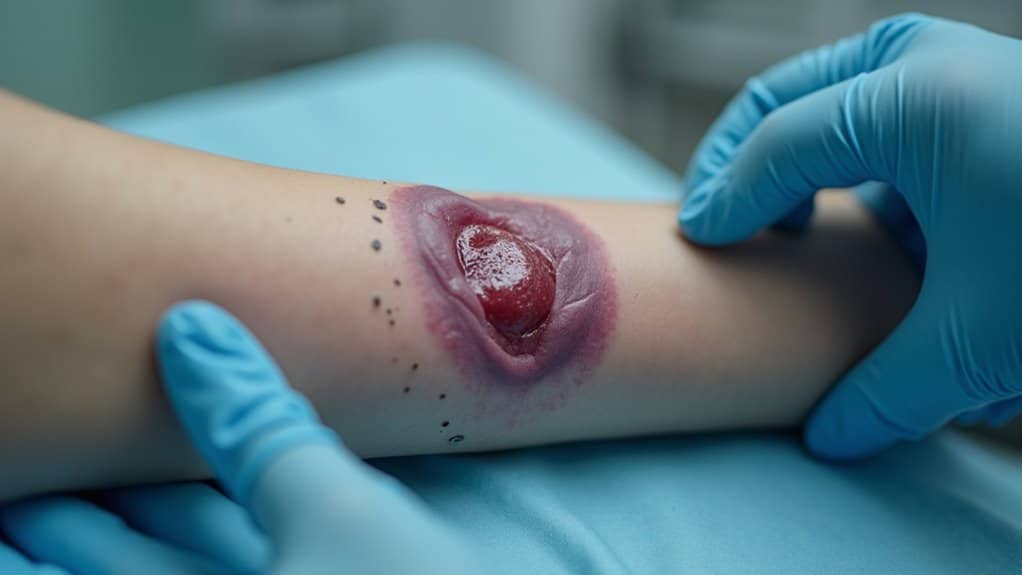
Track marks signal risks of infection, vein damage, and abscess, because each injection breaks the skin and injures the vein beneath it, turning injection sites into entry points for bacteria and sources of lasting tissue damage. Track marks themselves don’t confirm an infection, but they show where you’ve repeatedly injured tissue. Watch for these complications:
Every injection breaks skin and injures a vein, turning track marks into entry points for bacteria and lasting tissue damage.
- Infection: Contaminated equipment, drugs, or water can introduce microbes, causing cellulitis that may spread into your bloodstream.
- Vein damage: Reusing the same site, especially with dull needles, can scar veins and leave them hardened or “ropey.”
- Abscess: A painful, swollen pocket can form under your skin. Don’t cut, drain, or squeeze it.
Seek urgent care if you notice fever, chills, pus, rapidly spreading redness, severe pain, or a pulsing swelling. Sharing equipment exposes you to HIV and hepatitis C.
Why track marks are often a turning point for seeking help
Track marks are often a turning point because they make repeated injection visible, turning something largely private into clear evidence of ongoing tissue injury, and that change often prompts people to reconsider their health and options. Scars, bruises, or hardened veins show that your skin and veins are absorbing repeated damage, and new redness, swelling, or pain can signal infection that needs attention.
You don’t have to wait for a crisis to act. Syringe-service programs can check your wounds, provide sterile supplies, offer HIV and hepatitis C screening, and connect you with medical care or substance-use treatment. You can use these services together, on your own terms.
If you notice fever, chills, pus, or rapidly spreading redness, seek urgent care. These signs mean infection may have spread beyond the skin.
How Simonds Recovery Centers helps people who inject drugs
Simonds Recovery Centers helps people who inject drugs by treating substance use alongside the physical effects of injecting, and you don’t need to stop injecting before you reach out.
Medical care, recovery support, and harm reduction work best together, so your treatment can cover all three.
- Wound and vein concerns: You can discuss track marks, scarring, or painful sites and get referred for clinical assessment.
- Infection screening: Your care team can connect you with HIV and hepatitis C testing and follow-up care.
- Ongoing safety: You’ll learn how sterile supplies and syringe-service programs reduce injury and infection risks.
If you notice fever, chills, spreading redness, pus, or a pulsating swelling, seek emergency care first. Then contact Simonds so you can plan treatment that fits your needs.
Get Help Beyond the Marks
Track marks can be a sign of repeated injection use, but the bigger concern is the health risks and substance use behind them. Simonds Recovery provides opioid addiction treatment to help people move from ongoing drug use toward safer, sustained recovery.
Call (833) 781-8338 to discuss treatment options.
Frequently Asked Questions
Do Track Marks Ever Fade or Disappear Completely After Someone Stops Injecting?
Some injection-related marks can fade as punctures, bruises, and inflammation heal, while repeated injections can leave scars or changes in the veins that persist. How much a mark improves depends on factors such as the extent and duration of skin injury. New warmth, swelling, spreading redness, pus, severe pain, or fever can indicate an infection and should be evaluated promptly.
Can Medical or Cosmetic Treatments Reduce the Appearance of Old Track Mark Scars?
Some scars can be made less noticeable with treatment, although complete removal is uncommon. A dermatologist can determine the type of scar and may recommend options such as silicone products, laser treatment, microneedling, chemical peels, or injections for certain raised scars. Active wounds or infections should be evaluated and treated before cosmetic procedures are considered.
What Other Skin Conditions or Medical Procedures Can Look Like Track Marks?
Marks that resemble injection sites can have many causes. Repeated medical injections, IV access, blood draws, insect bites, folliculitis, eczema, bruising, and other skin conditions can produce punctures, discoloration, or scars. You cannot determine someone’s drug use from skin marks alone. Pain, swelling, warmth, drainage, or fever should be evaluated by a healthcare professional.
Is It Safe to Drain or Squeeze an Injection-Site Abscess at Home?
No. Cutting, squeezing, or attempting to drain an abscess yourself can worsen the infection or allow it to spread. A healthcare professional can determine whether drainage, antibiotics, or other treatment is needed. Seek prompt medical care for an enlarging abscess, spreading redness, severe pain, fever, chills, or other signs of systemic infection.
How Can I Talk to a Loved One About Track Marks I Noticed?
Choose a private moment and focus on concern rather than accusation. Remember that marks alone do not prove someone is injecting drugs, so ask open questions and give them an opportunity to explain. If injection drug use is confirmed, encourage medical care and addiction treatment without judgment. If they have an active wound, abscess, fever, or spreading redness, encourage prompt medical evaluation.