




Xylazine is a non-opioid veterinary sedative that’s infiltrated the illicit drug supply as a cheap bulking agent for fentanyl, earning the street name “tranq.” It depresses your central nervous system by activating alpha-2 adrenergic and kappa opioid receptors, causing prolonged sedation, respiratory depression, and dangerous drops in heart rate. Because it operates outside traditional opioid pathways, naloxone can’t reverse its effects. Understanding how tranq damages tissue, complicates overdoses, and interacts with fentanyl can help you recognize the dangers ahead.
What Is Xylazine and Why Is It Called “Tranq”?

Xylazine is a non-opioid sedative and central nervous system depressant that the FDA has approved exclusively for veterinary use. If you’re asking what xylazine is, it’s a tranquilizer that depresses brain activity, relaxes muscles, and slows heart rate and breathing in animals. It activates nervous system pathways distinct from opioids.
In illicit drug markets, the xylazine sedative drug goes by “tranq,” reflecting its tranquilizer properties. When dealers combine it with fentanyl, the resulting xylazine opioid mixture is called “tranq dope.” This combination extends opioid euphoria duration, making it appealing in illicit supply chains. You won’t always know when xylazine is present, since it’s frequently mixed into drugs without the user’s knowledge, greatly increasing overdose risk. Xylazine first emerged in Puerto Rico in the early 2000s before spreading across the mainland United States, with its detection doubling in 30 states between 2019 and 2022. Long-term use of xylazine can cause severe skin ulcers and abscesses that may lead to life-threatening sepsis.
Why Xylazine Is Showing Up in the Illicit Drug Supply
Because xylazine costs as little as $6, $20 per kilogram from online Chinese suppliers, traffickers can stretch fentanyl or heroin supplies by adding it as a bulking agent, boosting mixture weight and prolonging psychoactive effects without greatly raising production costs.
Xylazine’s rock-bottom price lets traffickers bulk up fentanyl supplies cheaply, extending highs while maximizing profit margins.
The veterinary sedative xylazine offers traffickers several strategic advantages, driving the xylazine drug crisis:
- Non-controlled status reduces law enforcement scrutiny at seizure points.
- Cheap online sourcing bypasses regulated trade channels entirely.
- Packaging mimics approved drugs, evading border identification.
- DEA data confirms xylazine-fentanyl mixtures seized across 48 of 50 states.
You should know that xylazine originated in northeastern heroin markets, spread through Puerto Rico, and then moved westward into fentanyl supply chains nationwide. Tianeptine misuse and mental health have become increasingly concerning topics in recent discussions about substance use.
How Tranq Affects Your Body and Brain

Understanding how cheaply and widely xylazine has infiltrated the drug supply matters, but knowing what it does once it enters your body is equally important. Xylazine depresses your central nervous system, triggering drowsiness, bradycardia, hypotension, and respiratory depression. It also acts as a kappa opioid receptor agonist, producing sedation that naloxone can’t reverse.
In your brain, xylazine dose-dependently decreases nucleus accumbens oxygenation. When combined with fentanyl, it eliminates the hyperoxic compensatory phase your brain relies on to recover oxygen levels. With heroin, it potentiates the initial oxygen drop and attenuates compensatory mechanisms.
Xylazine induces prolonged brain hypothermia through muscular atonia, reducing heat production. Effects persist eight hours or longer, and extreme sedation risks fatal respiratory arrest. Tianeptine sodium health effects can include improvements in mood and anxiety levels for some individuals.
The Skin Wounds and Tissue Damage Xylazine Causes
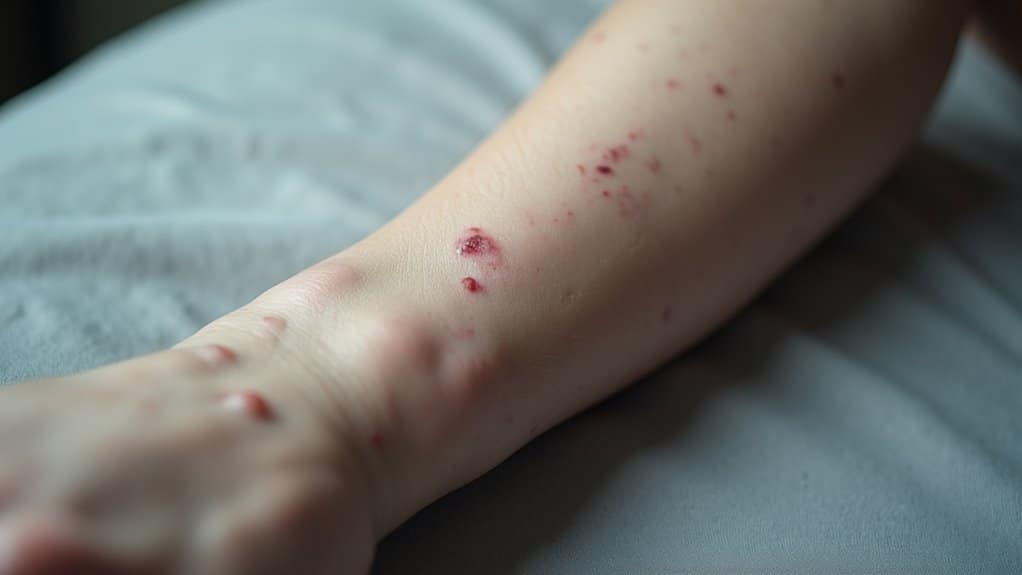
Xylazine triggers severe skin damage by activating peripheral alpha-2 adrenergic receptors, which constrict blood vessels and starve surrounding tissue of oxygen, a process that produces necrotic ulcers even at sites distant from injection. These wounds typically begin as small lesions with white or purple centers, then progress to deep ulcerations that expose underlying tendons or bone if left untreated. Without intervention, the cycle of ischemia and tissue death can advance to osteomyelitis and limb-threatening damage that ultimately requires amputation.
Severe Skin Ulcer Formation
When xylazine enters the body, it activates alpha-2 adrenergic receptors that trigger vasoconstriction, a narrowing of local blood vessels that sharply reduces blood flow to the skin. This decreased perfusion starves tissue of oxygen, producing ischemia that initiates necrosis. Repeated injections compound the damage by traumatizing already compromised tissue.
The resulting ulcers follow a distinct clinical pattern:
- They present as progressive, large, necrotic lesions with surrounding hyperpigmentation
- They develop spontaneously as de novo ulcers, even at sites distant from injection points
- They appear diffusely distributed across extremities, including forearms and knees
- They’re considered pathognomonic for xylazine use
Data from Puerto Rico shows 38.5% skin ulcer prevalence among xylazine users compared to 6.8% in non-users, confirming xylazine’s direct role in ulcer formation.
Necrosis Risking Amputation
Because xylazine-driven vasoconstriction doesn’t just damage the skin’s surface, the resulting necrosis can burrow through successive tissue layers in a staged progression that clinicians now classify into four distinct stages. Stage 1 affects skin and subcutaneous tissue, manageable with local wound care. Stage 2 extends into tendons and muscles, requiring debridement and reconstruction. Stage 3 reaches bone, demanding osseous debridement. Stage 4 compromises all extremity tissues, often necessitating amputation.
The data underscores this trajectory’s severity: Philadelphia documented a doubling of opioid-related amputations between 2019 and 2024. Critically, these necrotic wounds can develop at sites remote from your injection point, mimicking necrotizing fasciitis without systemic infection markers. Without acute intervention, you’re facing progressive tissue destruction that makes limb loss increasingly unavoidable.
Why Naloxone Alone Can’t Reverse a Xylazine Overdose

Although naloxone remains the frontline intervention for opioid overdoses, it can’t reverse the effects of xylazine because the two substances act on entirely different receptor systems. Naloxone targets opioid receptors exclusively, while xylazine operates as an alpha-2 adrenergic agonist, producing independent central nervous system depression. No FDA-approved reversal agent currently exists for xylazine. Nitazene opioids and public health have become increasingly concerning due to their potency and the risk of overdose.
When you’re responding to a suspected xylazine-involved overdose, follow these crucial steps:
- Administer naloxone to address potential opioid co-presence.
- Provide rescue breathing or CPR to counteract persistent respiratory depression.
- Call 911 immediately, as extended medical monitoring is essential.
- Position the person on their side and continuously monitor essential signs.
You should expect prolonged unconsciousness, up to 20 minutes post-naloxone, and potential relapse into critical respiratory failure despite initial improvement.
Why Xylazine Mixed With Fentanyl Is So Deadly
The combination of xylazine and fentanyl creates a uniquely dangerous pharmacological overlap: both substances independently suppress breathing, but they do so through entirely different mechanisms. Fentanyl binds opioid receptors to depress respiration, while xylazine acts as a non-opioid central nervous system depressant that compounds this effect through separate pathways. This dual suppression creates prolonged unconsciousness, xylazine’s respiratory depression alone can persist approximately 18 hours.
The DEA detected xylazine in 23% of seized fentanyl powder in 2022, spanning 48 states. You’re unlikely to know it’s present. Most fatalities involving both substances also contained cocaine, benzodiazepines, or alcohol, generating unpredictable polysubstance interactions that overwhelm emergency response protocols and render standard overdose reversal incomplete.
How to Tell If Someone Is Using Xylazine-Laced Drugs
You can identify potential xylazine exposure through three key categories of indicators: physical signs, severe skin wounds, and unusual sedation patterns. Physical signs include dangerously slowed breathing, low heart rate, cold and clammy skin, and discoloration of the lips and nails, symptoms consistent with central nervous system depression beyond typical opioid effects. Severe, non-healing skin ulcers at injection sites and prolonged unconsciousness that doesn’t respond to naloxone further distinguish xylazine-laced drug use from opioid use alone.
Physical Signs of Use
Recognizing xylazine’s physical signs of use starts with understanding how the drug acts as a potent central nervous system depressant. You’ll observe drowsiness, slowed breathing, decreased blood pressure, and lowered heart rate as primary indicators. Deep sedation typically lasts 4, 8 hours, with heavy nodding occurring within the first 20, 30 minutes.
Key physical signs you should monitor include:
- Prolonged immobility, sedation causes inability to reposition, increasing pressure ulcer risk.
- Dry mouth progressing to cardiovascular instability, initial hypertension and tachycardia shift to hypotension and bradycardia.
- Hyperglycemia, heightened blood glucose signals xylazine’s metabolic disruption.
- Loss of physical sensation and consciousness, CNS depression blocks protective reflexes, including airway maintenance via tongue relaxation.
These signs differentiate xylazine exposure from standard opioid intoxication alone.
Severe Skin Wounds
Beyond the systemic signs of CNS depression, xylazine produces a distinctive pattern of severe skin wounds that serves as one of the most visible indicators of exposure. These lesions typically begin as small superficial areas with a white or purple center and dark red fluid discharge, often over reddish-purple discolored tissue.
The underlying mechanism involves xylazine activating peripheral alpha-2 receptors, triggering vasoconstriction that starves tissue of oxygen. This ischemia, combined with direct local tissue toxicity resembling a chemical burn, drives progressive necrosis through skin, muscle, tendon, and bone. Wounds can develop at injection sites or anywhere on the body, regardless of the administration route.
Without early intervention, these wounds tunnel into surrounding tissues, forming thick eschar while progressing toward complications including bacteremia, sepsis, and limb amputation.
Unusual Sedation Patterns
Because xylazine acts on alpha-2 adrenergic receptors rather than opioid receptors, it produces sedation patterns that diverge sharply from those of fentanyl or heroin alone, and these differences serve as critical diagnostic cues.
You’ll notice xylazine-laced drug use through these distinguishing sedation markers:
- Prolonged unresponsiveness, blackouts lasting several hours exceed the typical opioid sedation duration.
- Naloxone-resistant sedation, consciousness doesn’t fully restore after naloxone administration, indicating a non-opioid sedative component.
- Hypothermia and profound muscle relaxation, body temperature drops alongside marked hypotonia, reflecting alpha-2 agonist activity.
- Cardiovascular depression concurrent with sedation, bradycardia and hypotension accompany unresponsiveness, producing cold, clammy skin.
If you observe someone nodding in and out of consciousness with shallow respiration persisting beyond expected opioid timelines, suspect xylazine contamination and seek emergency medical intervention immediately.
What to Do If You Suspect a Xylazine-Related Overdose
If you suspect someone is experiencing a xylazine-related overdose, three critical steps can determine the outcome: call 911, administer naloxone, and support breathing. Since xylazine frequently appears alongside fentanyl, naloxone addresses the opioid component directly. Wait two minutes before delivering a second dose.
Naloxone won’t reverse xylazine’s sedative effects. If the person remains unresponsive after one to two doses, initiate rescue breathing using mouth-to-mouth or a bag valve mask. This mechanical intervention directly counters xylazine-induced respiratory depression.
Place the person in the recovery position with their head supported. Monitor their pulse and breathing continuously, xylazine’s effects can persist up to eight hours. If you detect no pulse and you’re trained, begin CPR immediately. Stay with the person until EMS arrives, as prolonged sedation requires sustained monitoring.
How to Get Help for Xylazine Wounds and Dependence
Although xylazine wounds can progress rapidly, early and consistent wound care greatly improves outcomes, even when substance use continues. You should wash wounds daily with soap and warm water, apply petroleum jelly, and bandage with clean gauze.
Seek immediate medical evaluation if you observe:
- Exposed bone, tendon, or joint immobility at the wound site
- Crepitus, crackling sounds under the skin indicating a gas-producing bacterial infection
- Systemic infection signs: fever, tachycardia, spreading warmth, or worsening pain
- Loss of sensation or motor function near the wound
Hospital-based treatment includes saline cleansing, topical antimicrobials, debridement strategies, and burn surgery consultation to prioritize limb preservation. Addiction medicine consultations address concurrent opioid withdrawal and pain management. Community harm reduction programs provide wound care supplies and low-barrier treatment referrals.
Reach Out and Take Back Control
Substance use can quietly damage your health, strain your relationships, and disrupt your daily routine, but recovery is possible with the support you need. At Simonds Recovery Centers, we offer personalized Addiction Treatment Programs with experienced therapists and addiction specialists ready to guide you toward healing. Call +1 (833) 781-8338 today and begin your journey to a healthier, drug-free life.
Frequently Asked Questions
Is Xylazine Detectable on Standard Drug Tests Used by Hospitals?
No, standard hospital drug tests won’t detect xylazine in your system. These panels typically screen for opioids, cocaine, THC, amphetamines, and morphine, but they don’t include xylazine. You’d need a specialized toxicology screen for detection. When labs added xylazine to their panels, they identified it in only 23 of 1,800 specimens, highlighting significant underdiagnosis. Your detection window‘s narrow too: 24, 48 hours in blood and 48, 72 hours in urine.
Can Xylazine Cause Withdrawal Symptoms When Someone Stops Using It?
Yes, xylazine can cause withdrawal symptoms when you stop using it. You’ll likely experience severe agitation, muscle spasms, sweating, increased heart rate, and intense cravings, symptoms driven by central nervous system overactivity upon cessation. These effects won’t respond to additional opioid doses, making withdrawal particularly difficult. Symptoms typically begin 6, 24 hours after your last dose, peak within 12, 72 hours, and can persist for weeks through a post-acute phase.
Is There a Specific Antidote Being Developed to Reverse Xylazine Effects?
As of now, no FDA-approved antidote exists specifically for reversing xylazine effects in humans. Researchers are investigating alpha-2 adrenergic antagonists like atipamezole and yohimbine, which successfully reverse xylazine in animals, but you won’t find approved human formulations yet. If you’re exposed, you’ll receive supportive care, oxygen, fluids, and crucial sign monitoring. Naloxone won’t counteract xylazine’s non-opioid mechanism, though you should still administer it given frequent fentanyl co-contamination.
Are Certain Regions of the Country More Affected by Xylazine Contamination?
Yes, you’ll find xylazine contamination hits hardest in the Northeast, where Philadelphia reported 25.8% prevalence in overdose deaths by 2020. The South experienced a staggering 1,127% increase in xylazine-positive drug toxicity deaths from 2020 to 2021. The Midwest saw a 516% rise during that same period, with St. Louis detecting xylazine in one-third of medical examiner reports. The West remains least affected but shows rapidly accelerating identification rates.
Can Fentanyl Test Strips Also Detect Xylazine in Drug Supplies?
No, fentanyl test strips can’t detect xylazine in your drug supply. They’re designed exclusively to identify fentanyl through specific immunoassay mechanisms and won’t react to xylazine’s distinct molecular structure. You’ll need dedicated xylazine test strips, rapid lateral flow immunoassays showing 100% sensitivity and 91% precision at concentrations as low as 0.5 mcg/mL. Alternatively, you can use 2-in-1 combination strips that simultaneously detect both substances for more thorough drug checking.