




When you drink, your liver metabolizes most of the alcohol. Alcohol dehydrogenase converts ethanol into acetaldehyde, a toxic compound that, along with CYP2E1-driven oxidative stress, injures hepatocytes. Over time, this drives hepatic fat accumulation, inflammation, and fibrosis. Steatosis can appear within days of heavy intake, and early damage often doesn’t cause symptoms. Alcohol-associated hepatitis and cirrhosis can follow. Below, you’ll learn how these stages progress, which warning signs matter, and whether your liver can recover.
Key Takeaways
- The liver metabolizes most alcohol, converting ethanol into acetaldehyde, a toxic compound that damages liver cells and generates oxidative stress.
- The liver processes only a limited amount of alcohol per hour, so drinking faster causes alcohol and acetaldehyde to accumulate.
- Heavy drinking can cause fatty liver within days, and continued exposure can lead to alcohol-associated hepatitis and cirrhosis.
- Early liver damage is often symptomless, while later stages may cause fatigue, nausea, jaundice, abdominal swelling, or confusion.
- Stopping alcohol early can often reverse fatty liver, but cirrhosis, the advanced scarring stage, is generally irreversible.
How does alcohol affect the liver
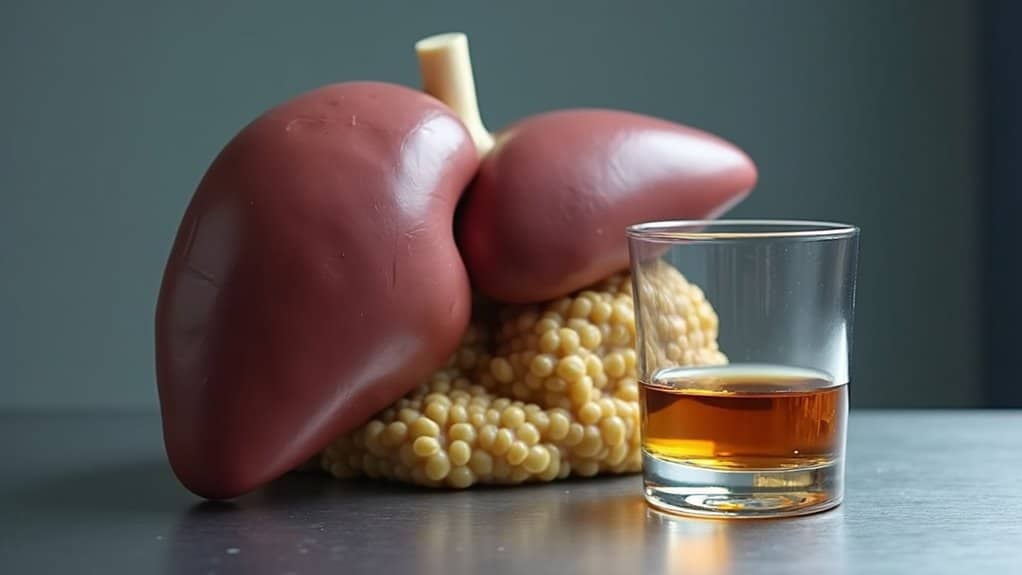
Alcohol injures your liver, which bears the brunt of alcohol’s toxic effects because it metabolizes most of the alcohol you drink. As your liver breaks down ethanol, it generates acetaldehyde and oxidative stress, which injure hepatocytes. Repeated exposure drives fat accumulation, inflammation, and fibrosis.
Alcohol-related liver disease typically develops over months or years of heavy drinking, but you can develop hepatic steatosis after just several days of heavy intake. The disease spectrum includes steatosis, alcohol-associated hepatitis, and cirrhosis, though these stages can overlap and don’t always progress sequentially.
Quantity and duration of consumption are your major risk factors, yet no single threshold predicts your individual outcome. Early disease is often asymptomatic, so feeling well doesn’t rule out liver injury. If you stop drinking early, steatosis often reverses.
How the liver processes alcohol
Your liver processes alcohol mainly through two enzymes: alcohol dehydrogenase converts ethanol into acetaldehyde, a toxic, reactive compound, and aldehyde dehydrogenase then oxidizes acetaldehyde into acetate, which your body breaks down further. Your stomach and small intestine absorb alcohol into the portal circulation, which delivers it directly to your liver, where your hepatocytes metabolize most of it.
Heavy drinking also induces cytochrome P450 2E1 (CYP2E1), an enzyme pathway that generates reactive oxygen species. Acetaldehyde and this oxidative stress damage your liver cells directly. Alcohol metabolism shifts your hepatocytes’ chemistry in ways that favor fat synthesis and storage.
Your liver can only process a limited amount per hour, so drinking faster causes unmetabolized alcohol and acetaldehyde to accumulate. That’s why repeated exposure progressively injures your liver.
What fatty liver, hepatitis, and cirrhosis are

Fatty liver (steatosis), alcohol-associated hepatitis, and cirrhosis are three overlapping conditions of alcohol-related liver disease, ranging from fat buildup in liver cells to inflammation and injury to advanced fibrosis. These stages don’t always progress in a fixed order, and you can have more than one at once.
- Fatty liver: Fat accumulates in your hepatocytes, sometimes after just several days of heavy drinking. It’s usually asymptomatic and often reversible with abstinence.
- Alcohol-associated hepatitis: Inflammation and hepatocellular injury, distinct from viral hepatitis, can cause nausea, fatigue, anorexia, and jaundice.
- Severe hepatitis: You may develop coagulopathy, confusion, or bleeding, which signal possible rapid progression to liver failure.
- Cirrhosis: Advanced fibrosis disrupts liver architecture and function. It’s generally irreversible, though stopping alcohol limits further damage.
Since early disease is often asymptomatic, you can’t rely on how you feel. Clinical evaluation can detect injury.
How the stages of alcohol-related liver disease progress
Alcohol-related liver disease generally progresses from steatosis to alcohol-associated hepatitis to cirrhosis as continued exposure causes cumulative hepatocellular injury, with acetaldehyde toxicity and oxidative stress promoting fat accumulation, inflammation, and fibrogenesis. Stages overlap, and you won’t necessarily progress sequentially. Steatosis can develop within days of heavy intake.
| Stage | Key features | Reversibility |
|---|---|---|
| Steatosis | Asymptomatic hepatocellular fat accumulation | Often reversible with abstinence |
| Alcohol-associated hepatitis | Inflammation, jaundice, nausea, fatigue | Mild injury may improve; severe disease needs urgent care |
| Cirrhosis | Advanced fibrosis impairing hepatic function | Generally irreversible |
| Decompensated cirrhosis | Ascites, variceal bleeding, encephalopathy | Irreversible; transplantation may be considered |
Cumulative quantity and duration of intake drive your risk, though no threshold predicts individual outcomes. Abstinence at any stage limits further injury, so if you’re physically dependent, seek medical guidance before stopping to manage withdrawal.
What symptoms signal liver damage

Early liver damage often causes no symptoms, while later stages can bring fatigue, anorexia, nausea, weight loss, right upper quadrant discomfort, and more serious warning signs. Steatosis and early alcohol-related liver disease often produce no noticeable symptoms, so their absence doesn’t rule out hepatocellular damage. Seek prompt medical attention if you notice:
- Jaundice, which signals impaired bilirubin clearance
- Ascites or peripheral edema, indicating fluid retention from portal hypertension
- Hematemesis or melena, suggesting gastrointestinal bleeding
- Confusion or disorientation, which may reflect hepatic encephalopathy
To assess your liver, clinicians review your alcohol-use history and order blood tests, imaging, and sometimes a liver biopsy. Remember that quantity and duration of drinking drive risk, but no single threshold guarantees your safety or reliably predicts whether you’ll develop disease.
Whether liver damage from alcohol can heal
Alcohol-related liver damage can often heal, but recovery depends largely on the stage of injury when you stop drinking. Hepatic steatosis is often reversible: with abstinence, accumulated fat in hepatocytes can clear, restoring normal liver architecture. Mild alcohol-associated hepatitis may improve after cessation, though severe hepatitis requires urgent medical assessment and may need nutrition support or corticosteroids. Cirrhosis is different. Established fibrotic scarring is generally irreversible, but abstinence limits further injury, lowers complication risk, and improves your prognosis. If you’ve progressed to severe liver failure, you may need evaluation for transplantation. Abstinence remains the mainstay of treatment at every stage. If you’re physically dependent on alcohol, don’t stop without medical guidance. Withdrawal can require supervised care, and medications such as naltrexone or acamprosate can support recovery.
How Simonds Recovery Centers helps people stop drinking and protect their health
Simonds Recovery Centers helps you stop drinking safely and stay stopped through a treatment plan that addresses both alcohol use disorder and its physical consequences. This matters because abstinence drives recovery at every stage of alcohol-related liver disease.
Your care can include:
- Medical guidance before stopping: If you’re physically dependent, withdrawal can require supervised care.
- Counseling and psychological support: You’ll build relapse-prevention skills and identify drinking triggers.
- Medication options: Where clinically appropriate, naltrexone or acamprosate can help reduce relapse risk.
- Nutritional and medical support: You’ll receive ongoing care that complements blood tests, imaging, and liver-complication management.
Stopping early gives fatty liver and mild inflammation the best chance to reverse, and it limits further scarring if cirrhosis has developed. Contact us today.
Stop Drinking Before Liver Damage Progresses
Alcohol-related liver damage can worsen with continued drinking, even when you do not have obvious symptoms. If stopping feels difficult or you are physically dependent on alcohol, Simonds Recovery provides medical detox and ongoing alcohol addiction treatment to help you stop safely and address the underlying alcohol use disorder.
Call (833) 781-8338 to discuss your treatment options.
Frequently Asked Questions
How Much Alcohol Does It Take to Damage the Liver?
There is no single amount of alcohol that guarantees liver damage because risk varies with factors such as drinking pattern, duration, sex, genetics, nutrition, and other health conditions. Regular heavy drinking substantially increases the risk of alcohol-associated liver disease. Early fatty liver can develop before noticeable symptoms appear, so feeling well does not rule out liver injury. A healthcare professional can evaluate your risk using your history, blood tests, imaging, and other assessments.
Can Just a Few Days of Heavy Drinking Cause Fatty Liver?
Yes. Fat can accumulate in the liver after relatively short periods of heavy alcohol consumption. Alcohol-associated fatty liver is often reversible when drinking stops, but continued heavy use can lead to inflammation, fibrosis, alcohol-associated hepatitis, and eventually cirrhosis. Because early fatty liver may cause few or no symptoms, it should not be dismissed simply because you feel healthy.
What Tests Do Doctors Use to Diagnose Alcohol-Related Liver Disease?
Doctors generally combine your medical and alcohol-use history with blood tests and imaging. Liver blood tests can identify patterns of injury or impaired liver function, while ultrasound and other imaging can assess fat accumulation, liver structure, or signs of advanced disease. Additional tests, including specialized imaging or occasionally a liver biopsy, may be used when the diagnosis or severity remains unclear.
When Might Someone Need a Liver Transplant for Alcohol-Related Damage?
A liver transplant may be considered when alcohol-associated liver disease causes advanced, life-threatening liver failure or complications that cannot be adequately managed with other treatment. Signs of advanced disease can include jaundice, ascites, gastrointestinal bleeding, hepatic encephalopathy, and severe problems with blood clotting. Transplant evaluation is individualized and includes assessment of medical severity as well as ongoing treatment for alcohol use disorder.
Is It Safe to Stop Drinking Suddenly if I’m Physically Dependent?
It may not be safe. Abruptly stopping alcohol after prolonged or heavy use can cause withdrawal, which can progress to seizures or delirium tremens and become life-threatening. If you may be physically dependent, speak with a healthcare professional before stopping so your withdrawal risk can be assessed and an appropriate detox plan can be arranged. Do not attempt severe withdrawal without medical support.