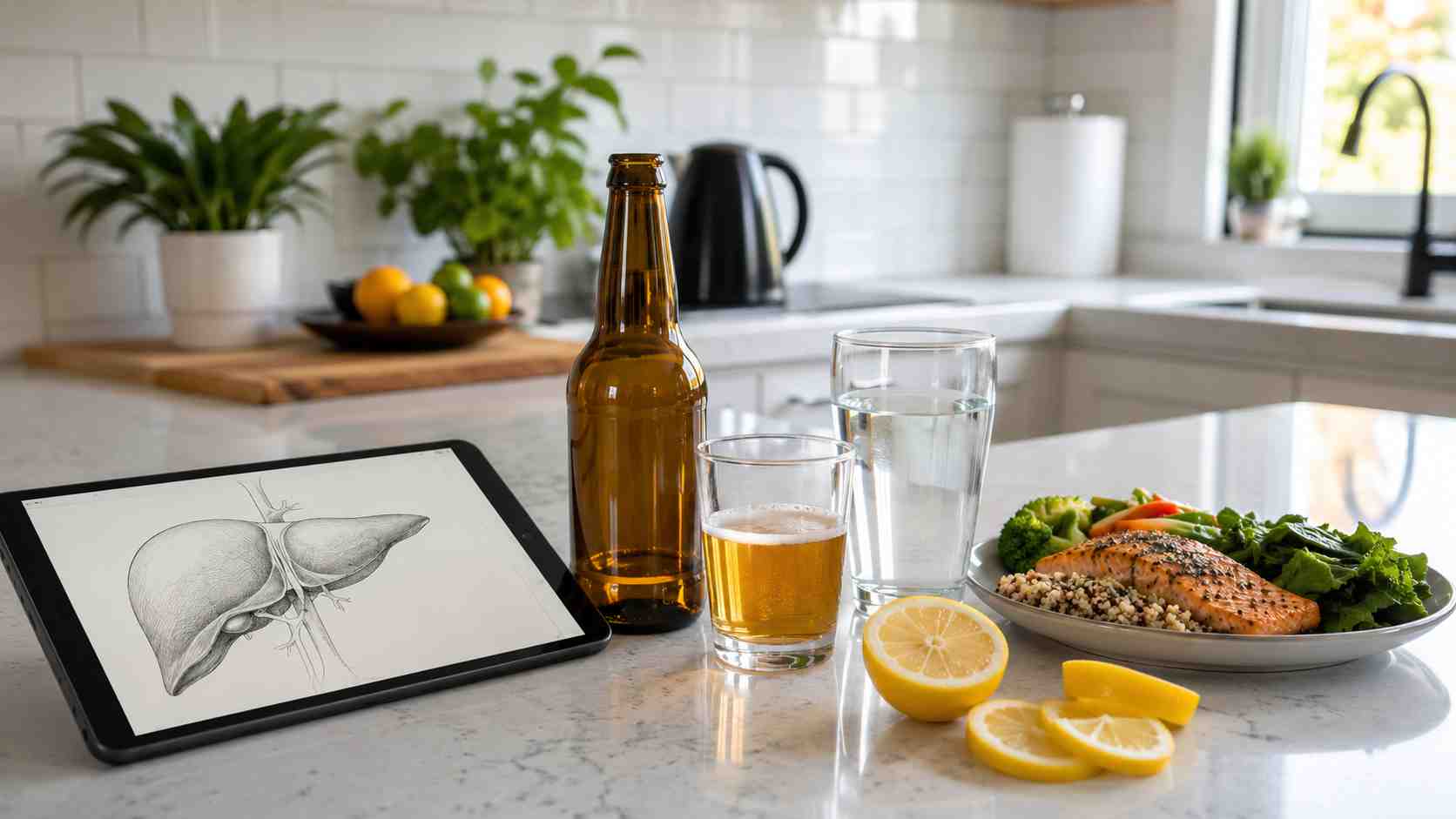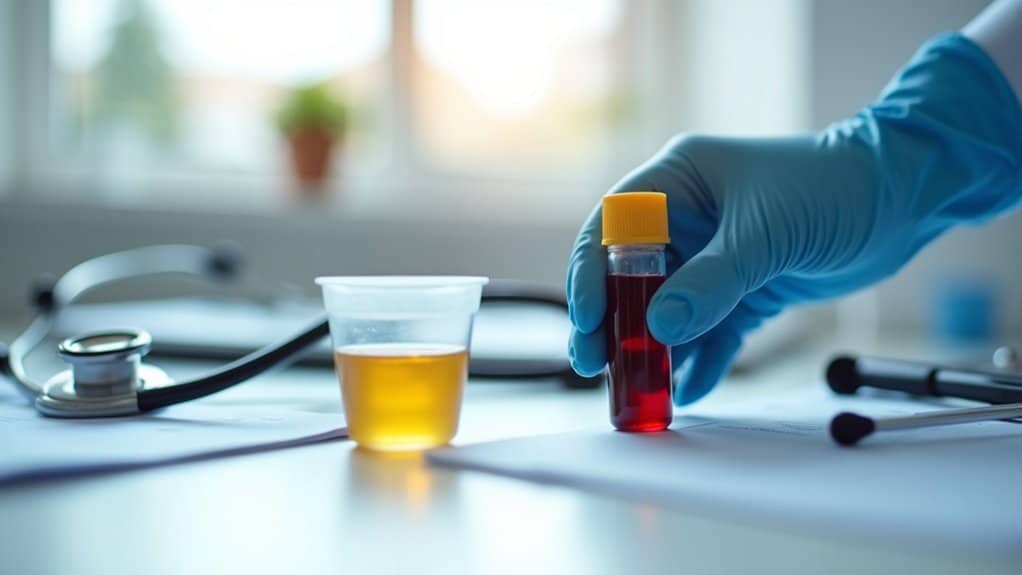






Your liver metabolizes about 90% of the alcohol you drink at a fixed rate of roughly 0.015 BAC per hour, or about one standard drink hourly. A single drink typically clears in 2 to 5 hours. After heavy drinking, elimination extends to 10 to 15 hours, with full clearance taking around 25 hours from your last drink. Detection windows vary: blood 6 to 12 hours, breath and urine 12 to 24 hours, and EtG up to 80 hours. Several factors shift this timeline considerably.
Key Takeaways
- Your liver metabolizes alcohol at a fixed rate of about 0.015 BAC per hour, roughly one standard drink hourly.
- A single drink typically clears in 2 to 5 hours, while heavy consumption extends elimination to 10 to 15 hours.
- Detection windows vary by test: blood 6 to 12 hours, breath and urine 12 to 24 hours, and advanced EtG urine up to 80 hours.
- Amount consumed, body weight, liver enzyme activity, and food intake all influence your personal elimination timeline.
- Feeling sober doesn’t mean full clearance, as measurable alcohol can remain the next morning after heavy drinking.
How long does alcohol stay in your system

Alcohol stays in your system for varying lengths of time depending on how much you drink. Your liver metabolizes alcohol at a fixed rate of 0.015 BAC per hour, roughly one standard drink hourly. For a single standard drink, complete elimination takes 2 to 5 hours in healthy adults. After heavy consumption, that window extends to 10 to 15 hours, and full clearance can require around 25 hours after your last drink.
Alcohol elimination follows zero-order kinetics, meaning your blood alcohol concentration falls at a steady rate rather than a proportional one. On an empty stomach, it peaks about an hour after drinking, then declines linearly. Because that rate holds across body sizes and drink types, you can’t practically speed it up. Time is the only reliable factor. Some people believe certain tricks can flush alcohol out of your system faster, but most of these remedies don’t work or change the rate of elimination. It’s best to let your body process the alcohol naturally and stay patient through detox.
How does the body process and eliminate alcohol
Your liver shoulders most of the workload, metabolizing roughly 90% of the alcohol you consume while your breath, sweat, and urine excrete the rest. It processes alcohol at a fixed rate of about 0.015 BAC per hour, or 15 mg/100 ml, which stays constant regardless of your body size or what you’ve been drinking. How your body breaks down alcohol is a complex process driven by enzymes and chemical reactions that safely clear alcohol from your system and prevent toxicity. Understanding it can help you make informed decisions about drinking.
On an empty stomach, your blood alcohol concentration peaks about one hour after drinking, then declines linearly. Once levels drop to around 20 mg/100 ml, the elimination curve flattens, though detectable amounts persist for hours. You can’t accelerate any part of this. No practical method exists to speed up your liver’s metabolism of alcohol, which is why alcohol clearance depends almost entirely on how much you drank and how long ago.
What is the average rate the body clears alcohol

Your liver metabolizes alcohol at a fixed rate of roughly 0.015 BAC per hour, equivalent to about 15 mg/100 ml removed from your blood each hour. That translates to approximately one standard drink processed per hour for most adults. This rate stays notably constant regardless of your body size or the type of drink you’ve had. Alcohol clearance follows a predictable timeline, though the total duration varies with how much you’ve consumed. For a single standard drink, complete elimination typically takes 2, 5 hours in healthy adults. Heavy consumption extends that window considerably, requiring 10, 15 hours, and full clearance from your body averages around 25 hours after your last drink. Unfortunately, no practical method exists to speed up this metabolic process. How long does sugar alcohol stay in your system varies with your metabolism and how much you consume. Since sugar alcohols aren’t fully absorbed, clearance times differ and can bring gastrointestinal side effects that prolong how long the body takes to process them.
What factors affect how long alcohol stays in your system
How long alcohol stays in your system depends on several physiological and behavioral factors. The amount you consume directly affects total elimination time, since more alcohol requires proportionally more hours to clear at your liver’s fixed rate. Body weight influences how alcohol distributes through your tissues, shaping your peak concentration rather than your clearance rate.
Individual variation in liver enzyme activity means metabolism speed differs from person to person. Eating a meal before drinking slows absorption and lowers your peak blood alcohol concentration, though it doesn’t shorten total clearance time, since the same amount of alcohol still has to be processed. Long-term heavy drinkers may metabolize somewhat faster due to enzyme induction, but this is an adaptation to sustained exposure, not something you can invoke on a given night.
How body weight, sex, food, and liver health change the timeline
Body weight, sex, food, and liver health each change the timeline by shaping how alcohol distributes, absorbs, and clears. Higher body mass dilutes alcohol across more fluid volume, lowering your peak concentration. Sex matters too: differences in body water and enzyme activity mean you may reach higher concentrations at identical intake. Eating before drinking slows absorption and blunts your peak. Liver health governs enzymatic clearance, and compromised function extends your timeline substantially.
| Factor | Effect on Timeline | Mechanism |
|---|---|---|
| Body Weight | Lower peak BAC | Greater fluid distribution |
| Sex | Variable peak | Body water, enzyme differences |
| Food | Shorter, delayed peak | Slowed absorption |
| Liver Health | Extended clearance | Reduced enzyme metabolism |
These variables shift your peak and your starting point. None of them change the rate at which your liver works through what you drank.
How feeling sober differs from being fully cleared
Feeling sober reflects declining impairment, not complete elimination. Your liver metabolizes alcohol at 0.015 BAC per hour, and that pace doesn’t accelerate because you feel alert. After heavy evening drinking, you can still register measurable blood alcohol the next morning, and impairment may persist even when subjective symptoms fade.
Detection windows outlast perceived sobriety considerably. Blood tests identify alcohol for 6 to 12 hours, breath tests for 12 to 24 hours, and standard urine tests for 12 to 24 hours. Advanced EtG urine testing detects metabolites up to 80 hours later. Don’t equate feeling clear-headed with full clearance, and never use an estimated timeline to decide whether you’re safe to drive. No calculation substitutes for not driving after drinking. The alcohol detection window varies by testing method, and even after alcohol’s effects fade, traces can linger far longer than you’d expect.
How Simonds Recovery Centers helps with alcohol detox and recovery
Simonds Recovery Centers provides medically supervised detox and evidence-based recovery, focused on what the science actually supports. Because your liver clears alcohol at a fixed 0.015 BAC per hour, we can’t speed elimination. What we can do is keep you safe while your body does the work.
Our clinical approach includes:
- Continuous monitoring of vital signs and BAC during the window when withdrawal symptoms peak.
- Medical management of complications, since heavy consumption prolongs elimination and intensifies physiological stress.
- Recovery planning that accounts for long-term biomarkers like PEth, detectable for 1 to 3 weeks.
You’ll detox under supervision, then move into structured, sustainable recovery.
Time Is the Only Thing That Sobers You Up. That’s Also the Problem.
Twenty-five hours of clearance is manageable when you’re waiting one night out. It’s a different situation when withdrawal starts before the last drink has even left your system, and the 6 to 24 hour window is exactly when it gets hardest. Simonds Recovery Centers handles that stretch under medically supervised detox, with board-certified physicians monitoring vitals around the clock at our Granada Hills facility, then a step into structured treatment once you’re stable.
Call (833) 781-8338 or check your coverage. Confidential, seven days a week.
Frequently Asked Questions
Can drinking water or coffee speed up alcohol elimination?
No. Your liver metabolizes alcohol at a fixed rate of 0.015 BAC per hour, and that rate holds regardless of what you consume afterward. Coffee might make you feel more alert, but feeling alert isn’t the same as being sober, and it doesn’t reduce your blood alcohol concentration. You’ll simply have to wait.
Which test type detects alcohol the longest after drinking?
Hair testing detects alcohol the longest, identifying consumption up to 90 days after drinking. For shorter windows, EtG urine tests catch metabolites for up to 80 hours, while PEth blood tests indicate consumption for 1 to 3 weeks. Standard blood tests only detect alcohol for 6 to 12 hours, so they’re far more limited by comparison.
What is a PEth biomarker and how long is it detectable?
PEth (phosphatidylethanol) is a direct alcohol biomarker, a phospholipid that forms in your red blood cell membranes only when ethanol is present. Because it reflects actual consumption rather than temporary intoxication, it’s highly specific. It stays detectable in blood for 1 to 3 weeks after drinking, which makes it useful for monitoring longer-term drinking patterns.
Can I fail an alcohol test the morning after drinking?
Yes. Since your liver metabolizes alcohol at roughly 0.015 BAC per hour, heavy evening consumption can leave measurable levels, and impairment, hours later. Breath tests stay positive for 12 to 24 hours, while EtG urine tests detect metabolites up to 80 hours. Whether you test positive depends on how much you drank and when you stopped, so feeling fine is not evidence that you’ve cleared.
Does alcohol show up on a hair follicle test?
Yes. Hair testing offers the longest detection window of any method, up to 90 days after consumption. Alcohol metabolites get incorporated into your hair as it grows, creating a long-term record of use. Short-term abstinence won’t clear detectable traces before this kind of test.