





When you drink, ethanol enters your bloodstream through your stomach and small intestine, then flows straight to your liver. Your liver handles over 90% of it. There, alcohol dehydrogenase (ADH) converts ethanol into acetaldehyde, a toxic intermediate. Next, acetaldehyde dehydrogenase (ALDH) rapidly transforms it into harmless acetate, which your tissues oxidize and eliminate. This pathway runs at a fixed, saturable rate roughly one drink per hour. Understanding what influences that rate matters more than you’d think.
Key Takeaways
- Ethanol is absorbed directly into the bloodstream through the stomach and small intestine, then carried to the liver for processing.
- The liver metabolizes roughly 90% or more of consumed alcohol, primarily using the enzyme alcohol dehydrogenase (ADH) in hepatocytes.
- ADH converts ethanol into acetaldehyde, a toxic and carcinogenic intermediate, using the cofactor NAD and producing NADH.
- Mitochondrial acetaldehyde dehydrogenase (ALDH) rapidly converts toxic acetaldehyde into harmless acetate, later oxidized into carbon dioxide, fatty acids, and water.
- The pathway works at a fixed, saturable rate, processing about one standard drink per hour and lowering BAC by ~0.015 g/100mL hourly.
How does the body break down alcohol

Your body breaks down alcohol primarily in your liver, which processes roughly 90% or more of what you consume. Ethanol enters your bloodstream directly through your stomach and small intestine without requiring any prior digestion. Most absorption occurs in your small intestine, with a smaller fraction taken up by your stomach. Because ethanol is highly water-soluble, it diffuses passively throughout your entire body, including your brain. Blood carrying the absorbed alcohol flows directly to your liver, the central organ for metabolism.
Your liver breaks down alcohol through oxidation. Alcohol dehydrogenase (ADH), located in the cytosol of your hepatocytes, initiates the first step, converting ethanol into acetaldehyde, a toxic, carcinogenic intermediate. Over 80% of ethanol metabolism proceeds through this ADH system, making it your body’s primary route for clearing alcohol.
What role does the liver play in alcohol metabolism
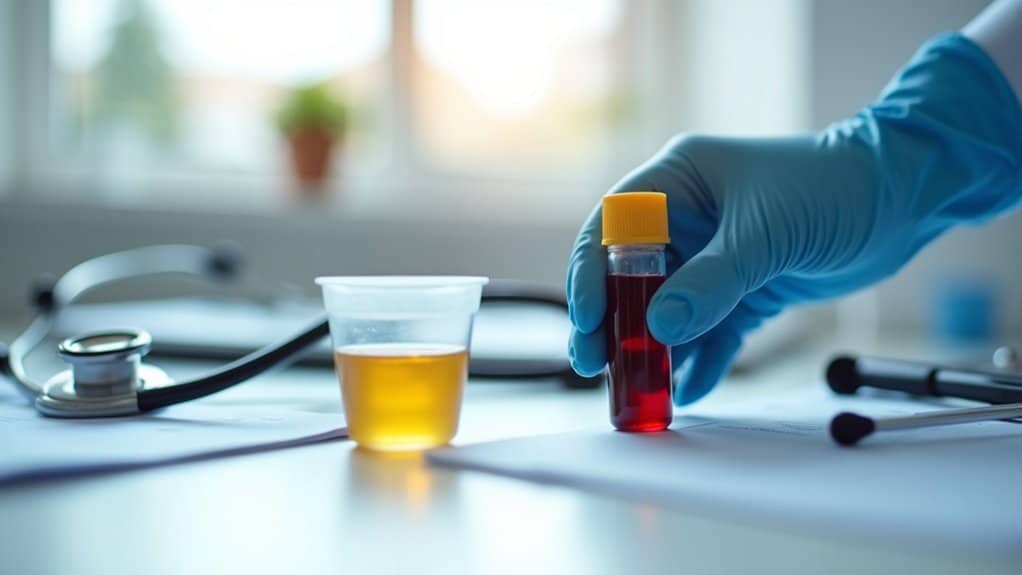
Your liver serves as the central organ for alcohol metabolism, handling roughly 90% or more of the alcohol you consume. After ethanol’s absorbed through your stomach and small intestine, your blood carries it directly to your liver, where enzymatic breakdown begins. How long alcohol stays in your system depends on body weight, hydration, and metabolism. Detection in blood and urine can range from hours to days, which matters when sober judgment is needed.
Your liver relies primarily on alcohol dehydrogenase (ADH), a cytosolic enzyme in your hepatocytes that converts ethanol into acetaldehyde, a toxic, carcinogenic intermediate. This reaction requires the cofactor NAD, producing acetaldehyde and NADH. Over 80% of your ethanol metabolism proceeds through this ADH system.
Next, mitochondrial acetaldehyde dehydrogenase (ALDH) rapidly converts the toxic acetaldehyde into non-toxic acetate. Your liver then releases this acetate into your bloodstream, where peripheral tissues oxidize it into carbon dioxide, fatty acids, and water, completing metabolism.
What is alcohol dehydrogenase (ADH) and what does it do

Alcohol dehydrogenase (ADH) is the major enzyme system responsible for metabolizing alcohol in your liver. Located in the cytosol of your hepatocytes, ADH initiates the first oxidative step of ethanol breakdown. It converts ethanol into acetaldehyde, a toxic and carcinogenic intermediate metabolite. This reaction requires the cofactor NAD, which accepts electrons to produce NADH alongside acetaldehyde.
ADH handles the bulk of your body’s alcohol processing, accounting for more than 80% of ethanol metabolism. Because this enzyme operates at a relatively fixed capacity, it can’t accelerate when you drink faster. That’s why consuming alcohol beyond your liver’s metabolic rate elevates your blood alcohol concentration. ADH’s role clarifies why acetaldehyde accumulates temporarily before subsequent enzymes convert it into safer compounds. Understanding how the body metabolizes alcohol shows why many look for ways to flush alcohol out of your system faster. Home remedies and hydration tricks claim to speed it up, but science offers little support, making moderation the most reliable way to manage alcohol’s effects.
How is ethanol converted to acetaldehyde and then acetate
Ethanol is converted to acetaldehyde and then acetate in your liver through a two-step oxidative conversion that transforms it into a harmless end product. In the first step, alcohol dehydrogenase (ADH) in the hepatocyte cytosol oxidizes ethanol into acetaldehyde, a toxic and carcinogenic intermediate. This reaction requires the cofactor NAD, yielding acetaldehyde and NADH. In the second step, mitochondrial acetaldehyde dehydrogenase (ALDH) rapidly converts that toxic acetaldehyde into non-toxic acetate.
Here’s what you should understand about this pathway:
- Step one: ADH transforms ethanol into acetaldehyde using NAD, producing NADH.
- Step two: Mitochondrial ALDH oxidizes acetaldehyde into acetate.
- Final stage: Acetate enters your blood, where peripheral tissues oxidize it into carbon dioxide, fatty acids, and water.
This sequence minimizes your exposure to acetaldehyde’s harmful effects.
How genetics and enzymes cause people to process alcohol differently

Genetics and enzymes cause people to process alcohol differently because two key enzymes, ADH and ALDH, do the heavy lifting, and genetic variation in either one changes how efficiently you clear ethanol and its toxic intermediate. If you carry a high-activity ADH variant, you convert ethanol to acetaldehyde faster. If your ALDH is impaired, acetaldehyde accumulates, producing flushing, nausea, and heightened toxicity.
| Enzyme | Genetic Effect | Clinical Result |
|---|---|---|
| ADH (fast variant) | Accelerated ethanol oxidation | Rapid acetaldehyde production |
| ADH (slow variant) | Reduced oxidation rate | Prolonged ethanol exposure |
| ALDH (deficient) | Impaired acetate conversion | Acetaldehyde buildup, flushing |
| ALDH (normal) | Efficient detoxification | Minimal acetaldehyde retention |
These enzyme polymorphisms explain why you and someone else can drink identically yet experience markedly different intoxication and toxicity.
Why you can’t speed up the enzymatic process
You can’t speed up the enzymatic process because the ADH pathway operates at a fixed, saturable rate. Your liver processes roughly one standard drink per hour, reducing your blood alcohol concentration by approximately 0.015 g/100mL/hour. Because a single drink nearly saturates ADH’s capacity, the enzyme can’t work faster regardless of what you try. Popular interventions fail for measurable reasons:
- Coffee stimulates your nervous system but doesn’t increase ADH activity or acetaldehyde conversion.
- Cold showers raise alertness yet leave hepatic metabolism unchanged.
- Drinking water aids hydration but can’t boost NAD availability or enzymatic throughput.
When you consume alcohol faster than 0.015 per hour, the excess accumulates in your bloodstream, elevating BAC until your liver catches up. How long does alcohol stay in your system depends on factors like your weight, age, and overall health, along with the type of alcohol and whether you’ve eaten. Understanding this helps you make responsible choices about drinking and driving or other activities.
How Simonds Recovery Centers treats alcohol dependence
Simonds Recovery Centers treats alcohol dependence through medically supervised detoxification, monitoring your withdrawal while your enzymatic systems clear residual alcohol and metabolites. Chronic heavy drinking overwhelms your liver’s metabolic pathways and leads to dependence. When you consistently exceed your liver’s fixed metabolic rate, acetaldehyde accumulates, tissues sustain damage, and your neurological system adapts to persistent ethanol exposure. You’ll receive evidence-based pharmacotherapy that manages symptoms and reduces cravings, targeting the neuroadaptations driving dependence. The centers integrate behavioral therapy to address the psychological reinforcement underlying compulsive consumption. Because your liver processes alcohol at roughly one standard drink hourly, abstinence remains the only reliable recovery mechanism. Simonds’ structured approach supports your physiological healing while rebuilding sustainable habits that prevent relapse.
When You Drink Faster Than Your Liver Works, the Difference Doesn’t Disappear
One drink an hour is the ceiling. Everything past it sits in your blood waiting, and years of that means acetaldehyde building up faster than your enzymes can handle, tissue taking damage, your nervous system adjusting to alcohol always being there. That last part is why stopping alone gets dangerous. Simonds Recovery Centers in Granada Hills runs medically supervised detox with physicians watching the withdrawal, then medication-assisted treatment for the cravings and behavioral therapy for the pull underneath them.
Call (833) 781-8338 or verify your insurance. Confidential, seven days a week.
Frequently Asked Questions
How long does alcohol stay detectable in your body?
It depends on the test. Blood tests detect alcohol for roughly 6 to 12 hours after your last drink, while breath and standard urine tests detect it for 12 to 24 hours. Advanced EtG urine testing picks up metabolites for up to 80 hours, and hair testing reveals heavy drinking patterns for up to 90 days. Detection reflects that alcohol was consumed, not that you’re currently impaired.
Does eating food affect how alcohol is absorbed?
Yes. Most ethanol is absorbed in your small intestine, so anything that keeps it in your stomach longer slows how fast it reaches your bloodstream. Food delays gastric emptying, which means alcohol trickles into the small intestine rather than arriving all at once. The result is a lower, later peak in blood alcohol concentration. It doesn’t reduce the total amount your liver has to process.
Can drinking water or coffee lower your BAC faster?
No. Your liver metabolizes alcohol at a constant rate of roughly 0.015 g/100mL per hour, or about one standard drink hourly. Over 80% of ethanol is oxidized by alcohol dehydrogenase, and only 5 to 10% leaves unchanged through breath, urine, and sweat, so hydration has nothing to act on. Coffee may mask how impaired you feel, but your metabolic clearance stays fixed either way.
What is a standard drink measurement?
A standard drink in the US contains about 14 grams of pure ethanol. That works out to roughly 12 oz of regular beer (5% ABV), 5 oz of wine (12% ABV), or 1.5 oz of distilled spirits (40% ABV). Your liver processes approximately one standard drink per hour, so drinking faster than that raises your blood alcohol concentration until your liver catches up.
Why does alcohol affect the brain so quickly?
Ethanol doesn’t require digestion. It passes directly into your bloodstream through your stomach and small intestine, and because it’s highly water-soluble, it diffuses passively throughout your body. It crosses the blood-brain barrier freely rather than waiting on a transport mechanism, so it reaches neural tissue within minutes of absorption.