





Yes, smoking weed while you’re pregnant is risky. Health agencies haven’t identified any safe amount or safe trimester. When you use cannabis, THC crosses the placenta and reaches your baby. Research links prenatal exposure to preterm birth, smaller babies, and NICU admission. A 2024 meta-analysis found 42% higher adjusted odds of preterm birth. Switching to edibles won’t eliminate exposure. Below, you’ll find what the evidence shows, which risks matter most, and where to get support.
Key Takeaways
- No safe amount or trimester of cannabis use during pregnancy has been identified, and THC crosses the placenta to reach the baby.
- A 2024 meta-analysis linked prenatal cannabis use to 42% higher adjusted odds of preterm birth, though evidence certainty was rated low.
- Prenatal cannabis exposure is associated with low birth weight, small-for-gestational-age infants, NICU admission, and stillbirth.
- Switching to edibles, drinks, or CBD does not eliminate fetal exposure, and CBD should not be assumed safer.
- ACOG does not recommend cannabis for pregnancy nausea or other symptoms due to insufficient safety and effectiveness evidence.
Is smoking weed while pregnant risky

Yes, smoking weed while pregnant carries real risks, and health agencies haven’t identified any safe amount or safe trimester for use, even though many people view cannabis as natural or harmless.
THC crosses the placenta and reaches your baby when you smoke. Research links prenatal cannabis exposure to preterm birth, small-for-gestational-age infants, low birth weight, and NICU admission. A 2024 meta-analysis found 42% higher adjusted odds of preterm birth, though evidence certainty was low.
Smoking also exposes your lungs to toxic, cancer-causing chemicals and may lower your oxygen levels, which can affect fetal development. Switching to edibles won’t eliminate THC exposure.
Most studies are observational, so they can’t prove causation. Still, uncertainty isn’t proof of safety, so CDC and ACOG advise you to avoid cannabis entirely.
What the research says about cannabis and pregnancy
Research links cannabis use during pregnancy to higher risks of preterm birth, small-for-gestational-age babies, and other complications, though the evidence shows associations rather than proven cause and effect. Most of what researchers know comes from observational studies, which track outcomes in people who used cannabis rather than randomly assigning exposure. Still, the signals are consistent enough to warrant caution. A 2024 meta-analysis found higher adjusted odds of preterm birth (aOR 1.42) and links to small-for-gestational-age babies, even after accounting for tobacco use. ACOG also lists low birth weight, NICU admission, and stillbirth among reported associations. Researchers rate much of this evidence low certainty because tobacco, other substances, dose, and socioeconomic factors complicate analysis. But don’t mistake uncertainty for safety. Elevated group-level odds don’t guarantee your pregnancy will have complications, yet no study has identified a safe amount.
How THC crosses the placenta and affects fetal development
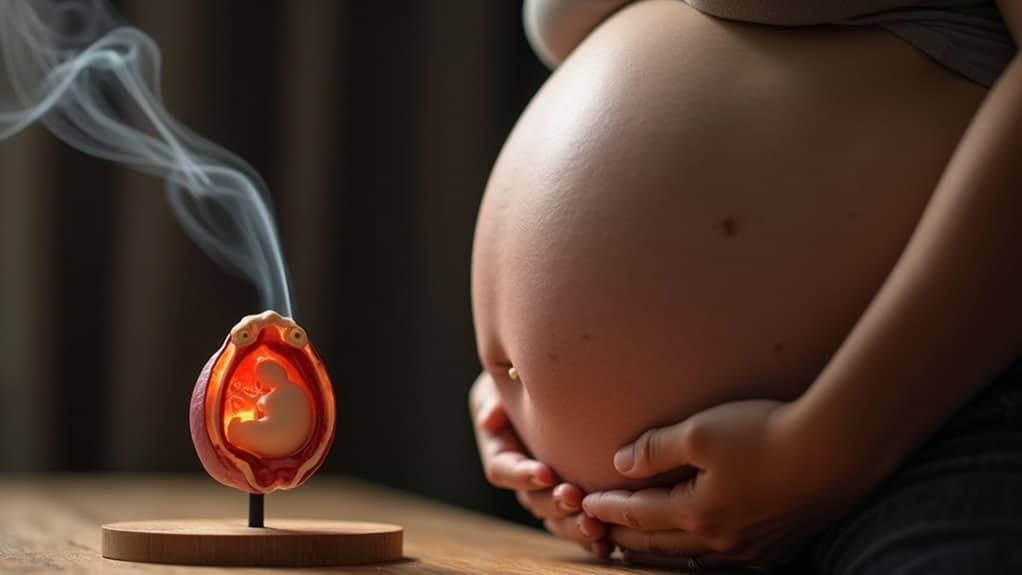
THC crosses the placenta and reaches your developing baby whenever you use cannabis during pregnancy, regardless of whether you smoke, vape, or eat it. Edibles and drinks avoid smoke, but they don’t avoid fetal exposure.
Researchers believe THC may affect fetal brain development, though they’re still studying the exact nature and magnitude of these effects. ACOG reports that some cannabinoid-exposed newborns show altered arousal, regulation, and excitability, along with sleep problems and irritability, during their first month. Later, exposed children may face attention, memory, learning, and behavioral difficulties, but findings aren’t uniform.
Because tobacco, other substances, and social factors complicate the data, scientists can’t yet clearly define long-term outcomes. Still, uncertainty doesn’t prove safety, and researchers haven’t identified any safe amount or trimester.
What the known risks to the baby are
Research links prenatal cannabis exposure to preterm birth, smaller babies, and newborn and developmental effects that can affect your baby’s health at birth and beyond:
- Preterm birth: A 2024 meta-analysis found 42% higher adjusted odds (aOR 1.42), though evidence certainty was low.
- Smaller babies: Researchers link use to low birth weight and small-for-gestational-age births, even after adjusting for tobacco.
- Newborn and developmental effects: ACOG reports NICU admissions, irritability, sleep problems, and altered regulation, with possible later attention and learning difficulties.
These findings come mostly from observational studies, so they don’t prove cannabis caused any outcome, and your pregnancy won’t necessarily face complications. Still, uncertainty isn’t evidence of safety. No one’s identified a safe amount, so avoiding cannabis best protects your baby.
Why using cannabis for nausea during pregnancy is discouraged

ACOG doesn’t recommend cannabis for treating nausea or any other pregnancy symptom because there isn’t enough evidence that it’s safe or effective during pregnancy, even though it might seem like a natural remedy for morning sickness.
| Concern | What evidence shows | What it means for you |
|---|---|---|
| THC exposure | Crosses the placenta | Your baby is exposed |
| Birth outcomes | Linked to preterm birth, low birth weight | Group risk rises |
| Non-smoked forms | Edibles still deliver cannabis compounds | Switching routes isn’t safer |
| CBD products | Pregnancy effects unknown | Don’t assume it’s safe |
These risks are observational associations, not certainties, but uncertainty isn’t proof of safety. Instead, tell your prenatal clinician about your nausea and any cannabis use. They can recommend pregnancy-appropriate treatments and support you if you’re trying to stop.
What safer alternatives exist for pregnancy symptoms
Safer alternatives for managing nausea, pain, poor sleep, or anxiety during pregnancy are treatments with established safety data in pregnancy, so talk with your prenatal clinician about these options instead of reaching for cannabis. Cannabis isn’t a recommended pregnancy treatment. ACOG notes that evidence on its safety and effectiveness during pregnancy is lacking.
- Ask about pregnancy-appropriate options: Your clinician can match treatments to your specific symptom rather than leaving you to self-treat.
- Don’t assume CBD is safer: CDC says CBD’s potential health effects during pregnancy are unknown.
- Disclose current use: Telling your provider about cannabis use helps guide your care and connects you with support for stopping.
Switching to edibles or vapes won’t solve the problem, since non-smoked forms still expose your baby to cannabis compounds. Remember: uncertainty isn’t proof of safety.
How Simonds Recovery Centers helps pregnant individuals who use cannabis
Simonds Recovery Centers helps pregnant individuals stop using cannabis through clinical support rather than judgment. Our team starts with a confidential assessment of your use, including frequency, route, and any tobacco or other substance use, since these factors can shape risk. We’ll coordinate with your prenatal care provider to align treatment with your pregnancy care. If you’ve used cannabis for nausea, pain, sleep, or anxiety, we’ll help you find pregnancy-appropriate alternatives instead of substituting CBD, which hasn’t been shown safe. Evidence-based counseling helps you build practical strategies to reduce and stop use. You don’t need to wait for a complication to ask for help. Reaching out now helps protect your health and your baby’s development.
Get Support to Stop Cannabis Use
If you are pregnant and struggling to stop using cannabis, getting addiction support can help you move toward a healthier pregnancy and recovery. Simonds Recovery provides marijuana addiction treatment to help address problematic cannabis use, cravings, and the challenges that can make stopping difficult.
Call (833) 781-8338 to discuss your options with the Simonds team.
Frequently Asked Questions
Is Secondhand Cannabis Smoke Harmful to a Pregnant Person or Baby?
Secondhand cannabis smoke contains THC and many of the same harmful chemicals found in tobacco smoke. Because THC can cross the placenta, avoiding cannabis smoke during pregnancy is the safest approach. The specific risks from secondhand exposure are less clearly established than those from direct cannabis use, so avoid smoke-filled environments and discuss significant exposure with your prenatal care provider.
Are CBD Products Safe to Use During Pregnancy?
The safety of CBD during pregnancy has not been established. CBD products can vary in their ingredients and may contain THC or other contaminants. The FDA advises against using CBD during pregnancy because there is insufficient safety information. If you are considering CBD for nausea, pain, sleep, or another symptom, discuss pregnancy-appropriate alternatives with your prenatal care provider.
Should I Tell My Prenatal Provider That I Use Cannabis?
Yes. Tell your prenatal provider about your cannabis use, including how often you use it and whether you smoke, vape, or consume edibles. This information helps your care team provide appropriate prenatal guidance and discuss ways to stop or reduce exposure. Healthcare providers can also help address symptoms for which you may have been using cannabis, such as nausea, pain, or sleep problems.
Is It Safe to Use Cannabis While Breastfeeding?
Cannabis is not considered safe during breastfeeding because THC can pass into breast milk and remain detectable for an extended period. A safe amount of cannabis exposure for a breastfed infant has not been established. If you use cannabis after delivery, discuss your use with your healthcare provider and your baby’s pediatrician or lactation professional so they can help you determine the safest feeding approach.
Does Using Cannabis Before Knowing I Was Pregnant Harm My Baby?
Cannabis use before you knew you were pregnant does not mean that your baby will necessarily experience harm, but prenatal cannabis exposure has been associated with certain adverse pregnancy and developmental outcomes. Individual outcomes cannot be predicted from exposure alone. If you discover you are pregnant after using cannabis, stop using it and tell your prenatal provider so they can provide appropriate guidance and care.